I’ve walked into enough kitchens to know that when you search for a “complete guide to temperature control,” you’re usually met with a mountain of expensive, shiny digital probes and a manual thick enough to stop a bullet. Most of those guides are written by people who have never had to manage a lunch service for four hundred hungry kids while two staff members are calling in sick. They tell you to monitor every single thing, every single minute, which is absolute nonsense. If I see a kitchen manager spending more time staring at a digital readout than actually supervising the prep line, I know they’ve lost the plot.
I’m not here to sell you on fancy gadgets or academic theories that fall apart the moment the lunch rush hits. Instead, I’m going to give you a practical, no-nonsense framework for what actually matters when the pressure is on. We are going to focus on the few critical points where temperature discipline actually prevents an incident, and I will show you how to build a system that is actually sustainable for a busy, understaffed team. Let’s get to work.
Table of Contents
Mastering Food Safety Temperature Ranges Without Burning Out
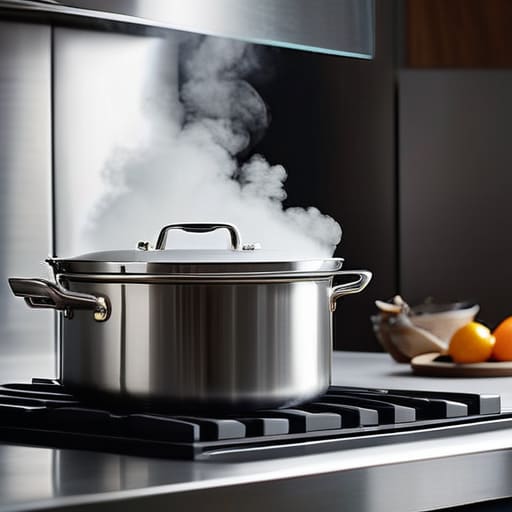
Let’s be honest: if I tell you to monitor every single pot on the stove every five minutes, I’m setting you up to fail. You’ll stop doing it by Tuesday because you’re too busy plating up. Instead of chasing every degree, you need to focus on the high-stakes zones. I’m talking about maintaining hot holding temperatures above 63°C and ensuring your cold storage stays below 5°C. These aren’t just arbitrary numbers; they are the boundaries between a successful service and a massive headache. If you can nail those two extremes, you’ve already won half the battle.
When things get chaotic, don’t try to reinvent the wheel with complex thermal regulation techniques. Stick to the basics of your refrigeration and storage guidelines. For example, don’t just check the fridge once a day; check it when you’re doing the heavy prep in the morning and right before you leave. It’s about building a rhythm that fits your workflow rather than adding a chore that feels like a burden. Focus your energy where the risk is highest, and the rest will follow.
Refrigeration and Storage Guidelines for High Volume Kitchens
When I walk into a school kitchen during a lunch rush, the first thing I do isn’t checking the cook’s hairnet; it’s checking the state of the walk-in. If your fridge is packed so tight that air can’t circulate, your refrigeration and storage guidelines are essentially just suggestions. You can have the most expensive cooling unit in the world, but if you’ve blocked the vents with crates of milk, you’re playing a dangerous game with bacterial growth. I always tell my trainees: space is a safety requirement, not a luxury.
You also need to be ruthless about how you stage your deliveries. I’ve seen too many kitchens leave crates of raw chicken on a prep table for forty minutes while they deal with a delivery driver or a broken dishwasher. That’s a massive failure in temperature discipline. You need a system where “out of the box and into the fridge” is the absolute priority. If you can’t manage the transition from the loading bay to the cold store, you aren’t actually in control of your kitchen; you’re just hoping for the best.
Five Ways to Stop Temperature Logs From Becoming a Work of Fiction
- Stop trying to log every single movement. If you’re trying to record the temperature of every pot on the stove during the lunch rush, you’re going to fail, and your logs will start looking like they were written by someone sitting in a quiet office rather than a kitchen in the weeds. Pick your critical control points—the ones that actually prevent an outbreak—and ignore the rest of the noise.
- Get a thermometer that actually works and keep it calibrated. I’ve walked into so many kitchens where the staff are genuinely trying, but they’re using a probe that’s been dropped in a sink so many times it’s lost its mind. If the tool is lying to you, your paperwork is useless.
- The “Ice Bath Test” is your best friend. You don’t need a laboratory to check your equipment; just a bucket of ice and water. If your probe can’t hit 0°C accurately, it’s not a thermometer anymore, it’s a decorative stick. Make calibration a weekly habit, not an annual event.
- Watch the “Danger Zone” transit times, not just the final temperature. It’s not enough to know the chicken is cooked; I want to see that you aren’t leaving massive trays of hot gravy sitting on a counter for forty minutes while you deal with a delivery. It’s the time spent in that middle ground where the real damage happens.
- Train your staff to trust their senses, not just the digital readout. If a fridge sounds like a jet engine or a prep table feels uncharacteristically warm, they need to know that’s a red flag worth reporting immediately. A digital screen might say 4°C, but if the compressor is struggling, that number is a lie waiting to happen.
Three Things to Take With You When You Leave the Kitchen Today
Stop trying to log every single thermometer reading in the building; identify your three most dangerous temperature “danger zones”—like cooling hot food or holding meat at service—and make those your non-negotiable priorities.
A clean temperature log is useless if the fridge is actually a mess; check the physical state of your equipment and the consistency of your cooling times, not just the numbers written in the book.
Documentation isn’t a chore to be finished at the end of a shift when everyone is exhausted; if you can’t find five minutes to log a temperature while the food is actually at risk, your system is broken and needs to be simplified.
Frequently Asked Questions
What do I actually do if I find a fridge is sitting at 8°C halfway through a busy lunch service?
First, stop panicking and stop the clock. If you’re mid-service, you can’t just shut down, but you can’t ignore it either. Check the door—is it just propped open because someone’s rushing? If the temp is genuinely climbing, move your high-risk items (dairy, meat, cooked sauces) into a working chiller or a backup unit immediately. Don’t try to “fix” it mid-rush. Get the food safe, then deal with the broken compressor when the lunch rush dies down.
How often should I really be calibrating my probes if we're using them dozens of times a day?
If you’re using those probes dozens of times a day, you can’t wait for a weekly schedule. You need to calibrate them at the start of every shift—before the first pot of sauce is checked. If a probe has been dropped, or if the reading seems even slightly “off” compared to your usual baseline, stop what you’re doing and run an ice point test immediately. Don’t guess; a drifting probe is just a way to lie to yourself.
If we’re struggling to keep up with the paperwork, which specific temperature logs are the absolute non-negotiables for an inspector?
If you’re drowning in paperwork, stop trying to log everything. I don’t care about a thermometer reading for a bowl of garnish. Focus on the “Big Three”: your high-risk fridge temperatures, your cooking/reheating core temperatures, and your cooling logs. If you can prove you’re hitting those, you’ve managed the actual risk. Everything else is just noise. Show me those three, and I’ll know you’re actually controlling the danger.