I remember standing in a school kitchen three years ago, watching a frantic midday service where the staff were trying to juggle forty different dietary requirements with nothing but a stack of handwritten notes and a prayer. It was chaos, and it was exactly the kind of environment where a single mistake doesn’t just mean a complaint—it means an ambulance. Most people will try to sell you a complete guide to special diets that involves expensive new software or a total menu overhaul that your budget simply won’t allow. I’m not going to do that. I know that when you’re staring down a lunch rush with three staff members short, you don’t need more complexity; you need a system that actually works when things get loud.
In this guide, I am stripping away the academic fluff and the impossible standards to give you something useful. I’m going to show you how to build a practical framework for managing allergens and religious requirements by focusing on the few, high-impact controls that actually prevent accidents. This isn’t about being perfect; it’s about being reliably safe within the reality of your kitchen. I’ll tell you exactly where to put your energy so you can stop worrying about the paperwork and start focusing on the plates.
Table of Contents
Managing Food Allergies in Catering Without Breaking Your Staff
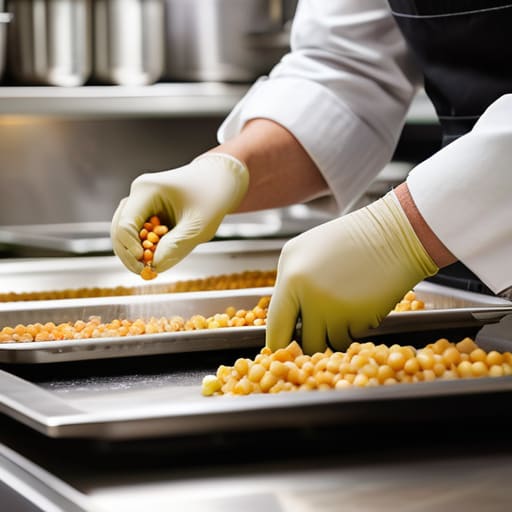
Let’s be honest: when you’re halfway through a lunch service and three different kids shout that their meal has something they can’t eat, your heart rate spikes. Most training manuals suggest a level of precision that is physically impossible when you have four staff members and a mountain of trays to move. My advice? Stop trying to achieve perfection across the entire menu and focus on managing food allergies in catering through strict, repeatable sequences. It isn’t about having a separate kitchen; it’s about the order of operations. If you prepare the allergen-free meal last, using freshly cleaned equipment and dedicated utensils, you’ve already mitigated 90% of your risk.
Don’t get bogged down in complex special diet meal planning that requires a degree in biochemistry. Instead, build robust dietary accommodation protocols that rely on visual cues. Use colour-coded boards or specific prep zones that stay consistent every single day. If your staff knows that “purple means dairy-free,” they don’t have to stop and think when the rush hits. You need controls that are automatic, not things that require a staff member to pause and consult a binder while the service queue grows.
Identifying Gluten Free and Vegan Options Through Reliable Protocols
When we talk about identifying gluten-free and vegan options, I see too many kitchens treating it as a “substitution” game rather than a protocol. It isn’t enough to just swap butter for oil or bread for a gluten-free alternative; you have to look at the entire production chain. If you are using a shared slicer for ham and then a “clean” knife for a vegan deli option, you haven’t actually provided a vegan meal—you’ve provided a meat-contaminated meal. You need dietary accommodation protocols that are baked into the workflow, not tacked on as an afterthought when a child presents a specific requirement.
Effective special diet meal planning relies on knowing exactly what is in your pantry, not just what is on the label. I’ve seen staff confidently swear a sauce is vegan, only for me to find thickener containing milk powder in the back of the cupboard. To make this sustainable, stop relying on memory. Use a standardised ingredient checklist for every single batch cooked. If the staff can’t verify the ingredient against a written master list, the meal doesn’t go out. It’s about building a system where the “boring” paperwork actually prevents the error before the plate leaves the hatch.
Five Practical Rules for When the Rush Hits
- Stop relying on memory. If a child has a dairy allergy, that requirement needs to be written on the service ticket or the prep list, not just “remembered” by a busy kitchen assistant during the lunch rush.
- Control your flow, not just your ingredients. You can buy the most expensive gluten-free pasta in the world, but if you boil it in the same pot as the regular wheat pasta, you’ve just wasted your money and created a massive risk.
- Make your allergen labeling idiot-proof. If a staff member has to go hunting through a folder of ingredient specs to figure out if a sauce contains soy, your system has already failed. It needs to be visible and instant.
- Don’t let “close enough” become your standard. I’ve seen too many kitchens assume a dish is vegan because they “think” it’s plant-based; if you aren’t 100% sure about the fat or the stock, don’t label it as such.
- Audit your cleaning sequence, not just your cleaning products. It’s not about how much bleach you use; it’s about making sure the specialized equipment for special diets is cleaned and put away before the general prep begins.
The Bottom Line for Your Kitchen
Stop chasing perfection across the whole menu and start mastering your high-risk controls; if you can’t guarantee a 100% allergen-free kitchen, you must be able to guarantee the accuracy of your labeling and the integrity of your preparation sequence.
Documentation isn’t just for the inspector—use your temperature and cleaning logs as your safety net so that when things get chaotic during a lunch rush, you actually have a record of what was done right.
Focus your limited staff energy on the “boring” stuff that actually prevents incidents: clear communication between the front-of-house and the kitchen, and a rigid discipline regarding cross-contamination during peak service.
Frequently Asked Questions
How do I actually prove to a parent or a care manager that my 'gluten-free' meal didn't touch a floury surface during prep?
You don’t prove it with a verbal promise; you prove it with your cleaning sequence and your logs. If a parent asks, show them your “gluten-free prep protocol”—the specific time of day you prep those meals, the dedicated equipment used, and the signed-off cleaning schedule for those surfaces. It’s not about being perfect; it’s about showing that you have a repeatable, documented system that prevents the flour from ever reaching that plate.
When we’re short-staffed on a Tuesday lunch rush, what is the one non-negotiable check I shouldn't skip for special diets?
It’s the verbal hand-off. When the rush hits and your team is scrambling, the paperwork might be perfect, but if the person plating the meal hasn’t explicitly confirmed the specific requirement with the person who took the order, you’re flying blind. Don’t skip the verbal check. Make them say it out loud: “This is the dairy-free pasta for table four.” It takes five seconds, but it’s the only thing standing between a busy service and an emergency call.
If a supplier changes their ingredients mid-term without telling me, how do I catch it before it hits the plate?
You can’t rely on your memory, and you certainly can’t rely on the supplier’s word alone. The moment a delivery arrives, make it a non-negotiable rule: check the label against the spec sheet you have on file. If the brand or the ingredient list has shifted—even slightly—stop the service. Don’t just assume “it’s the same stuff.” A change in a manufacturer’s recipe is often the silent killer in school catering.