I remember standing in a school kitchen back in 2014, the air thick with the smell of overcooked pasta and the frantic energy of a team that was clearly drowning. The manager showed me a beautiful, glossy three-week rotation binder, but when I looked at the actual prep list, it was a disaster. They had planned a menu that required five different types of specialized allergens to be handled simultaneously, all while running with only two trained staff members on the morning shift. Most people think that learning how menu cycles are planned is about finding the perfect balance of nutrition and cost, but in a real-world kitchen, that’s a lie. If you don’t plan for the human reality of your staff and the physical limits of your equipment, your cycle isn’t a plan—it’s a ticking time bomb.
I’m not here to give you a theoretical lecture from a textbook or suggest expensive software that no one has time to update. I want to talk about the grit of it: how you actually build a rotation that stays safe when the delivery is late or a staff member calls in sick. I’ll show you how to align your menu with your actual capacity, focusing on the practical controls that keep food safe without breaking your team.
Table of Contents
Operational Efficiency in Food Service Without the Chaos
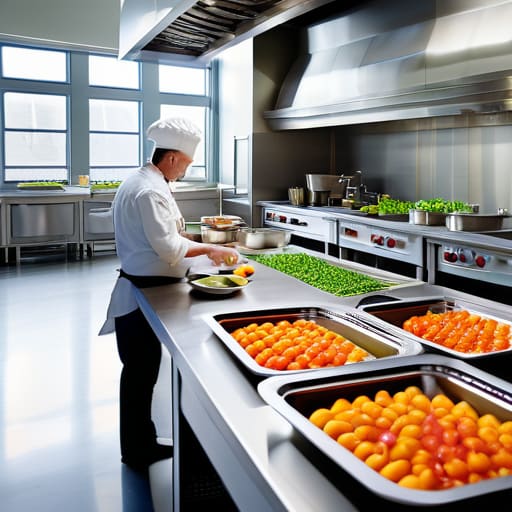
When I walk into a kitchen during a mid-week lunch rush, I’m not just looking at the plates going out; I’m looking at the flow of the room. If your menu cycle is a chaotic mess of fifty different ingredients, your staff will be fighting the kitchen instead of managing it. Real operational efficiency in food service isn’t about having the fanciest recipes; it’s about how those recipes interact with your prep space and your people. If a menu requires three different chefs to prep three different specialty sauces at the same time, you aren’t planning a menu—you’re planning a breakdown.
The secret to a sustainable rotation lies in ingredient cross-utilization strategies. If you’re buying a specific herb or a particular cut of meat for a Monday special, that ingredient needs to have a purpose elsewhere in the week. This isn’t just about being clever with your budget; it’s about reducing the mental load on your team. When the ingredients are consistent and the prep follows a logical pattern, the risk of someone skipping a critical temperature check or a cleaning step because they are “too busy” drops significantly.
Ingredient Cross Utilization Strategies for Overstretched Staffs
When I walk into a school kitchen during a mid-week rush, I’m looking for how many different prep tasks are happening simultaneously. If your team is chopping five different types of vegetables for five different dishes, you’ve already lost the battle. Effective ingredient cross-utilization strategies aren’t about being clever or trendy; they are about survival. If you use spinach in a pasta bake on Tuesday, use it in a smoothie or a frittata on Thursday. It keeps your stock turning and, more importantly, it means your staff aren’t constantly reaching for new, unwashed containers every ten minutes.
This isn’t just about saving pennies; it’s a core part of food cost management in menu planning that actually protects your safety margins. When you limit the variety of raw ingredients moving through the kitchen at any one time, you naturally reduce the risk of cross-contamination. It is much easier to manage allergen controls and temperature checks when you aren’t juggling thirty different SKU numbers. If you can streamline your prep by using versatile, high-quality ingredients across the cycle, you give your staff the breathing room to actually follow the procedures rather than just rushing to get the service out.
Five Ways to Plan a Cycle That Actually Survives a Tuesday Rush
- Build in your ‘buffer’ days. Don’t try to run a high-complexity, new-recipe rotation seven days a week. Plan for a “standard” rotation, but leave gaps for the days when the delivery is late or two staff members call in sick. If your cycle is too tight, that’s when the temperature logs get ignored and the prep gets rushed.
- Map your allergen complexity across the week. If you put your most allergen-heavy, “special request” meals on the same day you have your most complex prep, you are asking for a mistake. Spread the high-risk dishes out so your team has the mental headspace to manage the cross-contamination risks properly.
- Align your prep with your delivery schedule, not just your menu. A menu cycle is useless if it forces you to do massive amounts of prep on the same day the heavy deliveries arrive. You need a rhythm where the prep work is staggered so you aren’t fighting for sink space and fridge room all at once.
- Audit your “hidden” prep time. When planning a new cycle, don’t just look at the cooking time; look at the cleaning and setup time. If a dish requires three different pans and a specialized piece of equipment that’s hard to clean, it’s going to slow down your entire service, regardless of how good it looks on paper.
- Test the cycle with real-world staffing levels. Before you commit to a four-week rotation, run it against your most difficult shift. If you can’t execute the cycle when you’re down to your minimum safe staffing level, then the cycle isn’t well-planned—it’s a fantasy.
The Bottom Line: What Actually Matters When the Lunch Rush Hits
Stop planning menus for a dream team; plan them for the staff you actually have on a Tuesday morning, because a complex recipe is just a massive food safety risk waiting to happen when people start rushing.
Cross-utilization isn’t just about saving money on stock; it’s about reducing the number of different ingredients your team has to manage, label, and track for allergens in a single shift.
If your menu cycle doesn’t build in “breathing room” for deep cleaning and temperature checks, you aren’t being efficient—you’re just setting yourself up for a preventable incident.
Frequently Asked Questions
How do I balance a diverse menu that keeps kids interested without making my prep list so long that my team starts skipping the temperature checks?
The trick is to stop treating “variety” as a list of different ingredients and start treating it as a list of different applications. Use your core proteins and seasonal veg across three different flavor profiles. If you’re serving roasted chicken on Monday, use the same prep for a mild curry on Wednesday. This keeps the kids from getting bored, but keeps your prep list—and your team’s mental bandwidth—short enough that they actually have the headspace to check those fridge temps.
If we change our menu cycle to save money on ingredients, how do I make sure my allergen information stays accurate and doesn't get lost in the shuffle?
Changing a menu to save pennies is fine, but if you swap a sauce to cut costs and forget to update the allergen matrix, you’ve just created a crisis. Don’t rely on memory. Every time a recipe changes, the paperwork must change immediately. I’ve seen too many “small” swaps lead to massive mistakes. Make it a rule: no new ingredient enters the kitchen until the allergen folder is updated. If the paperwork doesn’t match the pot, the menu isn’t finished.
When we're short-staffed on a Tuesday, how much flexibility should I actually build into the cycle so we aren't compromising on food safety just to get the service out on time?
Build in a “safety valve” meal—something that requires minimal prep and uses stable, pre-portioned ingredients. If you’re down two staff members on a Tuesday, you shouldn’t be attempting a complex, multi-stage recipe that relies on precise temperature control or intensive manual handling. Don’t aim for culinary perfection when you’re drowning; aim for a controlled, repeatable meal that your remaining team can execute safely without rushing the cooling or reheating stages.