I’ve sat in enough school dining halls to know that most people get how packed lunch policies are written completely wrong. They treat it like a legal exercise, churning out twenty-page documents filled with academic jargon and impossible-to-follow mandates that assume every parent is a nutritionist and every teacher is a forensic scientist. I remember standing in a primary school corridor after a near-miss with a peanut allergy; the policy on the wall was a masterpiece of compliance, but it was utterly useless in the chaos of a thirty-minute lunch break. It was a piece of paper designed to protect the school’s reputation, not the children’s throats.
I’m not here to give you more bureaucracy to file away in a cabinet. My goal is to show you how to strip away the fluff and build a policy that actually works when the lunch bell rings and the room goes loud. I will tell you how to focus on the few critical checkpoints that matter—like clear allergen communication and manageable rules—so you can create something realistic and sustainable. Let’s stop writing for the auditors and start writing for the people actually running the room.
Table of Contents
Balancing Nutritional Guidelines for Schools With Real World Chaos
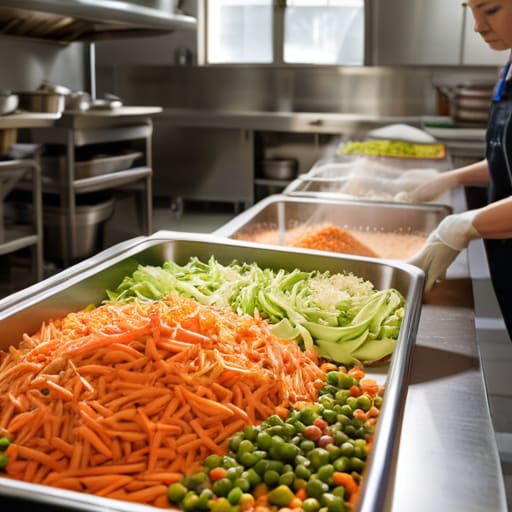
When you sit down to draft these policies, there is a massive temptation to follow the nutritional guidelines for schools to the letter, creating a document that looks beautiful on a headteacher’s desk but is utterly useless in a service window. I have seen too many policies that demand complex, multi-ingredient meal components that require specialized prep time which a small, stretched team simply doesn’t have. If your policy requires a chef to prep five different types of fresh produce for a single lunch service while simultaneously managing allergy alerts, you aren’t writing a guide; you’re writing a recipe for burnout and error.
The trick is to bridge the gap between high-level standards and the reality of implementing dietary restrictions during a chaotic midday rush. You have to account for the fact that staff are often multitasking, moving between cleaning, serving, and prep. Instead of aiming for perfection across every single meal, focus your policy on the non-negotiable nutritional pillars that are easy to track even when the kitchen is at its loudest. A policy that is eighty percent achievable is infinitely safer than one that is a hundred percent ideal but ignored because it is impossible to sustain.
Stakeholder Involvement in Policy Making That Actually Sticks
If you want a policy that sits in a binder gathering dust, write it alone in an office. But if you want something that actually functions when the lunch bell rings, you need genuine stakeholder involvement in policy making. That means sitting down with the kitchen manager who is currently juggling three different prep lists, not just the headteacher or the board members. I’ve seen too many policies that look brilliant on paper but fall apart because they didn’t account for the reality of a two-person team trying to manage implementing dietary restrictions during a forty-minute service window.
You also have to include the parents and, frankly, the kids. If a policy is too restrictive without explaining the ‘why’—the safety aspect or the nutritional necessity—you’ll just end up with a constant battle of wills at the school gate. When you bring the people who actually handle the food and the people who pack the bags into the conversation, you move away from policing and toward shared responsibility. It’s about finding that sweet spot where the rules are firm enough to keep children safe, but flexible enough to be realistic for a busy household.
Five Rules for Writing a Policy That Doesn't End Up in the Bin
- Stop writing for the auditors and start writing for the person on the playground. If your policy requires a teacher to cross-reference a complex allergen matrix while supervising sixty energetic eight-year-olds, it isn’t a policy; it’s a liability. Keep the instructions blunt, visual, and impossible to misunderstand during the mid-morning rush.
- Focus on the “Red Line” allergens rather than the entire spectrum. You can’t police every single ingredient in every single lunchbox, and trying to do so will just exhaust your staff. Instead, write your policy around the high-risk, non-negotiable triggers—the ones that actually land a child in A&E—and make those the clear, unshakeable boundaries.
- Build in a “reasonable doubt” clause. A good policy acknowledges that a child might have a smear of peanut butter on a wrapper or a stray crumb. Instead of demanding perfection, which leads to staff hiding mistakes, write procedures for what happens when a breach is suspected. It’s about managing the response, not just the prevention.
- Ditch the jargon-heavy “compliance language.” If your policy reads like a legal contract, your kitchen and classroom staff won’t read it, and if they don’t read it, they won’t follow it. Use plain English. Tell them exactly what they need to check, how often to check it, and what to do if the answer is “no.”
- Mandate a “stress test” before the policy goes live. Before you print fifty copies and send them to parents, take your draft to the person who actually manages the lunch hall. Ask them: “In the middle of a chaotic Tuesday, could you actually follow this?” If they hesitate, scrap the section and rewrite it.
Three Things to Remember When Drafting Your Policy
Stop writing for the auditor and start writing for the person on the floor; if a policy is too complex for a busy kitchen staffer to follow during a lunch rush, it isn’t a safety measure, it’s just expensive fiction.
Focus your energy on the high-risk “non-negotiables”—like allergen communication and temperature control—rather than trying to micromanage every minor detail that doesn’t actually move the needle on safety.
A policy only works if the people expected to implement it have had a hand in shaping it; if you haven’t asked the team who handles the actual food how a rule will impact their workflow, don’t be surprised when they ignore it.
Frequently Asked Questions
How do I write a policy that keeps kids safe from allergens without making the lunchtime rush an absolute nightmare for the staff?
Stop trying to ban every nut and seed in the county; you’ll just end up with a policy that staff ignore because it’s impossible to enforce. Instead, focus your policy on the “handover.” Write clear, non-negotiable rules for how lunches are checked at the door and how staff communicate high-risk items. If the policy relies on a chef reading a tiny label during a thirty-minute service window, it’s a failed policy. Design for the chaos, not the ideal.
If my school budget is already stretched thin, what are the absolute non-negotiable parts of a lunch policy that I shouldn't cut?
If you’re cutting, cut the fluff, not the safety. You can skip the fancy “educational workshops” on seasonal vegetables, but you cannot skip allergen protocols. That is non-negotiable. You also can’t compromise on clear, written procedures for cross-contamination and temperature control. If your budget is tight, focus your policy on these high-stakes checkpoints. A policy that tells staff exactly how to handle a nut allergy is worth more than ten pages of nutritional theory.
How much of the policy should actually be about nutrition versus how much should be about the practicalities of food safety and hygiene?
Look, if you spend eighty percent of your policy talking about macro-nutrients but forget to mention how to handle a nut-free zone during a lunch rush, you’ve failed. Nutrition is the goal, but food safety is the foundation. I’ve seen “healthy” policies fall apart because they didn’t account for cross-contamination risks. Focus heavily on the hygiene practicalities—storage, allergens, and temperature—and keep the nutritional guidance as the standard they’re aiming for. Safety keeps them alive; nutrition keeps them well.