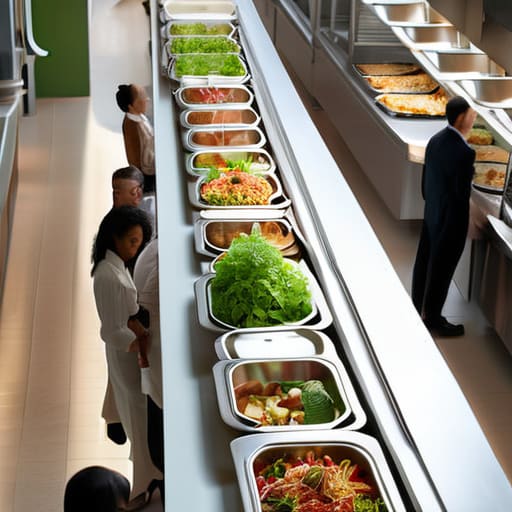
I remember standing in a secondary school kitchen three years ago, the steam from a massive vat of pasta hitting my face, while a Year 9 student sat in the corner of the dining hall, staring at a tray of food like it was a puzzle he couldn’t solve. It wasn’t that there wasn’t enough food; it was the way he was eating—or rather, the way he wasn’t. People love to talk about food insecurity in abstract, academic terms, but when you’re on the floor, you see how food insecurity shows up in schools through the quiet, hollow-eyed kids who skip lunch to save it for later, or the ones who suddenly become “allergic” to the only nutritious thing on the menu because they’re too embarrassed to be seen eating it.
I’m not here to give you a lecture on socio-economic policy or suggest you need a million-pound grant to fix the system. I know your budget is tight and your staff is stretched to the breaking point. Instead, I’m going to tell you what I’ve seen work on the ground: the small, unsung adjustments to meal service and kitchen culture that actually catch these kids before they slip through the cracks. We’ll focus on what is realistically sustainable in a high-volume kitchen, because if a solution isn’t practical, it isn’t a solution.
Table of Contents
Spotting the Behavioral Signs of Hunger in Children

When I’m walking through a dining hall, I’m not just looking at the trays; I’m looking at the kids. Hunger doesn’t always look like a child crying for a sandwich; in a school setting, it’s often much quieter and more disruptive. You’ll see it in the child who becomes uncharacteristically irritable during a quiet reading period, or the one who seems to have lost their “edge” in class. These behavioral signs of hunger in children often masquerade as ADHD or simple defiance, but more often than not, they are just the physiological fallout of an empty stomach.
It is a mistake to assume a student is fine just because they aren’t visibly frail. The impact of malnutrition on academic performance is frequently subtle—a sudden drop in concentration, lethargy by 2:00 PM, or even a strange fixation on food during lessons. If you are tasked with identifying food insecure students, don’t just look for the obvious gaps; look for the patterns of fatigue and the emotional volatility that comes when a brain is running on fumes. It isn’t about being a detective; it’s about noticing when a child’s baseline has shifted.
Identifying Food Insecure Students Before the Crisis Hits
You don’t need a spreadsheet to tell you when a child is struggling; you usually see it in the way they interact with the lunch line. I’ve spent enough time in school corridors to know that identifying food insecure students isn’t about looking for the obvious signs of neglect, but about noticing the subtle shifts in routine. It’s the student who suddenly stops bringing a packed lunch, or the one who seems strangely hesitant to join in during snack times. Sometimes, it’s as simple as seeing who is consistently the last to finish their meal, or who seems to be “grazing” on whatever scraps are left behind.
We also have to look at the classroom connection. There is a direct, undeniable impact of malnutrition on academic performance that manifests long before a child fails a test. If a student is lethargic, irritable, or simply unable to focus during a mid-morning lesson, we shouldn’t just assume they are “acting out.” Often, they are just running on empty. By the time a child is showing severe student hunger symptoms, we are already playing catch-up. The goal is to catch that quiet withdrawal early, before the physical toll becomes a crisis.
Practical Ways to Bridge the Gap Without Breaking the Budget
- Watch the “end-of-service” patterns. If you notice the same group of students hovering near the serving hatch or asking for “just a little more” of the most calorie-dense items right as you’re trying to clear down, they aren’t just being greedy; they’re likely trying to make a meal last until tomorrow morning.
- Listen for the “lunchbox excuses.” I’ve seen it a thousand times—students who suddenly claim they “forgot” their lunch or that their parents “didn’t have time” to pack anything. When the excuse feels a bit too rehearsed, it’s usually a sign that the fridge at home is empty.
- Keep a low-profile “emergency stash” that doesn’t feel like charity. If a child is visibly struggling, handing them a pre-packaged, shelf-stable item like a granola bar or a fruit pot feels less like a handout and more like a standard part of the kitchen’s flow. It preserves their dignity, which is half the battle.
- Monitor the waste bins, but look at what isn’t being eaten. If you see high-quality proteins or vegetables being tossed aside by a specific group of students, it might not be pickiness; it could be that their bodies are so used to high-carb, low-nutrient filler that they’ve lost the appetite for the “good stuff” we’re trying to serve.
- Build a “no-questions-asked” breakfast protocol. We can’t solve systemic poverty in a school kitchen, but we can make sure the breakfast cart is moving ten minutes earlier than usual. If we make the transition from the hallway to the eating area seamless and non-judgmental, we catch the kids who skipped breakfast because there was nothing in the cupboard.
Moving from Observation to Action
Don’t wait for a child to tell you they are hungry; by then, the behavioral shifts—the irritability or the lack of focus—have already happened.
Use your existing systems, like breakfast clubs or discreet meal vouchers, to bridge the gap without making the student feel like a target.
Focus on consistency over complexity; a reliable, predictable food service is more effective at stabilizing a hungry student than a complicated nutritional program that falls apart when staffing gets thin.
Frequently Asked Questions
How do I balance providing extra food to a student in need without making them feel singled out or embarrassed in front of their peers?
The trick is to make the “extra” part look like a standard procedure, not a charity case. I’ve seen schools implement “no-questions-asked” breakfast grab bags or discreet snack stations near the exit. If every kid has the option to grab a piece of fruit or a granola bar as they walk in, the student in need doesn’t feel like they’re being singled out; they’re just participating in the routine. Normalise it.
When a child is clearly struggling, what are the immediate, practical steps my kitchen staff can take without disrupting the service flow for the rest of the school?
Don’t try to turn your serving line into a counseling session; you’ll lose the flow and the kid will feel the spotlight. Instead, build “quiet options” into the routine. If a student is struggling, have a pre-arranged, discreet way to offer an extra portion or a grab-and-go snack bag—something they can take without a spectacle. It’s about making the extra help feel like a standard part of the service, not a charity case.
If I suspect a student is experiencing food insecurity, how do I flag this to the right people without overstepping my role as a catering provider?
Look, you aren’t a social worker, and you shouldn’t try to be. Your job is to feed the kids, not to perform a welfare check. If you notice a student consistently skipping meals or looking particularly hollowed out, don’t make it a thing in front of them. Just make a quiet note and pass it to your site manager or the school’s designated safeguarding lead. They have the protocols; you just have the eyes on the ground.