I remember standing in a secondary school kitchen three years ago, the air thick with the smell of overboiled broccoli and the frantic shouting of a mid-service rush. I watched a cook reach for a block of cheddar with the same knife she’d just used to slice a vegan cheese alternative, and it hit me: nobody was actually thinking about how vegan provision is planned; they were just trying to survive the lunch hour. Most of the “expert” advice out there suggests you need a complete overhaul of your supply chain or a dedicated, high-tech vegan station to do this right. That is complete nonsense. In a real kitchen, where you’re juggling three different dietary requirements and a broken dishwasher, you don’t need a revolution; you need a practical workflow that doesn’t rely on luck.
I’m not here to sell you on expensive new equipment or complex dietary spreadsheets that will just end up gathering dust in a folder. Instead, I’m going to show you how to build a sustainable, low-stress system that works within the constraints of your actual staff and budget. We are going to look at the unglamorous, essential bits—like physical separation and smart ingredient substitution—that ensure your vegan meals are safe, consistent, and actually edible.
Table of Contents
Securing Essential Amino Acid Profiles Without Chaos
When I’m looking at a school menu, I’m not just checking if there’s a green option; I’m looking to see if that option actually sustains a child through a long afternoon of maths and PE. The biggest mistake I see in large-scale catering is treating vegan meals as an afterthought—a side of plain pasta or a salad that leaves kids hungry an hour later. To avoid this, you have to move away from “filler” foods and focus on plant-based nutrient density. If you aren’t building those meals around legumes, grains, or soy, you aren’t really providing a meal; you’re just providing a snack.
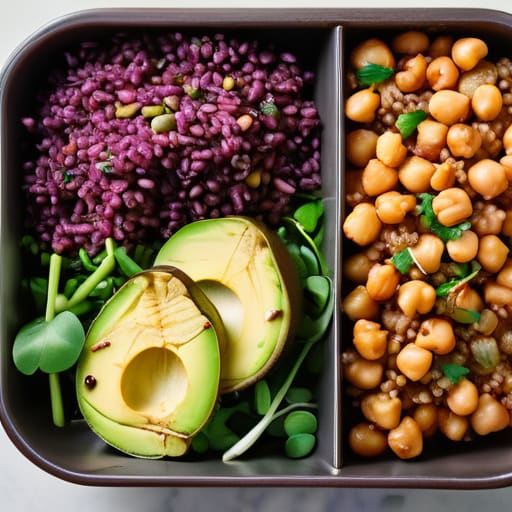
The real headache for a busy kitchen manager is ensuring essential amino acid profiles are met without needing a degree in biochemistry. You don’t need complex science; you need reliable, repeatable combinations. Pairing a grain with a pulse—think bulgur wheat with chickpeas or rice with lentils—is the simplest, most foolproof way to ensure the kids get what they need. It’s a small, boring logistical step in the prep stage, but it’s the difference between a balanced menu and one that leaves your most vulnerable students struggling.
Managing Plant Based Nutrient Density on a Budget
Here is the reality of school catering: you aren’t working with a limitless budget or a team of nutritionists. When you’re trying to hit targets for plant-based nutrient density while keeping the cost per plate down, the temptation is to lean heavily on processed meat alternatives. They’re easy, they’re consistent, and they don’t require a complex prep list. But they are expensive, and they often bring a sodium load that makes me wince when I look at the nutritional breakdown.
If you want to do this properly without breaking the bank, you have to lean on the “boring” staples: lentils, chickpeas, and oats. These are your workhorses. They are cheap, shelf-stable, and provide the bulk of what your students need. The trick isn’t in fancy substitutions; it’s in how you batch-cook them. I tell my kitchen teams to stop thinking about “vegan meals” as a separate, difficult category and start seeing them as efficient use of legumes. If you can master a consistent, high-volume bean or lentil base, you solve the density problem and the budget problem in one go.
Five Practical Guardrails for the Vegan Service
- Stop trying to make every meal “accidentally” vegan; if you are serving a plant-based option, label it clearly and keep it physically separate from the dairy during prep to avoid the cross-contact nightmare that keeps me up at night.
- Don’t overcomplicate your prep list with exotic meat substitutes that drive up costs and require special storage; stick to reliable, low-cost staples like lentils or chickpeas that your team already knows how to handle safely.
- Prioritise a “clean-as-you-go” sequence specifically for plant-based prep; if you’re using the same boards for vegan prep and then immediately slicing ham, you aren’t managing risk, you’re just waiting for an incident.
- Check your seasoning storage—it sounds trivial, but I’ve seen too many kitchens use a shared shaker for salt that has been contaminated by flour or dried milk, which completely invalidates your vegan claims.
- Build your vegan menu around “stable” proteins that don’t require high-stakes temperature monitoring the second they leave the pot, because I know you don’t have the luxury of a dedicated staff member standing over a vegan buffet for forty minutes.
The Bottom Line: What Actually Matters When the Lunch Bell Rings
Stop chasing perfection and start chasing separation; if you can’t manage a complex vegan-only prep station, at least ensure your plant proteins and dairy are physically distanced during the rush to prevent cross-contamination.
Prioritize the “boring” stuff—keep your fortified milk alternatives and legumes tightly controlled and well-labeled, because a nutritional gap is a headache, but a mislabeled allergen is a catastrophe.
Build your menu around staples that are naturally nutrient-dense rather than expensive “superfoods”; lentils, beans, and oats are cheap, reliable, and much easier for a busy team to manage than complicated meat substitutes.
Frequently Asked Questions
How do I manage the increased risk of cross-contamination when my kitchen staff is already juggling multiple dietary requirements during a busy lunch service?
Stop trying to manage every single allergy simultaneously during the rush; you’ll lose track and someone will get sick. Instead, lean on physical separation. Designate one specific “safe zone” on your prep bench and one set of color-coded utensils that never leave it. If you’re short-staffed, don’t let the person handling the dairy touch the vegan prep. It’s better to have a slightly slower service than a child in an ambulance.
If we can't afford a dedicated vegan prep area, what is the most realistic way to prevent allergen errors without slowing down the whole line?
If you can’t afford a separate room, stop trying to invent a complex new workflow. It’ll just break when the lunch rush hits. Instead, focus on “temporal separation.” Do your vegan prep first thing in the morning when the surfaces are clean and the kitchen is quiet. Use dedicated, colour-coded boards and knives that stay in a specific spot. If you can’t separate by space, separate by time and tools. It’s boring, but it works.
What are the absolute minimum temperature controls I need to document for plant-based milk and meat alternatives to satisfy an inspector?
Forget the complex spreadsheets. To satisfy me, you need two things: a consistent fridge temperature log and a clear record of your delivery checks. For plant-based milks and meat alternatives, I’m looking for proof they’ve stayed below 5°C from the moment they hit your loading bay to the moment they’re opened. If your fridge log is blank or shows fluctuations, the contents don’t matter—you’ve already lost the argument. Keep it simple, keep it accurate.