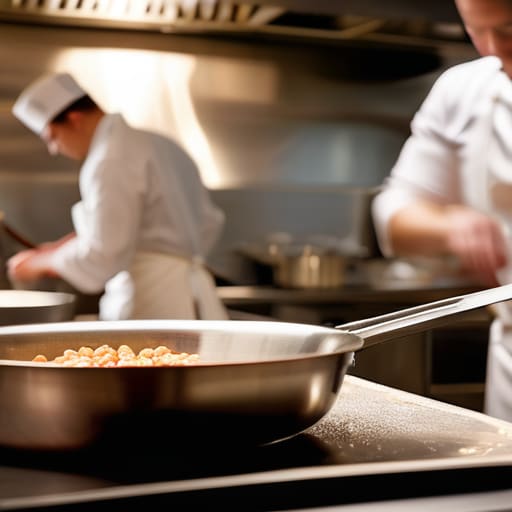
I remember standing in a secondary school kitchen three years ago, watching a team of three exhausted staff members try to manage a self-service buffet for five hundred teenagers. The chaos was deafening, but what actually worried me wasn’t the noise; it was seeing a student with a known dairy allergy reach for a roll that had been sitting next to a cheese-laden pasta dish for twenty minutes. People love to talk about the “student experience” or “aesthetic presentation,” but they rarely discuss the gritty reality of how service styles affect the dining hall when you’re short-staffed and under pressure. You can’t just pick a service model because it looks modern or saves five minutes on plating; you have to account for the unseen risks that emerge the moment the lunch bell rings.
I am not here to give you a glossy brochure on catering trends or expensive equipment you don’t need. Instead, I’m going to look at the actual mechanics of service—from line service to grab-and-go—and tell you exactly where your control points will fail. We are going to talk about what is actually sustainable for your team, focusing on how your choice of service dictates your ability to manage allergens, temperatures, and hygiene without breaking your staff in the process.
Table of Contents
Buffet vs Cafeteria Service Efficiency Where the Risks Hide
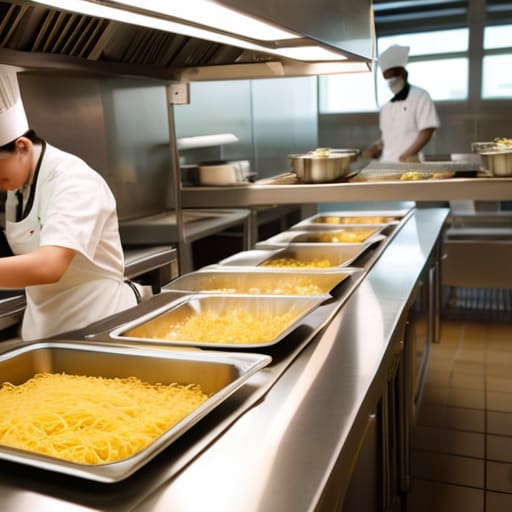
When I walk into a kitchen that has switched from a staffed cafeteria line to a self-service model, my eyes don’t go to the food first; they go to the staff. In a traditional cafeteria setup, you have a person behind every tray, which means you have a person controlling the portion and, more importantly, the temperature. You can see exactly who touched what. When you move toward a buffet-style setup to improve dining hall throughput and flow, you are essentially handing the keys of your food safety management over to the students.
The reality of buffet vs cafeteria service efficiency is that while you might save on labor costs, you are trading that for a massive increase in microbial risk. In a buffet, a student with unwashed hands can cross-contaminate a communal serving spoon, or worse, leave a tray of pasta sitting in the “danger zone” for twenty minutes while they chat with a friend. If you are going to commit to a self-service station layout, you cannot just “set it and forget it.” You need a rigorous, documented plan for how often those pans are swapped out and how you’re monitoring the heat. If you can’t commit to that level of oversight, stick to the service line.
Dining Hall Throughput and Flow Managing the Chaos
If you’ve ever stood at the end of a lunch line during a Friday rush, you know that “chaos” isn’t just a feeling; it’s a physical bottleneck that compromises safety. When we talk about dining hall throughput and flow, we aren’t just trying to get kids seated faster so they can get to recess. We are trying to prevent the exact moment when staff get overwhelmed and start cutting corners—like skipping a hand-wash or ignoring a temperature probe—just to keep the line moving.
A poorly designed self-service station layout is a recipe for disaster. If your students have to double back to grab a napkin or a spoon, you’ve just created a cross-traffic jam that increases the chance of spills and physical accidents. I’ve seen too many kitchens where the sheer friction of the movement causes the staff to lose their grip on the service. You need to design the path of least resistance. If the flow is logical, the staff can focus on the food and the kids, rather than acting as human traffic wardens.
Five Reality Checks for Choosing Your Service Model
- Don’t pick a buffet just because it looks easy; if you aren’t there to plate the food yourself, you’ve just handed over your temperature control and allergen management to a room full of hungry teenagers.
- If you move to a self-service model to save on staff, you must double your frequency of temperature checks, because once that food sits out, the clock is ticking faster than your paperwork can keep up with.
- Look at your physical layout before you commit to a service style; if the flow forces students to cross paths with the dirty tray return, you’re asking for cross-contamination issues that no amount of hand gel will fix.
- When choosing between pre-plated meals and a serving line, remember that pre-plating is your best friend for allergen accuracy, but it requires a level of prep-time discipline that many understaffed kitchens simply can’t sustain.
- Stop trying to implement a complex, multi-option service style if you only have two people on the floor; pick one method you can do safely and boringly every single day rather than three methods you do poorly.
The Bottom Line: Where to Focus Your Energy
If you choose a buffet or self-service model to save on staff, you are trading labor hours for increased risk; you must be prepared to double down on temperature monitoring and allergen signage to compensate.
Throughput isn’t just about speed; it’s about preventing the “bottleneck chaos” where staff get distracted, hygiene standards slip, and cross-contamination becomes an inevitability rather than a possibility.
Don’t try to implement a service style that your current staffing levels can’t realistically support—it is better to run a tight, controlled cafeteria line than a sprawling, unmonitored buffet that you can’t keep safe.
Frequently Asked Questions
If we move to a self-service buffet to cut down on staff, how do I stop the high-risk items from sitting in the danger zone for too long?
If you’re cutting staff by moving to a buffet, you’re trading labor for risk. You can’t leave a tray of pasta or chicken sitting out and hope for the best. My rule: keep high-risk items in smaller, frequent batches. Instead of one massive tray, use three small ones. Swap them out every twenty minutes. It’s more movement for your remaining staff, but it keeps the core of the food out of the danger zone.
Is it actually safer to have staff plating meals behind a counter, or does that just create a bottleneck that makes everyone rush and skip cleaning steps?
It’s a trade-off, plain and simple. Plating behind a counter is objectively safer for allergen control and portion accuracy—you aren’t leaving a tray of pasta next to a bowl of nuts for a student to grab. But if that counter creates a bottleneck, you’re asking your team to choose between speed and hygiene. If they’re rushing to clear the queue, they’ll skip the sanitizing wipe-down. Choose plating, but only if your flow allows it.
How do I manage allergen communication effectively if the students are the ones picking up their own trays and serving themselves?
Self-service is an allergen nightmare because you’re essentially handing the responsibility over to a child. If they’re picking up their own trays, you cannot rely on them reading tiny labels. You need clear, colour-coded signage at eye level and, more importantly, a “stop and ask” station. If a student looks unsure, they need a designated staff member right there to intervene. Don’t try to fix this with better printing; fix it with better supervision.