I remember standing in a school kitchen three years ago, watching a midday service descend into absolute chaos. The steam from the bain-maries was thick, the lunch queue was stretching into the hallway, and the person in charge was frantically trying to probe a massive tray of pasta while three different kids were shouting for more gravy. In that moment, I didn’t care about their expensive digital sensor arrays or their fancy automated logging software; I saw a team that had completely lost sight of how to control temperature through service because they were too busy reacting to the noise of the rush.
I’m not here to sell you on a new piece of kit or a complex manual that will just end up gathering dust in the office. My goal is to give you the practical, slightly unglamorous truth about managing heat and cold when you are stretched thin. We are going to focus on the realistic controls you can actually maintain when the bell rings and the pressure is on. I’ll show you where to tighten your discipline and where you can afford to breathe, so you can keep your food safe without losing your mind.
Table of Contents
Managing the Danger Zone Temperature Range Under Pressure
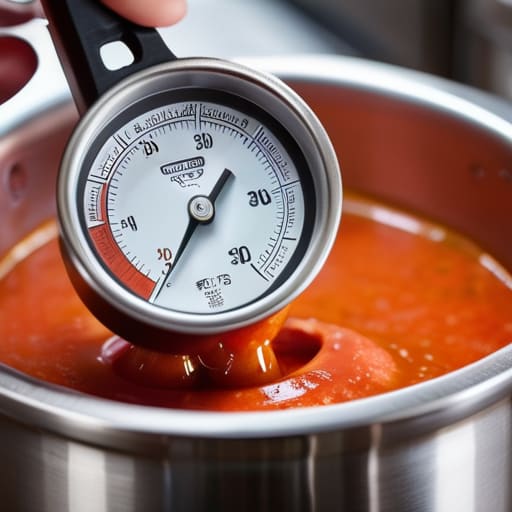
When the lunch bell rings and you’ve got three hundred hungry kids staring you down, the danger zone temperature range becomes your biggest enemy. In that rush, it is incredibly tempting to assume that if the bain-marie is steaming, everything is fine. It isn’t. I’ve seen too many kitchens rely on “visual cues”—like steam or a bubbling sauce—to justify skipping a check. Steam can lie, but a probe doesn’t. You don’t need to be checking every single pot every five minutes, but you do need to pick your battles. Focus your energy on the high-risk items—the meat, the dairy, the sauces—and ignore the bread rolls.
Realistically, you aren’t going to achieve perfect HACCP compliance monitoring if you’re trying to log every single movement in the kitchen. Instead, build a rhythm. If you are running a buffet-style service, your control isn’t about the thermometer alone; it’s about the rotation of the batches. Don’t keep one massive pot of gravy on the heat for three hours; pull smaller, manageable amounts and swap them out. It’s more work upfront, but it’s the only way to ensure you aren’t just managing the heat, but actually managing the risk.
Practical Haccp Compliance Monitoring for Busy Staff
Here is the reality of HACCP compliance monitoring: if your paperwork is so complicated that it takes twenty minutes to fill out, your staff will either skip it or lie to you. I have seen more “perfect” logs in school kitchens that were clearly filled out all at once at the end of a shift than I care to count. That isn’t safety; it’s fiction. To make it work, you need to strip the process down to what actually prevents a foodborne illness. Forget the massive binders for a moment and focus on the critical control points that matter during the rush.
Instead of asking staff to record every single movement, give them a streamlined way to track the high-risk windows. This means having a dedicated, easy-to-reach station for recording temperatures during the peak of service. If your team is struggling with thermometer calibration procedures, don’t make them do it mid-service; make it a five-minute ritual during the morning prep. Practical HACCP compliance monitoring isn’t about the volume of ink on a page; it’s about whether that data actually tells you if the food is safe to eat right now.
Five ways to keep the temperature stable when the lunch rush hits
- Stop the “open door” habit. I’ve seen so many service lines where the bain-marie door stays propped open because it’s easier for the staff to grab things, but you’re basically just letting your heat escape into the room. If you aren’t actively plating or serving from a specific tray, close the lid or the door. It sounds small, but it’s the difference between a stable temperature and a slow slide into the danger zone.
- Batch your service, don’t bulk-load. One of the biggest mistakes I see in school kitchens is pulling a massive pot of hot stew out of the oven and leaving it on the counter to “settle” before it hits the service line. Don’t do that. Move smaller, manageable quantities from the oven to the hot hold. It keeps the temperature consistent and prevents a giant mass of food from sitting in that lukewarm middle ground where bacteria love to throw a party.
- Respect the “chill-to-hot” transition. If you’re prepping components in advance, make sure they are actually cold before they hit the service line. I once walked into a kitchen where they were trying to put lukewarm pre-prepped veg into a hot bain-marie; they were essentially fighting against themselves. The hot hold is there to keep food hot, not to act as a secondary cooking or reheating stage.
- Check your equipment before the first plate goes out. I don’t care how busy you are; if the bain-marie hasn’t reached its set temperature before you start serving, you’re already behind. I’ve seen staff try to “make up for time” by serving food that hasn’t even hit the target temp yet. It’s better to be five minutes late with hot food than ten minutes early with lukewarm food.
- Use your eyes, not just your thermometer. Yes, you need the probe for the logs, but you also need to develop a sense for what “right” looks like. If you see steam struggling to rise or notice the sauce looks thicker/glazy in a way it shouldn’t, don’t just assume the equipment is fine because the digital readout says so. Trust your instincts—if it looks like it’s cooling down, it probably is.
The Bottom Line for Your Service
Stop trying to log every single movement; pick your three highest-risk holding points—like the main bain-marie or the high-volume salad fridge—and master those instead.
If your staff are too busy to check a temperature probe, they are too busy to be safe; build the check into the workflow, like checking the heat right before the lunch bell rings, not halfway through the rush.
A messy logbook is better than no logbook, but a logbook that ignores reality is useless; if a piece of equipment is failing, write it down and fix it, don’t just “correct” the numbers to make the paperwork look pretty.
Frequently Asked Questions
What do I do if a delivery arrives and the temperature is already hovering right on the limit?
Don’t just sign the delivery note because you’re in a rush to get the prep started. If it’s hovering right on the limit, it’s a warning shot. Check the ambient temperature of the van and the condition of the packaging first. If it looks suspect, reject it. I’ve seen too many “borderline” deliveries turn into a massive spike in your fridge temps an hour later. When in doubt, send it back.
If we're short-staffed and can't monitor every single batch, which specific high-risk foods should we prioritise for temperature checks?
Stop trying to chase every single tray; you’ll burn out and stop recording anything at all. If you’re short-staffed, focus your energy on the “big hitters”: high-risk proteins like poultry, minced meats, and fish, plus any dairy-based sauces or egg-based dishes. These are your non-negotiables. If you have the capacity, check your cooked rice and pasta too. If you can’t monitor everything, at least make sure these specific items stay out of the danger zone.
How do I handle staff who see temperature logging as a waste of time when they're trying to get service out the door?
I’ve been there. I’ve stood in a kitchen during a lunch rush where the staff looked at me like I was the enemy for asking for a log. Don’t fight them with theory; fight them with reality. Tell them: “I know this feels like busywork, but if a kid ends up in the hospital because this chicken was lukewarm, the paperwork is the only thing that proves you weren’t negligent.” Make it about their protection, not just the rules.