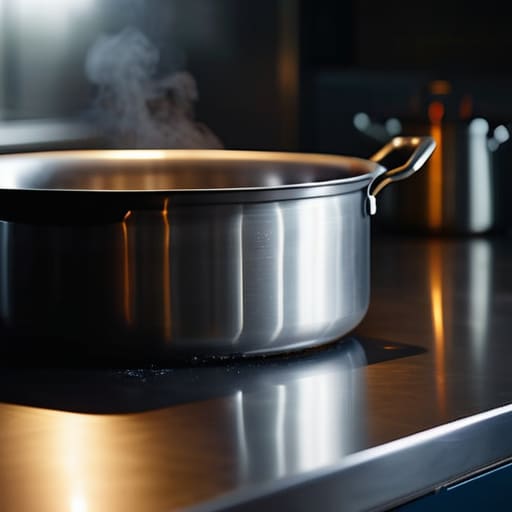
I remember standing in a school kitchen three years ago, staring at a massive, steaming vat of beef stew that had been sitting on the counter for two hours because the prep team was shorthanded and the dishwasher had broken down. They weren’t being lazy; they were just exhausted. It’s in these exact moments of chaos that we see how Clostridium perfringens finds its opening. Most textbooks make it sound like a high-tech biological failure, but in reality, understanding how Clostridium perfringens causes outbreaks is usually just a matter of looking at a pot of gravy that stayed in the “danger zone” a little too long because the staff was too busy to move it to the blast chiller.
I’m not here to lecture you with academic jargon or sell you on expensive, unnecessary equipment that your budget won’t allow. Instead, I’m going to tell you exactly what I’ve learned from sixteen years of inspecting kitchens when things go wrong. We are going to focus on the practical, boring controls—like realistic cooling schedules and smarter batch cooking—that actually stop these spores from turning a standard Tuesday lunch into a massive health incident.
Table of Contents
Bacterial Spore Formation and the Limits of Boiling
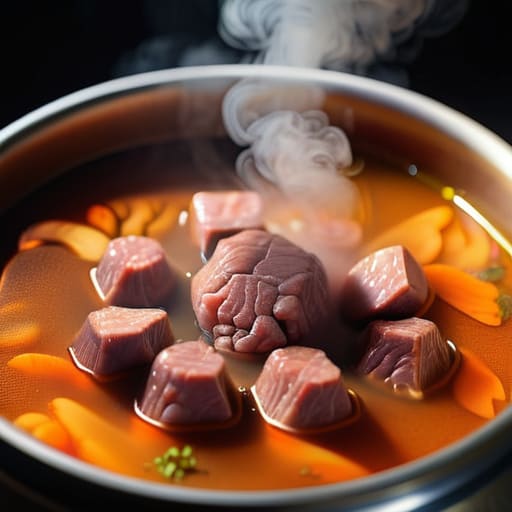
Here is the problem with relying on a quick reheat to save a batch of stew: Clostridium perfringens isn’t your average, sensitive bacterium. Most pathogens die off when things get hot, but these guys have a survival strategy called bacterial spore formation. Think of a spore like a tiny, armored bunker. When the environment gets harsh—like when you boil a pot of soup—the bacteria don’t just die; they tuck their DNA into these indestructible shells and wait.
I’ve walked into countless school kitchens where a massive pot of gravy or a thick lentil soup was left sitting on a counter because the team was too busy to deal with it immediately. They think, “It’s boiling, it’s fine.” But once that pot starts to cool down, those spores “wake up” and turn back into active, multiplying bacteria. This is where the real large scale catering risks hide. If you don’t use proper food cooling techniques to get that food through the danger zone quickly, you aren’t just serving leftovers; you’re essentially providing a high-speed incubator for a massive outbreak.
Large Scale Catering Risks in the Danger Zone Temperature
The real trouble starts when we talk about volume. In a domestic kitchen, a pot of stew cools down in an hour or two. In a school or care setting, you’re often dealing with massive, deep-sided catering pots that hold enough gravy or stew to feed a small village. This is where large scale catering risks become a reality. Because of the sheer mass of the food, the core temperature stays in the danger zone temperature—that window between 8°C and 60°C—for far too long. Even if you put the pot in the walk-in, the center stays warm, providing a perfect, insulated incubator for those spores to wake up and start multiplying.
I’ve walked into kitchens where the staff are working flat out, and I know they aren’t trying to cause an outbreak; they’re just trying to get through the service. But if you aren’t using proper food cooling techniques—like breaking large batches down into smaller, shallow containers—you are essentially setting a trap. You can’t rely on “luck” or “the heat of the oven” to save you; you need a controlled, rapid descent through those middle temperatures to keep the bacteria at bay.
Five Ways to Stop the Spore Problem Before It Starts
- Stop the “Big Pot” Habit. If you are making a massive batch of stew or gravy, don’t just leave the pot on the counter to “cool down naturally.” That middle section of a deep pot stays in the danger zone for hours, providing the perfect incubator for spores to wake up. Use shallow pans or an ice bath to get that core temperature down fast.
- Trust the Probe, Not Your Gut. I have seen too many cooks touch a lid and think, “That feels cool enough.” You cannot feel the temperature of a thick sauce with your hand. If you aren’t using a calibrated probe to check that you’ve hit the target cooling rate, you aren’t managing risk; you’re just guessing.
- Reheating is Not a Reset Button. If a batch of food has sat out too long or was cooled too slowly, reheating it to 75°C won’t save you. Remember: boiling kills the bacteria, but it doesn’t kill the spores. Once those spores have woken up and started multiplying, you’ve already lost the battle.
- Prioritise Your Cooling Logs. I know, the paperwork feels like a chore when you’re short-staffed, but the cooling log is your only evidence that you’ve actually managed the danger zone. If you don’t have time to write it down, you probably haven’t actually monitored the temperature, and that’s where the outbreaks live.
- Small Batches, Frequent Rotation. If you are running a school kitchen on a tight schedule, stop trying to prep everything in one go. It is much safer—and often more efficient—to cook smaller, manageable quantities that can be cooled and stored quickly, rather than wrestling with a 20-litre cauldron that takes half a day to reach a safe temperature.
The Bottom Line for Your Kitchen
Boiling doesn’t reset the clock; if you’re reheating a massive pot of stew that wasn’t cooled properly, you’re just warming up a colony of spores that have already survived the heat.
The danger isn’t just “leaving food out”—it’s the sheer volume of it; large batches of gravy, sauces, or stews hold heat in the centre for hours, creating a perfect, uninterrupted incubator.
Forget perfection; focus on the cooling curve—if you can’t get that bulk food from 60°C to 20°C within two hours, you need to change how you portion it out before it even hits the fridge.
Frequently Asked Questions
If the spores survive the initial cook, how can I be sure my reheating process is actually killing the bacteria that's grown since?
You can’t just “warm it up” and hope for the best. If those spores have woken up and started multiplying, a lukewarm reheat is just feeding them. You need to hit a core temperature of at least 75°C—and I mean core, not just the surface. Use a probe. If you’re reheating a massive pot of stew, don’t just heat the top; stir it, get it moving, and ensure every single part hits that mark.
We use large batch cooking for our sauces; what is the most realistic way to monitor the cooling process without it becoming a full-time job?
Look, I know you can’t stand there with a probe every five minutes while the lunch rush is looming. If you’re doing large batches of sauce, stop trying to cool the whole pot at once; that’s a recipe for a spore trap. Use smaller, shallow gastronorm pans instead. It increases the surface area so the heat escapes faster. Log the time you move it from the stove to the fridge, and if you can, use an ice bath for the heavy stuff. It’s a bit more washing up, but it’s better than an outbreak.
Is it enough to just keep the food hot in a bain-marie, or is there a specific temperature I need to hit to stay safe during service?
If you’re relying on a bain-marie to keep a massive pot of stew safe, you’re playing a dangerous game. A bain-marie isn’t a heater; it’s a holding tool. If that food isn’t already steaming hot when it goes in, you’ll never hit the 63°C safety mark in the middle of the pot. Don’t just trust the steam. Check the core temperature of the actual food, not just the water bath.