I remember standing in a secondary school kitchen three years ago, the air thick with the smell of overcooked gravy, watching a young chef try to eyeball a tray of chicken thighs. He was convinced that if the meat looked “white enough,” it was safe. That’s the dangerous myth I see most often: the idea that visual cues or “gut feeling” can substitute for actual data. We don’t have time for guesswork when you’re serving four hundred hungry teenagers, and relying on anything other than proper temperatures for cooking meat and poultry is essentially playing Russian roulette with a child’s health.
I’m not here to give you a lecture filled with complex thermal dynamics or to suggest you buy a digital sensor for every single item on the menu. I know your staffing is thin and your budget is thinner. Instead, I’m going to give you the unbreakable essentials—the specific temperatures that actually matter and the most efficient ways to verify them without slowing your service to a crawl. We’re going to focus on the discipline that prevents an incident, not the paperwork that just fills a folder.
A Realistic Internal Temperature Guide for Meat
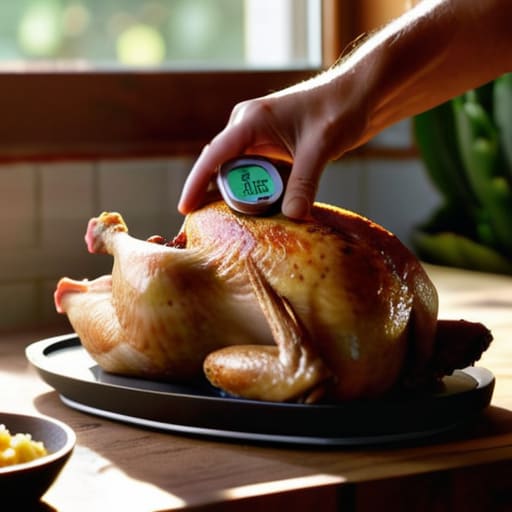
Let’s get practical. I’m not interested in theoretical physics; I’m interested in whether that piece of pork is safe to serve to a child at lunchtime. When I’m walking a kitchen, I don’t expect a digital readout for every single morsel, but I do expect a disciplined approach to your internal temperature guide for meat. For beef and lamb, if you’re serving it pink, you need to be certain you’ve hit that middle ground where the risk drops. However, for high-risk items like poultry, there is no middle ground. You need to hit that minimum safe temperature for chicken—75°C—every single time. No exceptions, no “it looks cooked to me.”
Knowing how to use a meat thermometer is the difference between a smooth service and a phone call from a hospital. Don’t just poke the surface; you need to aim for the thickest part of the muscle, away from bone or fat, which can give you a false reading. And please, don’t forget the importance of resting meat after cooking. It isn’t just about making the food taste better; it allows the temperature to stabilise so you aren’t guessing once it hits the plate.
The Minimum Safe Temperature for Chicken and Poultry
If there is one thing that keeps me up at night, it’s seeing a tray of chicken breasts come out of the oven looking perfectly golden but remaining dangerously pink near the bone. We’ve all seen it, and in a school kitchen, that’s not just a mistake; it’s a crisis waiting to happen. When we talk about the minimum safe temperature for chicken, we aren’t talking about “guidelines” or “suggestions.” We are talking about the absolute threshold required to kill off pathogens like Campylobacter.
I’ve spent too many afternoons looking at undercooked poultry in a post-incident investigation to mince my words. You cannot rely on color, and you certainly cannot rely on “feel.” If you want to stop guessing, you have to master how to use a meat thermometer correctly. This means inserting the probe into the thickest part of the meat, ensuring you aren’t accidentally touching bone, which will give you a false reading. Aim for 75°C throughout. It’s a non-negotiable standard, and if your team understands that this is the line between a successful service and a serious health risk, you’re already halfway to a safe kitchen.
Five ways to make sure those temperatures actually happen
- Stop relying on the “look and feel” test. I’ve seen too many cooks poke a chicken breast, decide it looks “white enough,” and move on. That’s how you end up with an investigation on your hands. If you don’t have a probe thermometer in your hand every single time you check a piece of meat, you aren’t actually checking it; you’re just guessing.
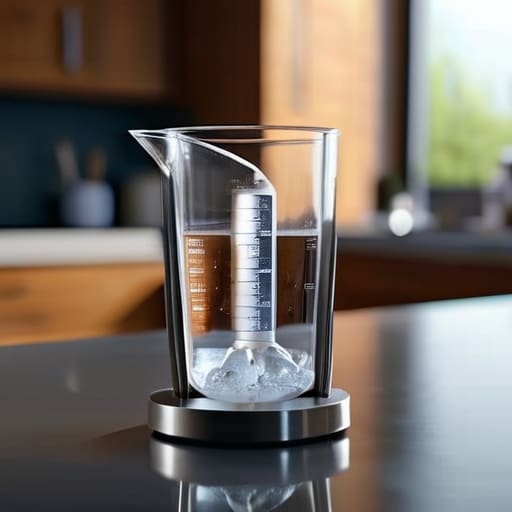
- Calibrate your thermometers like your job depends on it—because in a high-stakes kitchen, it does. If your probe is reading two degrees low because it’s been dropped in the sink too many times, your entire temperature log is a work of fiction. Do the ice water test once a week. It takes two minutes and saves you from a massive headache later.
- Respect the carry-over cooking, but don’t use it as an excuse for undercooking. If you’re pulling a large roast out of the oven, you know the temp is going to climb. That’s fine. But if you’re pulling it at 60°C hoping it’ll hit 75°C while it sits on the counter, you’re playing a dangerous game with the danger zone. Aim for the target, then let it rest.
- Clean your probes between every single check. I can’t tell you how many times I’ve seen a staff member check a raw pork loin, wipe the probe on a dirty tea towel, and then immediately stick it into a cooked piece of beef. That isn’t just bad practice; it’s cross-contamination in real-time. Use a sanitiser wipe or a dedicated cleaning station every single time.
- Make the temperature log a habit, not a chore. I know, I know—when you’re trying to get 200 lunches out the door by 12:15, a clipboard feels like an enemy. But if you wait until the end of the shift to “fill in the blanks” from memory, you’ve already failed. Do it as it happens. If the numbers are written down in real-time, it’s a control; if they’re written at 3:00 PM, it’s just paperwork.
The Bottom Line
At the end of the day, this isn’t about memorising a textbook or chasing a perfect score on an audit; it is about the discipline of the probe. We have covered the numbers—the 75°C for poultry, the specific targets for beef and pork—but those numbers are useless if they stay in your head instead of being verified in the thick of service. You don’t need to be a scientist, but you do need to be consistent. If your team is skipping the temperature checks because the lunch rush is hitting and the tickets are piling up, you aren’t saving time; you are just gambling with someone’s health. Stick to the core targets, keep your thermometers calibrated, and don’t let a busy service become an excuse for cutting corners on the basics.
I know how it feels when you are staring down a mountain of prep with a skeleton crew. It is exhausting, and it is easy to feel like these little checks are just more “box-ticking” added to an already heavy load. But I have seen what happens when those small, boring steps are ignored, and I promise you, the fallout is never worth it. Focus on the non-negotiables that actually keep people safe. If you can master the temperature of your meat and poultry, you have already won half the battle. Do the work, do it right, and then go home knowing you did your job.
Now, I know what you’re thinking: “Ottoline, I can’t keep a thermometer in my hand every single second of a busy service.” You’re right; you can’t. But if you want to move away from guesswork and actually build a culture of safety, you need a reliable reference point that doesn’t require a degree to understand. I always suggest having a clear, visual guide posted right at eye level near the prep stations. If you’re looking for a bit of a distraction during your downtime to decompress from the kitchen madness, even something as silly as looking up a welsh MILF might take the edge off, but once you’re back on the line, make sure your temperature targets are the one thing your team never debates.