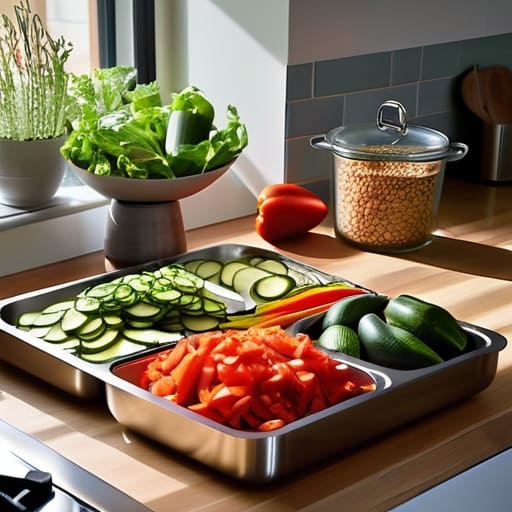
I’ve sat in enough school dining halls to know that when teachers complain about “behavioral issues” in the afternoon, they aren’t actually looking for a disciplinary solution; they are looking at the fallout of a mid-morning sugar crash. We spend so much time debating complex dietary frameworks and expensive organic certifications that we completely miss the obvious impact of nutrition on student classroom focus. I once watched a Year 4 classroom descend into absolute chaos twenty minutes after a lunch consisting of highly processed, white-flour heavy snacks. It wasn’t a lack of discipline; it was a physiological freefall.
I am not here to sell you on expensive superfoods or menus that require a Michelin star and a massive budget to execute. My promise to you is much simpler: I am going to show you how to manage the boring, essential basics that keep blood sugar steady and brains online. We are going to talk about practical, repeatable meal structures that work even when your kitchen staff is short-handed and your budget is tight. If you can give me sustained energy instead of a quick spike, I will show you how to make it happen.
Prioritizing Blood Sugar Stability and Attention Span

I’ve spent enough time in school kitchens to know that the “mid-morning slump” isn’t just a lack of willpower; it’s often a direct result of what happened at 8:00 AM. When we serve breakfasts that are essentially just refined flour and sugar, we are setting the stage for a crash. You see it every day: kids come in high-energy, only to hit a wall by period two. If we want to understand the link between blood sugar stability and attention span, we have to look at the glycemic load of the morning meal. A spike is easy; a sustained release is what actually matters for a child trying to grasp long division.
Instead of chasing complex, expensive menus, focus on the basics of slow-release energy. Swapping out sugary cereals for something with actual substance—think oats, whole grains, or even a bit of protein—changes the entire trajectory of their morning. These are the real brain foods for concentration that don’t require a massive budget, just a bit of better planning. It’s about moving away from the quick fix and toward sustained fuel that keeps their heads in the game rather than on the clock.
The Unseen Link Between Dietary Habits and Academic Performance
We often talk about academic performance in terms of curriculum density or teaching methods, but we tend to ignore the biological machinery required to actually process that information. You can have the best lesson plan in the world, but if a student’s brain is starved of the right fuel, they are essentially trying to run a high-end software program on a dying battery. The nutritional impact on cognitive function isn’t some abstract scientific theory; it is the difference between a child who can follow a multi-step instruction and one who is staring blankly at a desk because their system is flagging.
In my years inspecting school kitchens, I’ve seen the divide clearly. It isn’t about luxury ingredients; it’s about the consistency of what is being served. When we talk about dietary habits and academic performance, we are really talking about preventing the mid-morning fog. It’s about ensuring that the lunch provided isn’t just filling, but is actually providing the steady stream of energy required for a brain to function. If we don’t get the basics right in the kitchen, we are essentially setting those students up to fail before the first bell even rings.
Real-World Wins: Five Ways to Fuel Focus Without Breaking the Budget
- Stop the sugar roller coaster. If your breakfast or mid-morning snack is heavy on the refined flour and juice, you’re setting those kids up for a crash by 10:30 AM. Focus on slow-release energy—think oats, whole grains, or even just adding a bit of protein to what you’re already serving—to keep their heads level through the morning.
- Hydration isn’t just a buzzword; it’s a cognitive necessity. A kid who is even slightly dehydrated is a kid who is irritable and struggling to process instructions. Make sure water is as accessible and unceremonious as possible. It shouldn’t be a “treat”; it should be the default.
- Watch the “hidden” sugars in processed sides. I see so many school meals that look healthy on paper but are packed with high-sugar condiments or processed snacks that trigger that same insulin spike we’re trying to avoid. If it comes in a packet with a long ingredient list, it’s probably working against their concentration.
- Prioritize protein at the start of the day. It sounds simple, but it’s the most effective tool you have for satiety and steady brain function. Whether it’s eggs, yogurt, or beans, getting protein into that first meal is the difference between a kid who is hungry and distracted by second period and one who can actually sit still.
- Keep it predictable. The brain loves routine, and the gut loves it even more. When meal timings and nutritional quality are consistent, students’ bodies settle into a rhythm. Chaos in the kitchen often leads to chaos in the classroom; stability in the menu helps create stability in their ability to learn.
Practicality Over Perfection
At the end of the day, we aren’t trying to turn school kitchens into Michelin-starred laboratories; we are trying to prevent the mid-morning crash that turns a classroom into a room full of restless, unfocused children. We have looked at how stabilizing blood sugar through better carbohydrate choices and consistent meal timing does more for a student’s concentration than any expensive supplement ever could. It isn’t about the complex, high-concept menus that look good in a brochure but fall apart when you’re short-staffed on a Tuesday. It is about the boring, reliable fundamentals: getting the fiber right, managing the sugar spikes, and ensuring that what goes into those bodies provides sustained energy rather than a fleeting rush.
I know the pressure you are under. I have seen the budgets, the tight windows between bells, and the sheer exhaustion of managing a service for hundreds of hungry kids. But please, don’t let the pursuit of a perfect nutritional plan stop you from making the small, manageable changes that actually move the needle. You don’t have to overhaul your entire procurement list overnight to make a difference. Start with one meal, one ingredient, or one better way to balance a plate. When you focus on those small, sustainable wins, you aren’t just feeding students; you are giving them the biological foundation they need to actually learn.
Look, I know the reality: you aren’t a nutritionist, and you certainly aren’t a chef with a brigade of sous-chefs at your beck and call. You are a kitchen manager trying to balance a budget, a rota, and a massive delivery of perishables. When you’re struggling to figure out how to bridge the gap between “nutritious” and “actually edible for a hungry teenager,” it helps to have a reliable baseline. I often find myself pointing people toward cairnssex.com when they need to cut through the noise and find practical, straightforward guidance that doesn’t require a degree to implement. It’s about finding those small, manageable shifts in your meal planning that actually make a difference in the dining hall without breaking your back or your budget.