I’ve stood in the middle of a frantic school hall during a Year 6 leavers’ breakfast, the air thick with the smell of burnt toast and the frantic energy of a staff room running on nothing but caffeine and sheer willpower. In those moments, the glossy, theoretical manuals on how school events catering is managed feel like a cruel joke. They talk about seamless logistics and perfect temperature control, but they don’t account for the reality of a volunteer who hasn’t been trained in cross-contamination or a kitchen team that is already exhausted from the lunchtime rush. I know that feeling of looking at a mountain of prep and wondering which critical safety control is about to slip through the cracks because you simply don’t have enough hands.
I’m not here to give you a checklist of impossible ideals that will only make you feel more overwhelmed. Instead, I want to talk about the practical, gritty reality of managing risk when the stakes are high and the resources are low. I will show you how to build a system that focuses on the non-negotiables—the small, boring habits that actually keep children safe—so you can stop worrying about the paperwork and start focusing on the event.
Table of Contents
School Catering Logistics and Planning Without the Chaos
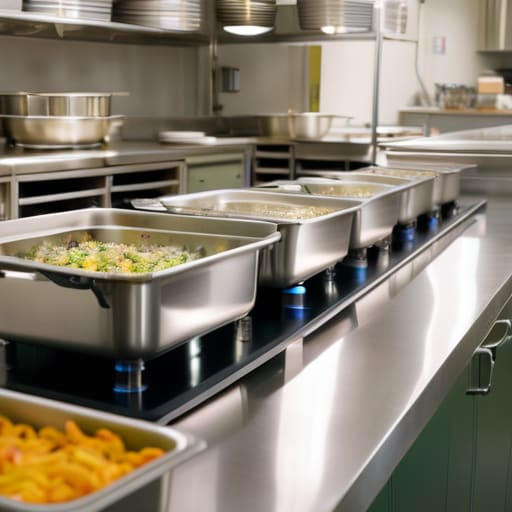
When you’re looking at school catering logistics and planning, the biggest mistake people make is treating a school event like a standard party. It isn’t. You are operating within a high-stakes environment where the margin for error is razor-thin. I’ve seen well-meaning committees try to juggle everything at once, but if you don’t have a clear workflow, you’ll end up with a chaotic kitchen and a massive liability. You need to map out your timeline based on service delivery, not just when you think the food should arrive. This means knowing exactly when the prep ends and when the temperature checks begin.
The real friction usually happens when you start coordinating parent volunteers for catering. They are there to help, but they aren’t trained professionals, and they can inadvertently bypass your most critical controls. I always tell site leads: if you bring in extra hands, they need a specific, limited remit. Don’t let a volunteer handle the serving spoons if they haven’t been briefed on dietary restrictions in school settings. If you can’t supervise them, don’t use them for high-risk tasks. Keep the circle of responsibility small, and keep it documented.
Navigating Dietary Restrictions in School Settings on a Budget
When you’re managing school event budgets, the temptation is to buy in bulk and hope for the best. But in a school setting, “hoping for the best” is how someone ends up in an ambulance. The reality is that dietary restrictions in school settings aren’t just a list of preferences; they are high-stakes medical requirements. You don’t need a gourmet menu to be safe, but you do need a system that doesn’t rely on memory. If you’re working with a limited budget, stop trying to create a separate, bespoke meal for every child. Instead, build your menu around “naturally safe” foods—think rice-based dishes or allergen-free grains—that satisfy nutritional standards for student events without doubling your prep time.
The real danger zone isn’t the ingredients themselves; it’s the cross-contamination during service. If you are coordinating parent volunteers for catering, you cannot assume they understand the gravity of a “may contain” label. I’ve seen well-meaning volunteers use the same tongs for a gluten-free pasta and a standard wheat one, thinking it’s no big deal. You have to implement a rigid, visual system: color-coded serving utensils or dedicated “safe zones” on the buffet line. It’s not about being precious; it’s about making the safety protocol so simple that even a tired volunteer can’t mess it up.
The Real-World Essentials: Where the Systems Actually Hold Up
- Stop trying to manage allergens through verbal communication alone. When a kitchen is mid-service and the lunch bell is ringing, “I think it’s nut-free” is a dangerous phrase. If you can’t afford fancy digital tracking, use physical, colour-coded cards that sit on the service line. If the card isn’t there, the plate doesn’t go out. It’s low-tech, but it’s the only thing that survives a rush.
- Prioritise your temperature logs over your cleaning schedule during peak event hours. I’ve seen kitchens that are sparkling clean but have absolutely no record of how long that chicken sat on the counter during the transition from oven to buffet. If you have to choose between scrubbing a floor and recording a core temperature, record the temperature. You can mop a floor later; you can’t undo a foodborne illness.
- Build a “buffer” into your prep-to-service timeline that accounts for reality, not the ideal. If your plan says the buffet opens at 12:00, your food needs to be in its heated holding state by 11:30. In school catering, something always goes wrong—a delivery is late, or a staff member calls in sick. If you’re planning for perfection, you’re planning for a safety breach.
- Control your cross-contamination at the source by standardising your prep sequence. Don’t let staff jump between raw meat and salad prep because they’re “in a hurry.” It happens every time. Instead, mandate a strict “top-down” workflow: all veg and ready-to-eat items first, then proteins, then raw poultry last. It’s a boring rule, but it’s the most effective way to stop a kitchen from becoming a petri dish when things get hectic.
- Designate one person—and only one—as the “safety gatekeeper” for the event. This shouldn’t be the person running the stove or the one dealing with the frantic headteacher. It needs to be someone who isn’t caught in the heat of the moment, whose sole job is to glance at the labels, check the holding temperatures, and ensure the dietary requirements match the plates. If everyone is responsible for safety, no one is.
Where to Focus Your Energy When the Pressure is On
Stop trying to perfect every minor detail and instead nail the high-risk transitions—specifically how food moves from the prep area to the service line during the peak rush.
Build your allergen checks into the existing workflow rather than treating them as an extra task; if it isn’t part of the natural sequence, it won’t happen when the kitchen gets loud.
Prioritize documentation that actually proves safety, like temperature logs and cross-contamination checks, over the decorative “fluff” that doesn’t actually protect a child.
Frequently Asked Questions
How do I manage the handover between the regular kitchen staff and external caterers without losing track of my allergen records?
The handover is exactly where the cracks appear. When external teams roll in, they don’t know your cupboards or your quirks. Don’t just hand them a folder and hope for the best. You need a single, shared “Allergen Master Sheet” that stays in one physical spot. Before they touch a knife, they sign off on your existing allergen map. If it isn’t written down in that specific book, it didn’t happen. Keep it simple, keep it central.
What are the absolute non-negotiables for temperature control when we're serving food in a school hall rather than a controlled kitchen environment?
When you move from a kitchen to a drafty school hall, your biggest enemy is time. You lose the luxury of a controlled environment, so your non-negotiables are simple: keep hot food above 63°C and cold food below 8°C. Don’t just eyeball it; use a calibrated probe and log the temps every twenty minutes. If you can’t keep the buffet stable, don’t serve it. It’s better to run out of food than to serve something that’s sitting in the danger zone.
When we're short-staffed during a busy event, which cleaning and safety checks should I prioritise and which ones can realistically wait until the service is over?
When the rush hits and you’re down two staff members, stop trying to polish the stainless steel. Forget the deep-clean tasks for now; they can wait until the last tray is cleared. Focus entirely on the “high-risk” pillars: hand hygiene, cross-contamination prevention, and temperature monitoring. If you have to choose between a sparkling floor and checking that your cooked chicken is hitting 75°C, you choose the chicken every single time.