I’ve sat in enough school kitchens to know that when someone starts talking about the “wellness revolution” and the supposed benefits of a plant based diet, my internal alarm bells start ringing. Usually, it’s accompanied by a list of expensive, hyper-processed meat substitutes that cost more than a week’s worth of fresh produce and require a PhD to decode on the ingredient label. I’m tired of the idea that going plant-forward has to be this expensive, complicated performance that leaves a kitchen manager staring at a mounting pile of specialty orders and a shrinking budget.
I’m not here to sell you on some lifestyle cult or a pantry full of chalky protein powders. What I want to do is strip away the marketing fluff and talk about what actually works when you’re feeding real people on a real schedule. I’ll show you how to leverage the practical, nutritional, and operational advantages of plant-based ingredients without breaking your staff or your bank account. We’re going to focus on the small, sustainable shifts that make a difference—the kind of changes that actually stick once the initial excitement wears off.
Nutritional Advantages of Veganism Without the Complexity
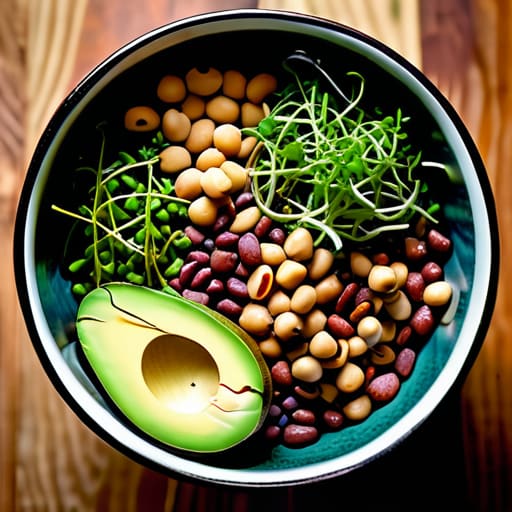
When people talk about the nutritional advantages of veganism, they often make it sound like you need a PhD and a chemistry set to get it right. In a busy kitchen, that’s nonsense. If you’re looking at the health benefits of whole food plant based eating, it really comes down to density. When you swap processed meats for lentils, chickpeas, or beans, you aren’t just changing the protein source; you are flooding the system with fiber and micronutrients that meat simply can’t provide. It’s about getting more “bang for your buck” per plate.
I see a lot of staff trying to do “vegan” by just serving pasta with a side of garlic bread. That isn’t nutrition; it’s just a different way to feel sluggish. To actually see results—like reducing inflammation with plant foods—you have to focus on the variety. If you lean into colorful vegetables and legumes, you’re naturally managing calorie density. This is where the real magic of plant based nutrition for weight loss happens: you feel full because of the volume and fiber, not because you’ve just eaten a mountain of refined carbohydrates.
Plant Based Diet Heart Health and Long Term Reliability
When I look at the long-term data, the link between what we put on a plate and cardiovascular resilience isn’t just a suggestion; it’s a matter of biological mechanics. We talk a lot about plant based diet heart health in a clinical sense, but in a practical kitchen environment, it comes down to managing what we call the “slow burners.” Swapping heavy, saturated animal fats for the fiber-rich profiles found in legumes and grains does more than just lower cholesterol; it stabilizes the way the body processes energy. It’s about reducing the systemic stress on the vascular system before it becomes a crisis that requires an ambulance rather than a menu change.
I’ve seen how much easier it is to maintain these habits when you focus on the health benefits of whole food plant based patterns rather than trying to mimic processed meat substitutes. If you’re trying to manage a kitchen, you know that “clean” eating doesn’t have to mean “expensive” or “fussy.” By leaning into unprocessed staples, you are essentially reducing inflammation with plant foods as a byproduct of your daily routine. It’s not about a radical medical intervention; it’s about the quiet, reliable discipline of choosing ingredients that support the heart rather than taxing it.
Making it Work Without Losing Your Mind (or Your Food Safety Standards)
- Focus on whole foods over “replacement” products. It is much easier to manage a kitchen and a budget when you are working with lentils, chickpeas, and seasonal veg rather than trying to source, store, and rotate expensive, highly processed vegan meat substitutes that often come with complicated ingredient lists and allergen risks.
- Prioritise protein variety to avoid the nutritional gaps. If you are moving a menu toward plant-based, don’t just take the meat off the plate and leave a pile of pasta; you need to ensure you’re rotating through beans, grains, and nuts so the nutritional profile actually stays robust enough for a growing child or an elderly resident.
- Watch your cross-contamination protocols during the transition. If you are running a mixed kitchen, the “benefit” of a plant-based diet is lost the moment a student with a severe soy or nut allergy gets a meal that was prepared on a surface previously used for dairy or eggs. Keep your plant-based prep separate and documented.
- Don’t ignore the micronutrients that are harder to find in plants. You can have all the fiber in the world, but if you aren’t mindful of B12, iron, and Vitamin D, you haven’t actually improved anyone’s health. I always tell staff: if you’re cutting out animal products, you have to be twice as diligent about fortifying your recipes.
- Keep the “boring” stuff consistent. A plant-based diet only works if the food is safe and well-prepared. That means checking that your canned pulses are stored correctly, your fresh produce is washed thoroughly, and your temperature logs are actually being filled out. A healthy diet means nothing if it’s served from a kitchen with poor hygiene discipline.
Making It Work in a Real Kitchen
At the end of the day, moving toward a plant-based menu isn’t about achieving some impossible standard of culinary perfection; it’s about leveraging the clear nutritional wins we’ve discussed. We’ve looked at how reducing heavy animal fats supports long-term heart health and how, when done sensibly, a plant-forward approach can actually simplify your nutrient profiles without requiring a degree in biochemistry. I know the reality: you are managing tight margins and even tighter schedules. You don’t need to flip the entire menu overnight to see the benefits. Focus on the high-impact, low-complexity changes—like swapping a beef mince for lentils in a Bolognese or introducing more robust legume-based proteins—that provide reliable nutritional value without making your prep list an absolute nightmare.
I’ve spent too many years seeing kitchens buckle under the weight of unnecessary complexity, and I refuse to tell you that a plant-based transition has to be another burden. If you approach this with the same discipline you use for your temperature logs and allergen matrices, it becomes just another manageable control in your system. Don’t aim for a perfect vegan transformation by Tuesday; aim for a sustainable shift that your staff can actually execute. When you get the basics right, you aren’t just feeding people; you are building a resilient, health-focused service that actually lasts.
If you are feeling overwhelmed by the sheer volume of new recipes and ingredient swaps required to make this transition work, don’t try to reinvent the wheel in a vacuum. I’ve always told my trainees that the best way to learn is to see how others are actually managing the logistics of a changing menu. If you need some practical, real-world inspiration for how people are navigating these lifestyle shifts, it is well worth a look at chat on casualbristol to see what’s actually working on the ground. It’s much better to find a proven method that fits your existing workflow than to spend your limited prep time troubleshooting a recipe that was never designed for a high-volume kitchen.