I’ve sat through enough “educational garden” seminars to know that most of them are filled with expensive, high-concept nonsense about “holistic ecosystems” that have zero relevance to a kid standing in a muddy field. If you want to understand how growing food supports learning, stop looking at the glossy brochures for hydroponic kits and start looking at the dirt. I remember standing in a primary school kitchen after a particularly chaotic gardening lesson; the kids hadn’t just learned about photosynthesis, they had learned the consequences of leaving a tool out or forgetting to water a bed. Real learning isn’t found in a textbook; it’s found in the grit under your fingernails and the realization that if you don’t respect the process, nothing grows.
I’m not here to sell you a dream of a perfect, organic utopia that your budget can’t afford. I’m going to tell you how to use a patch of ground to teach actual, transferable discipline—the kind of practical knowledge that sticks when they move into a real kitchen or a real job. We’ll skip the fluff and focus on the small, manageable ways a garden can build resilience and responsibility without breaking your staff or your sanity.
Table of Contents
Beyond the Hype Real Experiential Learning Through Gardening
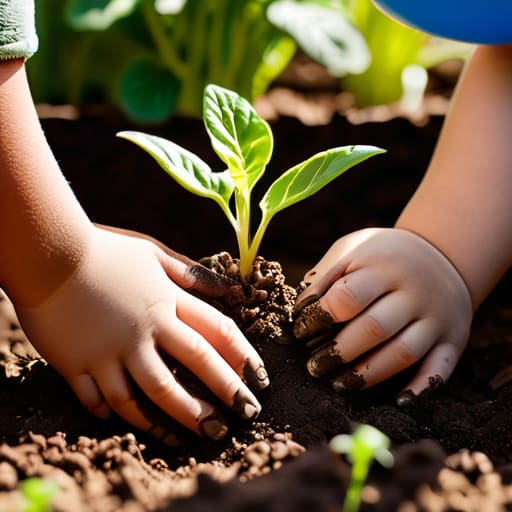
Let’s be honest: most school garden projects fail because they are treated as a “nice-to-have” extra rather than a functional part of the day. If you just stick a few tomato plants in a corner and hope for the best, you aren’t teaching anything; you’re just managing a slow-motion plant graveyard. Real experiential learning through gardening happens when the dirt actually meets the syllabus. It’s about moving past the “look at this pretty flower” phase and getting into the grit of how things actually work.
When you bridge that gap, you start seeing genuine hands-on science education take place without the teacher having to fight for attention. I’ve seen kids who struggle to sit still for a forty-minute lecture on biology suddenly become obsessed with the nitrogen cycle because they can actually see what happens when the soil goes sour. It isn’t about magic; it’s about observing cause and effect in real-time. If we want them to understand the mechanics of life—and eventually, the importance of food safety and quality—we have to stop treating the garden as a decoration and start treating it as a laboratory.
Practical Nutritional Literacy for Students Who Actually Eat
Let’s be honest: you can hand a child a textbook about the vitamins in a carrot all day long, and they’ll forget it before they’ve even reached the playground. Real nutritional literacy for students doesn’t happen through rote memorisation; it happens when they’ve spent three weeks watching a seedling struggle through dry soil only to finally harvest something they can actually sink their teeth into. There is a psychological shift that occurs when a kid moves from “I don’t like greens” to “I helped grow these radishes.” Suddenly, they aren’t just eating; they are consuming the result of their own discipline.
This isn’t just about making kids eat their vegetables, though. When we talk about school garden curriculum integration, we’re talking about bridging the gap between a theoretical science lesson and the reality of biology. It’s one thing to read about nitrogen cycles in a classroom; it’s quite another to see how it affects the vigour of your tomato plants. If we want them to understand the connection between soil health and human health, we have to stop treating the garden as a hobby and start treating it as a functional classroom where the stakes are tangible and the lessons are edible.
Five Ways to Make a School Garden Actually Work for Learning (Without Losing Your Mind)
- Stop focusing on the “magic” of nature and start focusing on the biology; let them see the direct link between soil health, plant vigour, and the actual nutrient density of the food hitting their trays.
- Use the garden as a live laboratory for food safety basics, teaching them that hygiene doesn’t start at the kitchen sink, but at the moment they pull a carrot from the dirt.
- Connect the seasonal cycle to the kitchen’s reality—if they grow kale in November, they need to understand why that specific crop is being served in the dining hall that week.
- Treat the garden as a lesson in accountability; if a student forgets the watering schedule or ignores a pest issue, they learn the immediate, unvarnished consequences of neglecting a living system.
- Move beyond the “seed to plate” cliché and focus on the economics of it—show them the cost of a wasted crop versus the value of a successful harvest to build a genuine sense of resource management.
The Bottom Line: What Actually Matters When You Start Planting
Don’t mistake “tending a garden” for “learning.” If you want the educational value to stick, you have to connect the dirt under their fingernails to the food on their plate; otherwise, it’s just a hobby, not a lesson.
Focus on the process, not the harvest. The real wins are in the discipline—learning that if you don’t manage the soil or the water correctly, the plant fails. That’s a lesson in cause and effect that no textbook can replicate.
Keep it manageable or don’t bother. A massive, overgrown plot that becomes a chore for an already stretched staff is a failure. Start small, make it sustainable, and ensure the kids actually have a hand in the upkeep.
Frequently Asked Questions
How do we actually manage the food safety risks of kids handling soil and raw produce without turning the whole thing into a bureaucratic nightmare?
Look, I’ve seen enough “educational” projects turn into cross-contamination nightmares to know where the line is. You don’t need a thirty-page manual; you need a hand-washing station that actually works and a strict “no eating in the dirt” rule. Keep the soil work separate from the food prep area, use dedicated tools, and make sure the kids wash up properly before they touch anything else. It’s not about bureaucracy; it’s about basic hygiene discipline.
What do we do when the budget for seeds and tools is non-existent, or when the school's maintenance team tells us a garden is just another liability?
Look, I’ve heard the “liability” argument from site managers a thousand times. They aren’t wrong; a neglected patch of weeds is just a trip hazard and a pest magnet. If you have zero budget, stop dreaming of raised beds and expensive trowels. Start with window boxes or even just old yogurt pots on a sunny sill. It’s low-risk, low-cost, and proves to the maintenance team that you can manage a small area without it becoming a swamp.
How do we connect the garden back to the actual school meal menu so it doesn't just feel like a one-off science experiment?
The biggest mistake I see is treating the garden like a museum exhibit—something to look at, but never touch. If you want it to stick, the harvest has to hit the plate. If the kids grow radishes, those radishes need to be on the lunch menu that Friday. It’s about closing the loop. When a child sees a vegetable they actually tended moving from the soil to the serving hatch, that’s when the lesson becomes real.