I’ve walked into enough school kitchens to know that when a contractor hands you a glossy, fifty-page “complete guide to ventilation and extraction,” they aren’t trying to help you; they’re trying to sell you a system that requires a specialist engineer just to change a filter. Most of these manuals are written by people who have never had to wipe grease off a ceiling while trying to serve three hundred hot lunches in a humid room. They talk about airflow simulations and high-tech sensors, but they completely ignore the reality of a tightly managed budget and a team that is already stretched to the breaking point.
I’m not here to sell you on expensive gadgets or academic theories that fall apart the moment your staff gets busy. Instead, I’m going to give you the practical version: a guide focused on the essential controls that actually keep your air clear and your kitchen safe. We’ll talk about what you can realistically maintain, how to spot a grease buildup before it becomes a fire hazard, and why the most important part of your extraction system is often the simplest cleaning routine you can actually sustain.
Table of Contents
Why Extraction Fan Efficiency Matters More Than Fancy Hardware
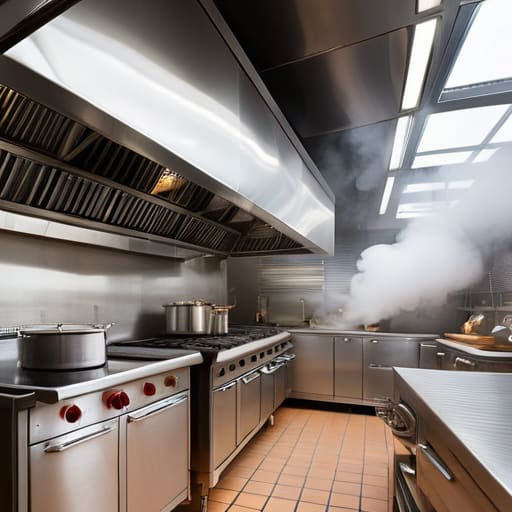
I’ve walked into far too many school kitchens where the head chef has spent the entire budget on a shiny, stainless-steel canopy that looks great in a brochure, but the actual extraction fan efficiency is practically non-existent. It doesn’t matter how much you spend on the hardware if the motor is struggling to pull even a fraction of the steam and grease out of the room. You can have the most expensive commercial kitchen exhaust systems in the world, but if they aren’t actually moving air, you’re just decorating a sauna.
The real issue isn’t the price tag; it’s the mechanical reality of what’s happening inside the ductwork. When grease filtration systems get clogged because the cleaning schedule is treated as a suggestion rather than a rule, the fan has to work twice as hard to do half the job. This doesn’t just lead to a miserable, humid environment for your staff; it creates a massive fire risk. I’m less interested in your fancy new hood and more interested in whether your ventilation system maintenance is actually happening, or if you’re just waiting for the air to turn thick before you notice a problem.
The Small Boring Reality of Grease Filtration Systems
I’ve stood in too many kitchens where the staff are working in a literal fog, eyes stinging, just trying to finish a service. They think the problem is a lack of high-end tech, but usually, it’s just that the grease filtration systems haven’t been touched in three weeks. When those filters are choked with old oil, your expensive commercial kitchen exhaust systems aren’t actually pulling anything out; they’re just recirculating heavy, greasy air back onto your prep surfaces.
It isn’t glamorous, and I know it’s the last thing anyone wants to do when they’re short-staffed on a Tuesday, but consistent ventilation system maintenance is what keeps the building from burning down. If you ignore the filters, you aren’t just dealing with poor air quality; you’re creating a massive fire hazard and a slip risk on your floors. You don’t need a manual on advanced indoor air circulation techniques to understand this: if the grease can’t pass through the mesh, it’s going to end up somewhere it shouldn’t—like your ventilation ducts or, worse, your cooking oil.
Five Practical Realities for Keeping Your Extraction System from Failing You
- Stop treating your filters like an afterthought. If they aren’t being pulled out and washed in the dishwasher or a sink every single shift, they aren’t doing their job. A clogged filter doesn’t just make the kitchen hot; it stops the air from moving, which means grease stays in the air instead of going up the duct.
- Watch your staff, not just your machines. I’ve seen plenty of “high-spec” systems fail because the person on the midday rush is too busy to notice the hood is dripping. If you see grease pooling on the underside of the canopy, your maintenance cycle is already broken. Fix it before it hits a hot pan.
- The “hidden” grease build-up is your real enemy. You can scrub the stainless steel until it shines, but if the internal ductwork hasn’t been professionally cleaned in a year, you’re sitting on a ticking time bomb. Don’t let a shiny hood fool you into thinking the system is safe.
- Listen to the noise. If your extraction fan suddenly sounds like it’s struggling or the airflow feels sluggish, don’t just turn up the volume and ignore it. That’s usually the sound of a motor working overtime because the system is choked with debris. It’s much cheaper to fix a motor than to replace a burnt-out kitchen.
- Document the cleaning, even if it feels like a chore. I don’t care about a mountain of paperwork for the sake of it, but if an inspector walks in and asks when those filters were last serviced, “we do it when we have time” isn’t an answer. A simple, realistic log proves you have a system in place, even on your busiest days.
The Bottom Line: What Actually Keeps Your Kitchen Safe
Stop obsessing over the brand of the fan and start obsessing over the grease. A high-end extraction system is useless if the filters are so clogged with old fat that the air just recirculates the smoke back onto the prep surfaces.
Cleaning isn’t a luxury for when the lunch rush ends; it’s a fire prevention strategy. If your team doesn’t have a scheduled, realistic routine for the hoods and ducts, you aren’t just looking at a bad smell—you’re looking at a massive liability.
If you can’t see the airflow, you’re flying blind. Don’t wait for a technician to tell you something is wrong; if the air feels heavy or the steam isn’t moving, your system is failing, and that’s when the real risks start to pile up.
Frequently Asked Questions
I know we need to clean the filters, but how often do I actually need to call in a professional team to deep-clean the ductwork before it becomes a fire risk?
Look, I’m not going to give you a textbook answer about “scheduled intervals.” If you’re waiting for a specific month on a calendar to call the pros, you’ve already missed the point. You need a professional duct clean when the grease buildup is no longer just a film on the filters, but is migrating into the system itself. In a busy school kitchen, that usually means every six to twelve months. If you can smell old oil when the fans are on, stop reading this and call them immediately.
We are working with a very tight budget and a small team; what is the absolute bare minimum we can do to keep the air moving without it becoming a full-time job?
Look, I get it. You aren’t running a Michelin-star restaurant; you’re trying to feed kids before the bell rings. If you can’t do everything, do this: make grease filter cleaning a non-negotiable part of your end-of-shift routine. Don’t wait for a deep clean. If those filters are clogged, your fan is just spinning air and wasting electricity. Keep the filters clear and the hoods wiped down daily. That’s your baseline for staying safe.
How can I tell if my extraction system is actually doing its job or if we're just moving warm, greasy air around the kitchen?
You don’t need a technician with a thermal camera to tell you something is wrong. If you’re standing at the pass and the air feels heavy, or if you notice a fine film of grease settling on the top of the prep tables by midday, your system has already failed you. If the steam from a boiling pot lingers in the air instead of vanishing into the hood, you aren’t extracting; you’re just recirculating humidity and risk.