I’ve spent sixteen years walking into kitchens where the fire safety manual is a three-inch-thick binder gathering dust in a damp corner, and let me tell you, nobody is reading it. Most people think a complete guide to fire safety in kitchens needs to be a massive, expensive list of every possible catastrophe and a dozen high-tech sensors you can’t afford. But I’ve seen enough near-misses in school canteens to know that the real danger isn’t a lack of fancy equipment; it’s the exhaustion that leads a tired prep cook to ignore a grease buildup on a vent because they’re three orders behind.
I’m not here to give you a lecture or a checklist designed by someone who has never stood in front of a roaring deep fat fryer. Instead, I’m going to give you the practical, unvarnished truth about what actually keeps the flames at bay when you’re running a tight ship on a shoestring budget. We are going to focus on the high-impact habits that your staff can actually sustain when the lunch rush hits, because a safety protocol that only works when the kitchen is quiet is completely useless.
Table of Contents
Managing Cooking Oil Temperature Control Without Constant Supervision
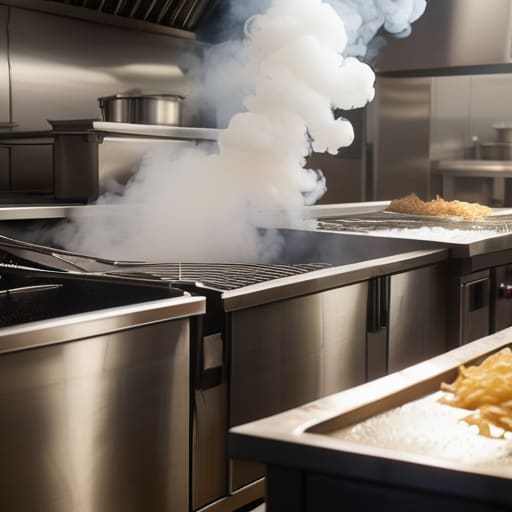
Let’s be honest: no one is standing over a fryer with a thermometer every single minute, especially when the lunch rush is hitting and you’re down two staff members. But if that oil gets too hot, it isn’t just a quality issue—it’s a massive fire risk. Most kitchen fires start because someone left a deep fryer unattended or failed to notice the smoke rising from a pot that’s been heating too long. If you want to manage cooking oil temperature control without micro-managing your team, you have to stop relying on “gut feeling” and start relying on your equipment.
Invest in fryers with reliable, automated thermostats and, more importantly, train your staff to actually trust them. If a fryer is behaving erratically, it’s not “just old,” it’s a hazard that needs immediate attention. I’ve seen too many incidents where a staff member tried to “fix” a smoking vat by throwing water on it—which is essentially turning a small mistake into an explosion. Make sure they know that when the oil hits that threshold, the only move is to turn off the heat and step back. It’s about building a culture where noticing the smoke is more important than finishing the service.
Why Ventilation System Maintenance Is Your Most Underrated Defense
I’ve stood in enough kitchens to know that most managers view the extraction system as “out of sight, out of mind.” They see it as a utility, like the water or the electricity, something that just works until it doesn’t. But if you aren’t prioritizing ventilation system maintenance, you aren’t just risking a smoky kitchen; you are essentially building a fuse that leads straight to your ceiling.
When grease builds up in the filters and the ductwork, it becomes the perfect fuel. You might have the best cooking oil temperature control in the building, but if a small flare-up on the range hits a grease-laden hood, that fire isn’t staying on the stove. It’s going into the vents, where your staff can’t reach it and where your standard extinguishers won’t do much good.
Don’t fall into the trap of thinking a quick wipe-down of the visible filters is enough. Real commercial kitchen fire prevention means getting into the ducts. It’s a chore, and it’s expensive, but it is the single most effective way to ensure a minor mishap doesn’t turn into a structural catastrophe that shuts your doors for good.
The High-Impact Essentials: What Actually Keeps the Building Standing
- Stop treating your fire blanket like a decorative wall hanging. If it’s buried under a stack of clean tea towels or tucked behind a heavy prep table, it’s useless. It needs to be visible, accessible, and every single person on your shift—from the head chef to the part-time kitchen assistant—needs to know exactly how to pull it.
- Manage your “clutter creep” around heat sources. I’ve seen too many kitchens where a stray roll of blue roll or a stack of cardboard delivery boxes has migrated too close to the fryers. It starts as a convenience for the staff, but it ends as fuel. If it’s flammable, it stays on the other side of the line.
- Get your electrical inspections out of the “we’ll do it next month” pile. Frayed cords on a heavy-duty mixer or a socket that looks slightly scorched aren’t just maintenance issues; they are fire starters. If a piece of kit is sparking or the cord is compromised, pull the plug and tag it out immediately. Don’t wait for the smoke to tell you it’s broken.
- Establish a “last person out” checklist that actually works. It shouldn’t be a twenty-point document no one reads; it should be three vital checks: Are the gas valves off? Are the electrics isolated where they should be? Is the waste bin emptied and away from heat? If you can’t sustain a complex audit, at least sustain these three.
- Don’t just buy a fire extinguisher; make sure it’s the right one for the job. I’ve walked into kitchens where someone tried to tackle a fat fire with a water extinguisher because they were in a panic. That’s how you turn a small pan fire into a room-wide catastrophe. Ensure your staff knows that oil fires require Class F, and nothing else.
The Bottom Line: Where to Put Your Energy
Stop trying to police every single minor spark; focus your limited supervision on the high-stakes areas like oil temperature and grease buildup that actually cause the big fires.
Maintenance isn’t a luxury for when you have a quiet shift; it’s a survival strategy, specifically when it comes to keeping those extraction hoods clear of flammable sludge.
Build systems that work when you aren’t standing there—if a safety control requires a manager to watch it every minute to be effective, it’s a bad control and it will eventually fail.
Frequently Asked Questions
If my staff are already stretched thin, how do I actually make sure they aren't skipping the deep clean of the extraction filters just to get the service finished?
You don’t solve this with a longer checklist; you solve it by making the filter clean part of the “close down” ritual, not an extra task. If it’s left for “when we have time,” it’ll never happen. Build it into the end-of-shift sequence so the kitchen isn’t officially locked until those filters are out and soaking. It’s one more thing to do, yes, but it’s better than a grease fire at 7:00 PM.
We have a mix of experienced cooks and teenagers on work experience; what’s the one thing I can teach them that actually prevents a fire rather than just reading a manual?
Forget the manual; teach them the “Look Before You Leave” rule. It sounds patronizing, but it’s the most effective habit you can build. Tell them: if you are walking away from a hot pan, a fryer, or a toaster, you are breaking the chain. Most kitchen fires start because someone thought, “I’ll just pop into the walk-in for ten seconds.” If they learn that a kitchen is never “off duty” while heat is applied, you’ve won.
I know the fire extinguishers need to be there, but how do I know my team won't freeze up or grab the wrong one when a pan actually catches fire?
Look, having the extinguishers on the wall is just compliance; having your team know how to use them is actual safety. In a real crisis, people panic and their brains go blank. Don’t just do a once-a-year briefing that everyone ignores. Run “micro-drills”—five minutes during a quiet period where you point at a pan and ask, “What’s the first move?” If they have to think about which extinguisher to grab, you’ve already lost.