I remember walking into a secondary school kitchen during a mid-term inspection, and the heat hit me like a physical wall before I even reached the prep station. The air was thick, greasy, and so stagnant that the staff were moving in slow motion, eyes glazed over from the humidity. It wasn’t just about being “unpleasant”; I could see the exact moment where the heat was causing them to lose focus. People often talk about ventilation as a luxury or a line item in a facility budget, but they miss the reality of how kitchen ventilation affects comfort and, more importantly, how that discomfort leads to mistakes. When a team is sweltering and breathing in old grease, they aren’t thinking about cross-contamination or temperature logs—they are just trying to survive the shift.
I am not here to sell you on expensive, high-tech airflow simulations that your maintenance team won’t know how to fix. Instead, I want to talk about the practical, gritty reality of keeping your air moving so your staff can actually do their jobs. I’ll show you how to spot a failing system before it becomes a safety hazard and how to manage your environment so that exhaust isn’t just a checkbox, but a tool for keeping your kitchen sane and compliant.
Table of Contents
Why Poor Commercial Kitchen Air Quality Breeds Fatigue
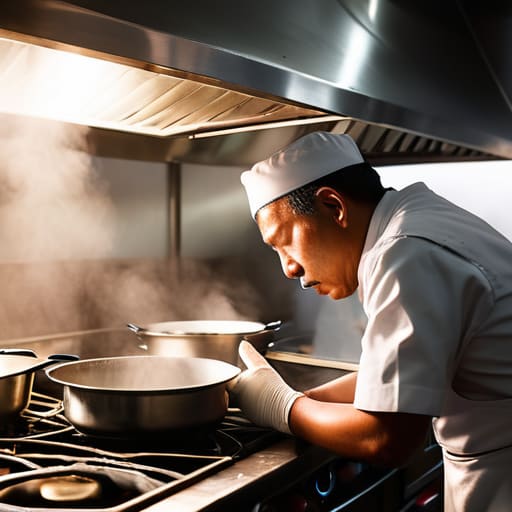
When I walk into a kitchen and the air feels heavy, thick, and smells like a mix of old grease and stale steam, I don’t just see a comfort issue; I see a ticking clock on your team’s mental sharpness. If your exhaust hood efficiency is down, that heat doesn’t just sit there—it builds. It creates a microclimate that physically drains your staff. When people are working in a sweltering, oxygen-depleted environment, they don’t just get grumpy; they get sluggish.
This isn’t about being “soft” on the crew. It is about the direct impact of ventilation on employee productivity and, more importantly, their ability to follow protocol. A cook who is struggling to catch their breath or wiping sweat from their eyes every thirty seconds is a cook who is going to miss a label, forget to check a core temperature, or overlook a cross-contamination risk. Fatigue leads to shortcuts, and in my experience, shortcuts are where the serious incidents live. If you aren’t managing the air, you aren’t managing your risks.
Exhaust Hood Efficiency as a Tool for Sanity
I’ve seen too many kitchens where the exhaust hood is treated like an optional extra rather than the lungs of the operation. When that hood is clogged with grease or simply underpowered for the volume of cooking you’re doing, it isn’t just a nuisance; it’s a recipe for chaos. If the air isn’t moving, the heat stays trapped at the line, and suddenly your team is fighting the environment as much as the service. High exhaust hood efficiency is often the difference between a kitchen that feels like a professional workspace and one that feels like a sauna.
When you’re struggling with managing kitchen temperature control, the hood is your first line of defence. A hood that actually pulls the heat and steam away means your staff aren’t constantly wiping sweat from their eyes or dealing with that heavy, humid air that makes every task feel twice as hard. It’s about more than just being “comfortable”—it’s about maintaining the mental clarity needed to avoid mistakes. If the air is stagnant, focus slips, and that is exactly when a cross-contamination error or a missed temperature check happens.
Five Ways to Stop Your Ventilation from Sabotaging Your Service
- Stop ignoring the grease buildup in your filters; when they’re clogged, your extraction isn’t pulling anything, and you’re basically just circulating a humid, oily soup around the kitchen.
- Check your make-up air levels, because if you’re pulling air out but not replacing it, you’ll end up with a vacuum effect that makes doors hard to open and leaves your staff gasping for fresh oxygen.
- Schedule your deep cleans during the quietest shifts, not when you’re mid-service, because a ventilation system that only works when you aren’t busy is a system that’s failing you.
- Watch your staff’s heat stress levels as a metric for your airflow; if they’re dragging by 1:00 PM, it’s rarely a lack of coffee and usually a sign that your air isn’t moving the heat away from the line.
- Don’t just look at the hood; look at the air currents. If you see steam or smoke drifting toward the prep area instead of straight up, your ventilation isn’t doing its job, and your cleaning schedule is about to get twice as long.
The Bottom Line for Your Kitchen
Don’t treat your extraction system as a luxury; if the air is stagnant and heavy, your staff will lose focus, and a distracted team is exactly when a cross-contamination error or a burn happens.
Maintenance isn’t just about grease fires; a hood that isn’t pulling its weight creates a microclimate of heat exhaustion that makes even the simplest food safety checks feel like a chore nobody wants to do.
Focus your energy where it counts—if you can’t fix the whole ventilation system today, ensure the filters are cleaned religiously, because keeping the air moving is the simplest way to keep your team’s heads in the game.
Frequently Asked Questions
If my kitchen feels like a sauna but the hood is running, am I looking at a mechanical failure or just a lack of make-up air?
If the hood is humming but you’re still melting, you’ve likely got a make-up air problem. Think of it this way: your extractor is trying to suck air out of the room, but if there’s no way for fresh air to get in, you’ve just created a vacuum. The hood is fighting an uphill battle against negative pressure. It’s not just about pulling smoke out; it’s about replacing what you’ve taken. Check your intake vents before you call a mechanic.
How much of a difference will a deep clean of the grease filters actually make to the temperature on a busy Friday service?
It’s more than you’d think. If those filters are choked with grease, your extraction system is basically just spinning its wheels. You aren’t pulling the heat out; you’re just recirculating a humid, heavy soup of steam and oil. On a Friday rush, that extra five degrees of ambient heat isn’t just uncomfortable—it’s the difference between a team that’s focused and a team that’s wilting. Clean filters mean better airflow, and better airflow means a manageable kitchen.
We’re working with a tiny budget—is it better to fix the extraction system or just invest in better cooling for the staff break area?
Fix the extraction. I know, it’s the more expensive, more headache-inducing option, but a cool break room is just a temporary band-aid for a broken system. If your extraction is failing, the heat and grease are staying in the workspace where the food is actually being handled. You can’t “cool” your way out of a kitchen that’s physically exhausting your team. Fix the air where the work happens, or you’ll just be managing a tired, sweaty crew.