I remember standing in a school kitchen three years ago, watching a trainee chef dump a massive container of pre-made sauce into a pot, completely oblivious to the fact that it had gone slightly sour from sitting out too long. He wasn’t being lazy; he just didn’t know what he was looking for. Most people think training is about expensive sensory workshops or high-end culinary degrees, but that’s a luxury your budget doesn’t have. In a real, high-pressure kitchen, understanding how taste education works isn’t about becoming a sommelier; it’s about building a functional instinct so your staff can spot a mistake before it reaches a child’s plate.
I’m not here to sell you on some abstract, academic theory of flavor profiles. My promise to you is much more practical: I am going to show you how to implement a system of sensory discipline that actually fits into a frantic service window. We are going to focus on the small, repeatable habits—the constant tasting, the recognition of acidity, and the immediate identification of spoilage—that turn a chaotic kitchen into a controlled one. I’ll tell you what you can realistically teach your team without breaking your schedule.
Table of Contents
Building Gastronomic Literacy Through Rigorous Palate Training Techniques
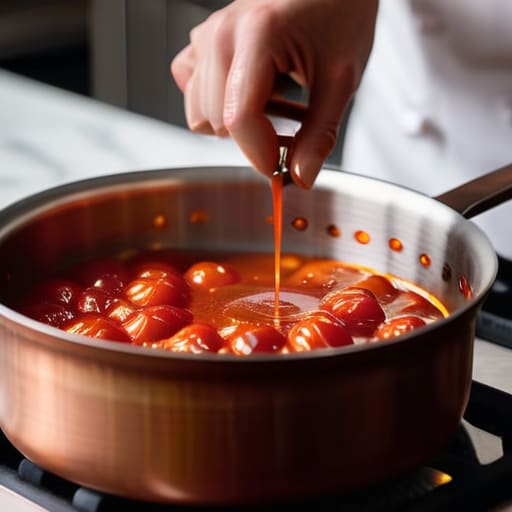
We aren’t talking about high-end sensory science or the neurobiology of taste here; we are talking about practical awareness. In a busy school kitchen, gastronomic literacy isn’t a luxury—it is a safety mechanism. If a cook can’t identify that a batch of tomato sauce has gone unexpectedly acidic, they won’t notice if a supplier has swapped a brand and introduced a hidden allergen or a different salt profile. Building this through palate training techniques doesn’t require expensive workshops. It starts with the “blind” tasting of base components—the stock, the sauce, the seasoning—before they are integrated into a larger recipe.
The goal is developing flavor vocabulary so that when a staff member says, “the gravy tastes off,” they aren’t just guessing. They can pinpoint whether it’s a lack of depth or a metallic tang. This level of sensory perception development allows your team to catch errors at the source. It is much easier to fix a seasoning imbalance in a pot of soup than it is to deal with the fallout of a hundred unhappy children or, worse, a massive waste of ingredients because a batch was unusable.
The Neurobiology of Taste Why Sensory Perception Development Matters
Now, I’m not a neuroscientist, but I know enough about how the brain processes signals to know that taste isn’t just something that happens on the tongue. When we talk about the neurobiology of taste, we’re really talking about the connection between the physical sensation of salt or acid and the way the brain categorizes that information. If your team hasn’t been trained to recognize a specific flavor profile, their brains are essentially just recording “good” or “bad” without any nuance. That lack of nuance is where mistakes happen; it’s the difference between noticing a sauce is slightly too acidic and realizing it’s actually about to go off.
Developing that mental bridge requires intentionality. Through consistent culinary sensory training, you aren’t just teaching people what food tastes like; you are actually rewiring how they interpret sensory input. This is the core of sensory perception development. When a cook can instinctively identify a subtle imbalance, they aren’t just “using their intuition”—they are utilizing a trained neurological response. If we don’t invest in this, we’re essentially asking our staff to fly a plane without ever learning how to read the instruments.
Practical Palate Discipline: Five Ways to Make Sensory Training Stick
- Stop treating tasting like a luxury; it’s a safety check. I don’t care if you’re a chef or a kitchen assistant, you need to taste the sauce before it hits the service line. A seasoning error isn’t just a culinary mistake; it’s a sign that your team has stopped paying attention to the product they are handing to a child.
- Focus on the “baseline” rather than the “gourmet.” You don’t need your staff to identify subtle notes of truffle oil; you need them to know exactly what the standard tomato sauce should taste like at 75°C. If they can’t identify when the salt is off or the acidity is too high, they aren’t actually tasting—they’re just swallowing.
- Use “comparison tasting” to build muscle memory. Instead of just telling a new starter that the soup is “too bland,” have them taste a properly seasoned version alongside the current batch. It’s much harder to argue with a physical comparison than it is to follow a vague instruction in a manual.
- Integrate tasting into your existing HACCP flow. Don’t make “sensory evaluation” a separate, daunting training session that no one has time for. Make it part of the routine: when you check the temperature, you check the seasoning. It should be as much a part of the job as checking the fridge log.
- Respect the fatigue factor. I’ve seen enough kitchens where the staff is too exhausted to notice a batch of food has gone sour. If your team is working twelve-hour shifts on their feet, their sensory perception is going to tank. Real taste education means recognizing when your staff is too tired to be an effective line of defense.
The Reality of the Palate: Three Hard Truths
Taste training isn’t about making your team food critics; it’s about creating a baseline of sensory awareness so that when a sauce is too acidic or a batch of soup is under-seasoned, they catch it before it reaches a single plate.
You cannot manage what you cannot perceive, which means sensory discipline is a critical safety control—a cook who can accurately identify salt levels is far less likely to miss the subtle chemical tang of a spoiled ingredient.
Don’t aim for perfection; aim for consistency. In a high-pressure kitchen, the goal of palate training is to ensure that even on the busiest Tuesday with half the usual staff, the standard of what goes out the door remains predictable and safe.
Frequently Asked Questions
If I’m running a kitchen with only two staff members on a lunch rush, how do I actually find the time to do this without the service falling apart?
You don’t do this during the rush. If you’re mid-service with two people and four hundred hungry kids, “palate training” is a recipe for chaos. You do it during prep or the post-service wind-down. It’s five minutes of tasting the batch sauce before it’s portioned, or a quick check of the seasoning while cleaning down. It’s not a seminar; it’s a controlled habit. If you can’t find five minutes in a shift, you aren’t training—you’re just surviving.
Does training staff to better understand flavour actually help with food safety, or is it just a way to make the food taste better?
It’s not just about making a better sauce; it’s about situational awareness. If a cook can actually identify a “flat” or “off” flavour profile, they aren’t just a cook—they’re a human sensor. A seasoning error is a quality issue, but a subtle sourness that shouldn’t be there is a chemical red flag. When staff understand flavour, they stop blindly following recipes and start noticing when something is actually wrong before it leaves the kitchen.
How do I know if the training is actually working, or if my team is just nodding at me because they want to get back to the prep list?
Stop looking for nods; start looking for corrections. If you tell them a sauce is too acidic and they just say “sorry,” you haven’t trained them. If they taste it, realize it’s the vinegar, and reach for the cream or a pinch of sugar to balance it, that’s when you know the training is sticking. You’ll know it’s working when the staff starts catching errors before the food ever reaches the pass.