
I’ve sat in far too many budget meetings where people stare at spreadsheets as if the numbers themselves will magically conjure more staff or better ingredients. There is this persistent, exhausting myth that understanding how in house catering is costed is just about slashing the food spend or finding the cheapest possible wholesaler. I once saw a school manager try to “optimize” their budget by cutting training hours and switching to a budget cleaning contractor; three weeks later, I wasn’t looking at a cost report, I was looking at a near-miss allergen incident that almost cost a child their life. You cannot balance a books-only approach against the reality of a kitchen floor.
I’m not here to give you a lecture on theoretical accounting or some polished corporate model that falls apart the moment a delivery is late. Instead, I’m going to show you where the money actually goes when you’re trying to feed hundreds of people safely and sustainably. We are going to look at the real-world variables—from labor stability to the hidden costs of compliance—so you can build a budget that actually works in practice, not just on paper.
Table of Contents
Managing Catering Operational Expenditure Without Breaking the Staff
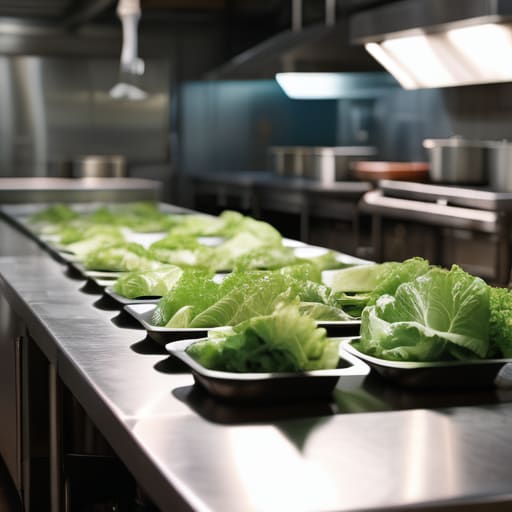
When you’re looking at your catering operational expenditure, the temptation is to look at the big numbers—the food invoices and the rent. But in a school or care setting, the real bleeding usually happens in the gaps between tasks. If you try to squeeze your catering labor cost percentage too tight by running a skeleton crew, you aren’t actually saving money; you’re just shifting the cost from the payroll to the risk register. I’ve seen it a dozen times: a kitchen understaffed to save a few pounds on a spreadsheet ends up with a massive spike in food waste because nobody has the time to manage stock rotation properly, or worse, they skip the deep clean that keeps the equipment running efficiently.
You have to find the balance between a lean operation and a functional one. This is where menu engineering for catering becomes a safety tool, not just a financial one. If you design a menu that uses overlapping ingredients across different dishes, you aren’t just reducing your food waste impact on catering costs; you’re also making life easier for the staff. Fewer unique items mean fewer prep errors and a much lower chance of an allergen cross-contamination incident. Don’t aim for a complex menu that requires precision timing you can’t afford; aim for a smart, repeatable workflow that stays stable even when someone calls in sick.
The Hidden Weight of Indirect Catering Expenses
When people sit down to look at the books, they usually focus on the big, obvious numbers: the price of a sack of potatoes or the weekly wage for the head chef. But if you only track what you can touch, you’re missing the leaks that actually sink the ship. I’ve seen too many school kitchens struggle because they treated indirect catering expenses as an afterthought. We aren’t just talking about the electricity to run the combi-ovens; we’re talking about the cost of the cleaning chemicals that must be used to keep you compliant, the replacement of broken prep bowls, and the sheer amount of time staff spend documenting temperatures instead of cooking.
These “invisible” costs are what turn a seemingly profitable menu into a financial drain. If you aren’t accounting for the food waste impact on catering costs—those half-used bags of spinach or the trays of pasta that go cold because the lunch service ran late—your math will never be right. You can’t manage what you don’t measure, and if you ignore the small, recurring spends, you’ll find your budget evaporated by mid-term without ever knowing why.
The Five Numbers That Actually Determine Your Bottom Line
- Stop looking only at the food invoice. If you aren’t calculating the “wastage tax”—the cost of that tray of pasta that went cold and got binned because the lunch bell rang late—you aren’t actually costing your catering; you’re just guessing.
- Factor in the “safety overhead.” This isn’t just about the price of a thermometer or a box of nitrile gloves; it’s the cost of the time your staff spends documenting temperatures and checking labels. If you don’t budget for that time, they’ll skip it to save a minute, and that’s when the real costs hit.
- Don’t treat energy as a fixed cost. In a school kitchen, the way you sequence your ovens and dishwashers can be the difference between a manageable utility bill and a budget blowout. It’s about operational rhythm, not just the meter reading.
- Account for the “training churn.” It costs money to hire someone, but it costs significantly more to re-train a new person on your specific allergen protocols every six months because your staffing is unstable. Stable, well-paid staff are a cost-saving measure in the long run.
- Watch your chemical spend like a hawk. I’ve walked into kitchens where they were using half the recommended dilution for a sanitizer because they were trying to “save money.” They weren’t. They were just creating a biofilm problem that would eventually require a professional deep clean they couldn’t afford.
The Bottom Line: What Actually Matters When the Books Close
Stop chasing “phantom savings” by cutting the small, essential things like high-quality cleaning chemicals or decent thermometer probes; you’ll end up paying for it tenfold in wasted stock or a massive, avoidable food safety incident.
Real costing isn’t just about the price of a kilo of chicken; it’s about the labour hours required to prep it safely and the energy it takes to store it—if your budget doesn’t account for the hands on deck, your math is wrong.
Build a buffer for the “boring” stuff—the unexpected broken fridge, the sudden staff shortage, or the price hike in allergens—because a budget that leaves zero room for error is just a countdown to a crisis.
Frequently Asked Questions
If I’m trying to tighten the budget, which specific food safety controls are non-negotiable and which ones are just expensive box-ticking?
If you’re tightening the belt, do not—under any circumstances—touch your allergen protocols or your temperature logs. Those aren’t “costs”; they are your insurance against a catastrophe that will bankrupt you far faster than a high paper bill. What you can scrutinize is the frequency of non-critical cleaning schedules or the brand of your consumables. Buy the generic degreaser, but never skip the cross-contamination checks. Tell me your staffing levels, and I’ll tell you what’s essential.
How do I account for the "invisible" cost of staff training and time when I'm trying to figure out if in-house catering is actually cheaper than outsourcing?
You can’t just look at the hourly wage; you have to look at the “cost of being ready.” When you’re in-house, training isn’t a one-off expense—it’s a constant operational drain. I’m talking about the thirty minutes a week spent reviewing allergen logs or the hour a month for a refresher on cross-contamination. If you aren’t accounting for that “lost” production time in your budget, your costings are a fantasy. Don’t guess; track the training hours.
When the numbers say we should be cutting costs, how do I stop that from turning into a dangerous shortcut in allergen management or temperature logging?
Look, when the budget gets tight, the temptation is to cut the “invisible” stuff—the extra ten minutes for a temperature check or the double-check on a label. Don’t do it. If you can’t afford the time, you can’t afford the risk. Instead of cutting the task, look at the process. Can you move to digital logging to save manual entry time? Can you streamline your prep sequence? Protect the non-negotiables; everything else is negotiable.