I’ve spent too many afternoons standing in the corner of steaming, chaotic school kitchens, watching managers hover over clipboards like they’re performing some high-level audit, while the actual danger zones go completely ignored. There is this persistent, exhausting myth that effective oversight means being everywhere at once, or having a supervisor who acts like a glorified hall monitor. Let’s be honest: if your management style is just walking around checking if aprons are tied correctly, you aren’t actually managing risk. When we talk about how supervision at lunch should work, we need to stop pretending that more paperwork equals more safety. In a rush to serve four hundred hungry kids, a supervisor shouldn’t be a bureaucrat; they need to be the person who catches the cross-contamination error before the tray even leaves the hatch.
I’m not here to give you a theoretical lecture or a list of expensive, digital tracking systems you’ll never have the time to use. My promise is much simpler: I am going to show you how to direct your limited staff toward the critical, high-impact movements that actually prevent an incident. We are going to focus on the practical, unglamorous reality of prioritizing the right controls when the pressure is on, so you can run a kitchen that is both safe and, more importantly, sustainable.
Table of Contents
Effective Cafeteria Monitoring Over Constant Surveillance
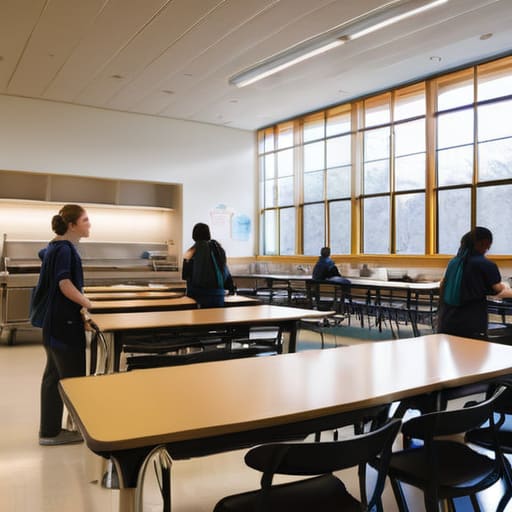
There is a massive difference between someone standing in the corner with a clipboard and someone actually managing the flow of a room. I’ve seen too many schools mistake “constant surveillance” for actual oversight. If your midday duty staff responsibilities are limited to just staring at kids to make sure they aren’t running, you’re missing the point. You don’t need a hawk hovering over every tray; you need staff who are positioned to spot the high-risk friction points—like the transition from the serving line to the seating area where spills happen and temp-sensitive food sits out too long.
Effective cafeteria monitoring isn’t about catching every single student misbehaving; it’s about identifying the moments where safety protocols are most likely to slip. Instead of trying to police every conversation, focus your energy on the critical transition zones. If a staff member is busy managing lunchtime behavior by shouting from across the room, they aren’t watching the handwashing station or the allergen-free zone. Move your people to where the movement is highest, and teach them to look for patterns of risk rather than just individual rule-breakers.
School Lunchroom Safety Protocols for Stressed Staff
When the lunch bell rings and the noise level hits that specific, ear-splitting pitch, your formal school lunchroom safety protocols are going to be the first thing to fly out the window. I’ve seen it a hundred times: the staff are so focused on getting the hot food out that they stop noticing the chaos in the dining hall. You cannot expect a single person to manage both a high-speed serving line and the behavior of two hundred hungry children. It doesn’t work, and it isn’t safe.
Instead of trying to enforce a perfect, rigid system, you need to define clear midday duty staff responsibilities that actually match the reality of the room. If your lunchtime supervisors are tasked with both cleaning up spills and managing student behavior, they will fail at both. I tell my teams to pick a lane. One person handles the flow and the spills; the other focuses entirely on managing lunchtime behavior and spotting the kid who is about to trip over a chair. If you try to do everything at once, you end up doing nothing well, and that is exactly when an accident happens.
Where to Point Your Eyes When the Rush Hits
- Stop trying to watch the whole room. You can’t be everywhere at once, and trying to do so just means you’ll miss the big stuff. Instead, pick your “danger zones”—the allergen prep station and the handwashing sinks—and make those your primary focus. If those two areas are tight, you’ve already mitigated half your risk.
- Watch the handovers, not just the hands. Most mistakes happen in the three seconds between one person finishing a task and another starting it. I’ve seen more cross-contamination during a frantic shift change or a mid-service staff swap than I ever have during steady-state cooking.
- Use your senior staff as “safety anchors” rather than just extra hands. If your most experienced cook is stuck peeling potatoes for forty minutes, you’ve wasted your best supervisory asset. They should be moving, checking temperatures, and spotting the person about to use the wrong tongs, not buried in prep.
- Listen for the “chaos noise.” In my experience, when a kitchen gets too loud or too frantic, that is exactly when the paperwork stops and the shortcuts start. If the atmosphere shifts from “busy” to “uncontrolled,” that’s your cue to step in and slow the line down before someone forgets a critical allergen check.
- Audit the “invisible” tasks. It’s easy to supervise someone plating up a meal, but it’s much harder to supervise someone cleaning a cutting board or checking a delivery temperature. Don’t just watch the output; look at the habits being formed in the gaps between the service rushes.
The Bottom Line: Where to Focus Your Energy
Stop trying to watch everything at once; pick your three highest-risk zones—usually allergen handling, temperature checks, and hand hygiene—and make those the non-negotiables for your team.
Supervision isn’t about catching people out, it’s about being the safety net that catches the small, boring mistakes before they become a crisis.
If a protocol is so complicated that it falls apart the moment the lunch rush hits, it’s a bad protocol; simplify the paperwork so the actual safety work can get done.
Frequently Asked Questions
I’ve got a team of three doing the work of five; what are the absolute non-negotiables I should have them watch during the rush?
If you’re down to three people, stop trying to supervise everything. You’ll just end up hovering and making them more frantic. Forget the tidy counters for now. Your non-negotiables are the “Big Three”: allergen integrity (no cross-contact on the line), temperature discipline (getting that hot food out fast), and hand hygiene. If they can keep those three pillars from collapsing during the rush, you’ve won. Everything else is just decoration.
How do I stop my supervisor from spending the whole service stuck in the office doing paperwork instead of actually being on the floor?
The office is where food safety goes to die. If your supervisor is staring at a spreadsheet while a junior staff member is cross-contaminating the allergen-free station, that paperwork is worthless. Tell them straight: the logs can be checked in the quiet ten minutes after service, but they can’t fix a mistake made during the rush. Their job isn’t to manage the files; it’s to manage the people and the temperatures. Get them on the floor.
If I can't be in two places at once, how do I ensure allergen communication stays accurate when the kitchen gets chaotic?
You can’t be in two places at once, and trying to be is how mistakes happen. Stop trying to micromanage the whole line and focus on the “handoff.” The danger isn’t the cook; it’s the gap between the cook and the server. Implement a hard rule: if a dish changes—even a brand of sauce—the server stops. Use a single, high-visibility “Allergen Alert” board. If it’s not on the board, it’s not being served. Keep it simple.