I once walked into a school kitchen during a mid-morning rush where the staff were practically weeping over a “state-of-the-art” undersink unit that had just choked on a single stray spoon. They’d spent their entire maintenance budget on a machine that looked beautiful in a brochure but was completely useless for the reality of serving four hundred hungry kids on a forty-minute window. Most sales reps will try to sell you on high-tech touchscreens and fancy rinse cycles, but when I’m teaching you how to choose a commercial dishwasher, I’m not interested in the bells and whistles that just end up being broken by Tuesday.
I’m not here to give you a glossy sales pitch or a list of features that only matter in a showroom. Instead, I want to talk about the unsexy reality of your workflow: cycle times that actually match your lunch rush, ease of cleaning that your exhausted team will actually bother with, and machines that don’t require a PhD to operate. I’ll help you figure out what you can realistically sustain, so you don’t end up with a shiny way to fail an inspection.
Table of Contents
Matching Dishwasher Throughput Capacity to Your Actual Service Rush
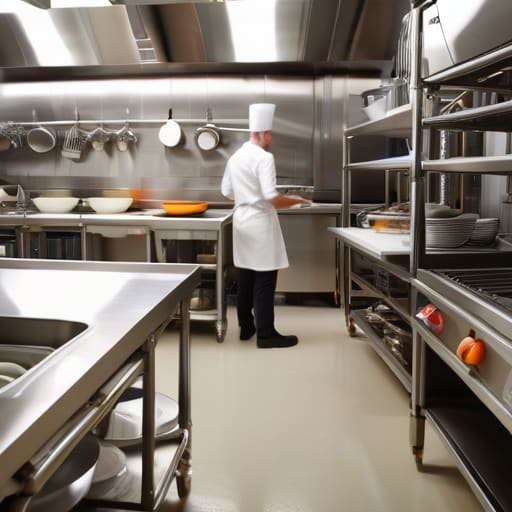
Matching Dishwasher Throughput Capacity to Your Actual Service Rush
I’ve stood in too many school kitchens at 12:15 PM, watching a single, overwhelmed staff member struggle with a mountain of trays because the machine simply can’t keep up. You need to look past the glossy brochure specs and calculate your actual peak load. If you are serving four hundred children in a sixty-minute window, a machine rated for “medium capacity” is a fantasy. You don’t just need a machine that cleans; you need a specific dishwasher throughput capacity that accounts for the reality of a frantic service rush, not the theoretical maximums used in sales pitches.
Don’t make the mistake of over-speccing just to feel prepared. If you buy a massive, high-cycle unit but only have the staff to load and unload it properly, you’ve just wasted your budget on a paperweight. Conversely, if you undersize, you’ll end up with a pile of dirty crockery that forces staff to take shortcuts with cleaning, which is where my real concerns begin. Whether you opt for high-temperature vs low-temperature machines depends entirely on your workflow and chemical access, but the capacity must be realistic for your headcount.
Balancing Commercial Warewashing Equipment Costs Against Long Term Sanity
When you look at the price tags for new gear, it is incredibly easy to get tunnel vision on the initial outlay. But I have seen too many kitchens go into debt for a top-of-the-line machine, only to find that the commercial warewashing equipment costs don’t even account for the specialized chemicals or the technician’s call-out fee when a proprietary part snaps. You have to look past the sticker price and ask yourself: what is the cost of a broken machine during a Tuesday lunch rush? If you can’t afford the maintenance, you can’t afford the machine.
You also need to weigh up the choice between high-temperature vs low-temperature machines based on your actual daily reality. A high-temp machine is the gold standard for meeting commercial kitchen sanitation standards because that final rinse is doing the heavy lifting for you, but it comes with higher energy demands and more complex plumbing. If your budget is tight, don’t just go for the cheapest low-temp option to save a few quid; if your staff aren’t perfectly disciplined with chemical dosing, you aren’t actually cleaning anything—you’re just making bubbles.
Five Things the Sales Brochure Won't Tell You
- Check the plumbing and the power before you sign anything. There is nothing more demoralising for a kitchen team than a brand-new, top-of-the-line machine arriving only to sit idle for three weeks because the electrical socket isn’t up to the load or the drainage is a nightmare. If you can’t make it work on day one, it’s just an expensive piece of metal taking up floor space.
- Prioritise ease of cleaning over “smart” features. I have seen too many kitchens with fancy digital interfaces that become useless the moment a staff member, exhausted at the end of a double shift, can’t figure out how to reset a sensor. You want a machine that can be wiped down and descaled in five minutes, not one that requires a manual and a degree to maintain.
- Don’t ignore the noise. If you are running a small, enclosed kitchen or a school canteen where kids are milling about, a machine that sounds like a jet engine taking off is going to drive your staff mad. A loud, jarring environment leads to mistakes, and mistakes in a kitchen lead to accidents.
- Verify the chemical compatibility. It’s easy to get seduced by a low upfront cost on a machine, but if it requires a specific, proprietary detergent that costs three times what the standard stuff does, your “saving” will vanish by the end of the first quarter. Ask exactly what chemicals you’ll be buying every month before you commit.
- Think about the “recovery time” between cycles. A machine might boast a fast wash time, but if it takes twenty minutes to get the water back up to the correct sanitising temperature after a heavy load, your service will grind to a halt. You need a machine that can handle the ebb and flow of a real service, not just a single, perfect cycle.
The Bottom Line: Don't Buy a Machine That Breaks Your Workflow
Match your machine’s cycles to your peak service rush, not your average hour; if the rack can’t keep up when the lunch rush hits, you’ll end up with a pile of dirty plates and a staff that’s too stressed to follow basic hygiene protocols.
Prioritize ease of use and reliable temperature-rise over fancy digital displays; a dishwasher is only as good as the person operating it, and if the cleaning sequence is too complicated for an exhausted team, you’re just inviting a non-compliance issue.
View the initial cost as a long-term sanity check; it is much cheaper to invest in a robust, reliable unit now than to pay for constant repairs or, worse, to deal with the fallout of a failed inspection because your cheap machine couldn’t hit the required sanitization temperatures.
Frequently Asked Questions
My kitchen is tiny and cramped—is there a way to get a decent wash without needing a massive footprint for a pass-through machine?
If you’re working in a kitchen where you’re constantly bumping elbows, forget the pass-through dream. You don’t need a massive footprint to get clean plates; you need a high-quality undercounter machine. They’re compact, but don’t let the size fool you—ensure it has a fast cycle time. If it takes twenty minutes to wash a rack, your dirty dishes will pile up, and that’s when your hygiene standards start to slip.
We're already struggling with staffing; how much extra time is my team actually going to spend on the daily maintenance and descaling this thing requires?
If you’re already short-staffed, don’t buy a machine that requires a PhD in maintenance just to keep it running. Most people ignore the “hidden” labor: descaling, cleaning filters, and checking chemical levels. If your team is too exhausted to do a five-minute nightly wipe-down, that machine will be scaled up and failing within a month. Look for models with easy-access filters and automated dosing; if the maintenance isn’t intuitive, it won’t happen.
I can see the price difference between a budget model and a high-end one, but is the energy and water saving actually going to show up on my monthly bills, or is it just marketing fluff?
It’s not just marketing fluff, but don’t let the sales pitch blind you. In a high-volume kitchen, the difference between a cheap, thirsty machine and an efficient one is measurable in your utility bills every single month. However, those savings only manifest if your staff actually uses the machine correctly. If they’re bypassing cycles or leaving it running empty during lulls, you’re just paying a premium for a high-end machine that’s behaving like a budget one.