I remember standing in a school kitchen three years ago, watching a tired prep cook pull a tray of pasta from a lukewarm oven and immediately head toward the service line. The steam was rising, but it wasn’t the right kind of steam; it was that tepid, dangerous mist that tells me the core temperature is likely sitting in the “danger zone.” Most people think they know how reheating should be done because they saw a colorful infographic once, but they don’t realize that reheating is actually a high-stakes recovery mission. If you aren’t hitting those internal temperature targets with precision, you aren’t just serving a meal; you’re essentially gambling with the health of every child in that dining hall.
I’m not here to hand you a twenty-page manual filled with fluff that your staff won’t have the time to read. Instead, I’m going to give you the practical, unvarnished truth about managing heat in a high-pressure environment. We are going to talk about the specific, boring controls—like probe calibration and batch management—that actually prevent an incident. I’ll show you how to make these steps stick, even when you’re short-staffed and the lunch bell is about to ring.
Table of Contents
Mastering Food Safety Reheating Temperatures When Time Is Short
When the lunch rush hits and you’re staring down a mountain of pre-prepped pasta or stew, the temptation to just “get it hot” is massive. But “hot to the touch” is a dangerous lie. I’ve seen too many kitchens treat the microwave like a magic wand, hoping a quick blast will do the trick. If you aren’t checking that the core of the food hits at least 75°C, you aren’t reheating; you’re just warming up a potential outbreak. You need to be hunting for that safe internal temperature for leftovers every single time, because bacteria don’t care how much you’re sweating behind the service line.
If you are using a microwave, please, for the love of everything, stop the “set it and forget it” habit. Microwaves are notorious for creating cold spots where pathogens can survive and thrive. You have to stir, rotate, and cover the food to ensure the heat is distributed. It’s an extra thirty seconds of work, but it is the difference between a successful service and preventing foodborne illness from becoming a headline in the local paper. Focus on the center, not the edges.
Avoiding the Danger Zone for Food Temperature in Busy Shifts
Here is the reality of a busy lunch service: you aren’t just fighting the clock; you’re fighting biology. When you’re rushing to get a large batch of pasta or stew back up to temperature, the temptation is to just “get it hot” and move on. But if you let that food linger in the lukewarm middle ground, you are essentially inviting bacteria to have a party. This is the danger zone for food temperature, that window between 8°C and 63°C where pathogens don’t just grow; they multiply at an exponential rate. If your food spends too much time drifting through those temperatures, no amount of reheating later will reliably fix the damage already done.
I’ve seen too many kitchens treat reheating like a slow simmer that lasts twenty minutes. If you’re working with leftovers or pre-prepared components, you need to be aggressive. You aren’t just warming things up; you are performing a critical safety intervention. My rule of thumb is simple: don’t aim for “warm,” aim for “piping hot.” Whether you’re using a heavy-duty pan or following specific microwave reheating safety tips like stirring halfway through to break up cold spots, your goal is to blast through that danger zone as fast as humanly possible.
Five Non-Negotiables for the Reheating Rush
- Stop the “just warming it through” habit. If you aren’t hitting 75°C (or 165°F) all the way through to the very centre of the batch, you haven’t reheated it; you’ve just made lukewarm food that’s still sitting in the danger zone.
- One reheat, and one reheat only. I see it all the time in school kitchens—staff trying to save money by reheating a tray of pasta a second time because it didn’t sell at lunch. Don’t do it. Once it’s been heated and cooled, it’s done. If it’s not used, it goes in the bin.
- Break up the big chunks. If you’re reheating a massive pot of stew or a thick sauce, don’t just stick the whole thing in the middle of the stove. Spread it out or stir it constantly. If the outside is scalding but the middle is still fridge-cold, you’ve failed the most basic part of the job.
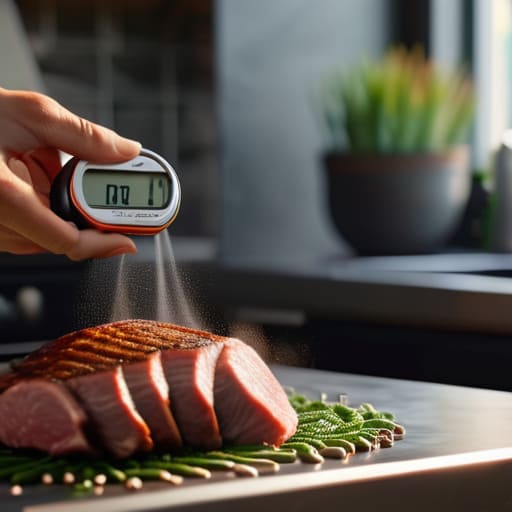
- Use the right tools, not just your eyes. I know you think you can tell it’s hot by looking at the steam, but your eyes lie to you. Use a probe. It takes ten seconds, and it’s the only way to prove to me—or a parent—that the food is actually safe.
- Watch the clock as much as the thermometer. You can’t leave a massive pot of soup sitting on a low flame for forty minutes waiting for it to get hot. That’s just an extended invitation for bacteria to throw a party. Get it up to temperature quickly, or don’t bother starting the process.
The Bottom Line: What Actually Matters When the Rush Hits
Stop guessing if it’s hot enough. You aren’t looking for “steaming”; you are looking for a probe reading that hits 75°C (or 165°F) in the thickest, coldest part of that batch. If the probe doesn’t lie, the food is safe.
Reheating is a one-shot deal. Once you’ve brought that food back up to temperature, it stays there or it gets chilled immediately. If you try to “warm it up again” halfway through service because you ran out of steam, you’re just inviting bacteria to a party.
Don’t let your equipment dictate your safety. If your bain-marie is struggling to keep up with the volume, stop using it as a holding unit. It’s a heater, not a fridge, and it won’t save you if you’re trying to coax lukewarm food into something edible.
Frequently Asked Questions
What do I do if the middle of the tray is steaming hot but the edges are still lukewarm?
That’s a classic sign of uneven heat distribution, and it’s exactly where things go wrong. If the edges are lukewarm, you’ve got a breeding ground for bacteria sitting right there in the middle of your tray. Stop what you’re doing. You need to stir it, break it up, or spread it thinner across a larger tray. Don’t just keep blasting it; you’ll burn the outside while the inside stays unsafe. Check the core again.
Is it actually safe to reheat a sauce that’s been sitting out on the prep table for an hour while we were serving lunch?
The short answer? No. If that sauce has been sitting out for an hour, you’ve already let the clock run against you. I’ve seen enough cases where “just a little bit of time” turned into a massive outbreak. Once it’s in that danger zone, bacteria start the party, and reheating won’t always kill the toxins they’ve already left behind. If it’s been sitting there, bin it. It’s a waste of money, but it’s cheaper than a food poisoning claim.
How many times can I realistically reheat a batch of something before the quality—and the safety—completely falls apart?
Here’s the short answer: Once. If you can, only once. Every time you pull a batch out of the danger zone and then let it sit, you’re inviting bacteria to a party you didn’t invite them to. Beyond that, the texture turns to mush and the safety margins vanish. If you’re over-preparing because you’re short-staffed, cook smaller batches more often. It’s more work upfront, but it’s better than a food poisoning outbreak.