I’ve spent sixteen years walking into kitchens where the staff are exhausted, the budget is non-existent, and the lunch rush is a battlefield. Most food safety training manuals will try to tell you that cross-contamination is some complex, high-level scientific phenomenon that requires expensive, colour-coded everything and a PhD to manage. That is a lie. In my experience, understanding how cross contamination occurs isn’t about mastering molecular biology; it’s about the thirty-second shortcuts taken when a timer is screaming and a line of hungry schoolchildren is staring you down. It’s the stray crumb on a prep table or the shared tongs that everyone assumes are clean, but aren’t.
I am not here to give you a lecture or a list of impossible standards that will fall apart the moment you get busy. My promise to you is different: I’m going to show you the actual, messy ways things go wrong in a working kitchen. We are going to look at the small, boring failures that lead to big risks, and I will help you figure out which controls you can realistically sustain without burning your team out.
Table of Contents
Microbial Transfer in Food Prep the Unseen Risk
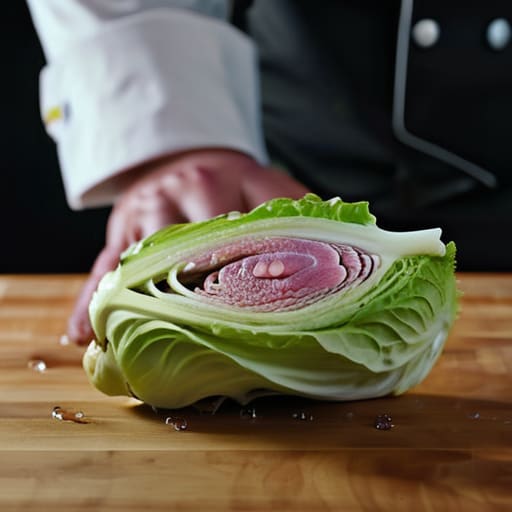
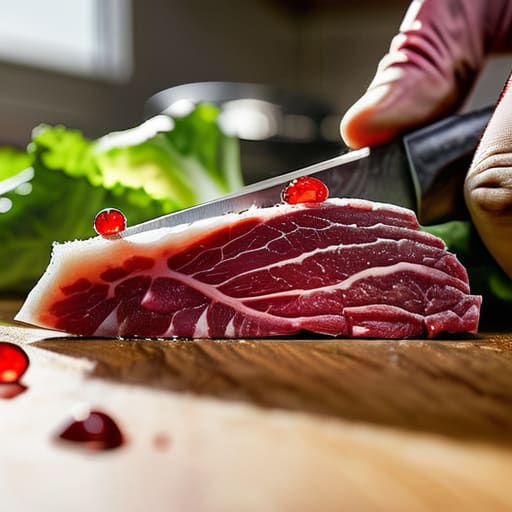
When I walk into a kitchen, I’m not just looking at the mess on the floor; I’m looking at the invisible stuff. Microbial transfer in food prep is the silent killer of a good reputation. It’s rarely a dramatic spill; it’s usually the subtle, mindless movement of bacteria from a high-risk item to something that’s ready to eat. I’ve seen it a hundred times: a chef handles raw chicken, wipes their hands on a tea towel—which is already a red flag—and then reaches for a head of lettuce. That lettuce is now a delivery system for Salmonella.
The reality is that preventing foodborne illness isn’t about complex science; it’s about discipline in the small moments. It’s about separating raw meat and produce with the same rigor you’d use to guard a locked door. If your staff is moving too fast to remember which board is which, the risk isn’t just theoretical—it’s sitting on a plate waiting for a child to eat it. You don’t need a chemistry degree to fix this; you just need to make sure that sanitizing food contact surfaces is a non-negotiable part of the rhythm, not an afterthought when the rush dies down.
Separating Raw Meat and Produce Without Losing Your Mind
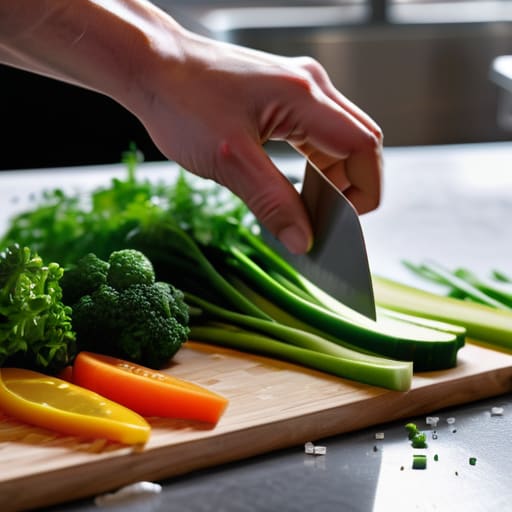
In a busy school kitchen, the theory of “separating raw meat and produce” sounds easy until you’re staring down a delivery of fifty kilos of chicken and a mountain of salad prep at 10:00 AM. You don’t have the luxury of a pristine, empty workspace. Most mistakes happen when we try to be too clever—using the same prep table for the raw protein and then just “wiping it down” before the vegetables go on. A quick wipe with a damp cloth isn’t enough; you aren’t just moving the bacteria around, you’re spreading it.
To make this work without losing your sanity, you have to rely on strict sequence and physical barriers. If you can’t manage separate stations, you must manage the clock: prep your high-risk produce first, clear the area, and only then bring out the raw meats. If you’re sharing a sink for both rinsing veg and defrosting poultry, you’re asking for trouble. It’s about building a workflow that makes preventing foodborne illness a natural part of the rhythm, rather than an extra chore that gets skipped when the lunch bell is about to ring.
The Real-World Culprits: Where the System Breaks Down
- The “Just This Once” Utensil Swap: It happens during the lunch rush when someone grabs the tongs used for raw chicken to plate up the cooked veg because the clean ones are in the dishwasher. That thirty-second shortcut is exactly how a salmonella outbreak starts.
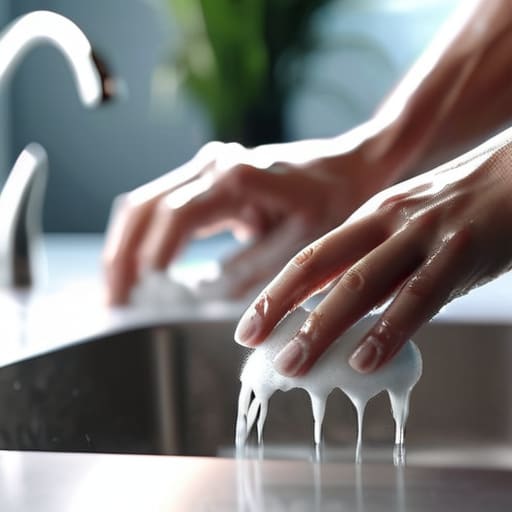
- The Handwashing Illusion: I see it constantly—staff washing their hands with cold water for three seconds and then immediately touching a prep surface or a bread roll. If you aren’t using warm water and actually scrubbing the skin, you haven’t cleaned anything; you’ve just moved the bacteria around.
- The Cleaning Cloth Chaos: A cloth that’s been sitting in a bucket of grey, lukewarm water for three hours isn’t a cleaning tool; it’s a delivery system for pathogens. If you aren’t switching to a fresh, sanitized cloth between tasks—especially after dealing with allergens—you’re just spreading the problem.
- Storage Logic Failures: It’s not just about the fridge; it’s about the hierarchy. If I see a container of pre-cut salad sitting on a shelf above an open tray of raw mince, the risk is already too high. Gravity is a constant, and it will move those juices straight onto your ready-to-eat food.
- The Allergen “Invisible” Transfer: This is the one that keeps me up. It’s the dusting of flour in the air or the shared spice tin that gets used for both gluten-free and standard pasta. You can’t see it, you can’t smell it, but for a child with a severe allergy, that tiny oversight is a catastrophe.
What to actually focus on when the rush hits
Stop trying to be perfect at everything and focus on the high-risk handovers—like moving from raw protein to ready-to-eat veg—because that’s where the real danger lives.
If your cleaning schedule is so long that nobody actually finishes it, you don’t have a cleaning problem; you have a workflow problem that needs fixing before someone gets sick.
Documentation isn’t about pleasing me during an inspection; it’s your only proof that the small, boring habits—like checking a fridge temp or a color-coded board—actually happened when things got chaotic.
Frequently Asked Questions
I’ve got a tiny kitchen and a tiny team; is it actually possible to keep everything separate without doubling my prep time?
Look, I’m not going to tell you to buy three different sets of colour-coded equipment if you don’t have the cupboard space for them. That’s box-ticking that doesn’t work in a cramped kitchen. Instead, focus on timing. Prep your allergens or high-risk produce first, when the surfaces are clean and the rush hasn’t started. If you can’t separate by space, separate by sequence. It’s about discipline, not just more gear.
We use color-coded boards, but is that enough, or am I just ticking a box while the real risk happens elsewhere?
Color-coded boards are a great start, but let’s be honest: they’re just plastic if the person using them is rushed. I’ve seen “red” boards used for raw chicken, then rinsed in a sink full of dirty water and used for veg ten minutes later. The risk isn’t the color; it’s the sequence. If you aren’t also enforcing strict handwashing between tasks and ensuring your cleaning schedule actually keeps those boards sterile, you’re just ticking a box.
When things get hectic during the lunch rush, what is the one "boring" thing I should never, ever let my staff skip?
It’s hand hygiene. I know, it sounds patronizing, but when the tickets are piling up and the lunch rush is hitting, that’s when people start treating the handwash sink like an optional extra. They skip the soap, they skip the drying, and they start moving between raw prep and service with “clean” hands that aren’t. If you can only enforce one non-negotiable during a rush, make it the handwash. Everything else can wait; a cross-contamination event won’t.