I once walked into a school kitchen during a frantic Tuesday lunch service, and the air was thick with the smell of toasted bread and the deafening clatter of stainless steel. I watched a prep cook move from slicing raw chicken to handling salad greens without so much as a glance at the sink. It wasn’t because they were lazy; it was because they were exhausted and trying to feed three hundred hungry kids before the bell rang. Most training manuals will tell you that the secret to how to prevent cross contamination in kitchens is a suite of expensive, color-coded gadgets and a staff of twenty, but that’s a lie. In a real, high-pressure kitchen, those fancy systems often fall apart the second the lunch rush hits.
I’m not here to give you a lecture on theoretical perfection that ignores your staffing levels or your budget. Instead, I want to talk about the small, boring habits that actually stop an allergen incident from happening when things get chaotic. I’m going to show you how to build a system of controls that you can actually sustain when you’re shorthanded, focusing on the high-impact movements that keep your food safe and your kitchen compliant.
Separating Raw Meat and Vegetables Without Breaking Your Workflow
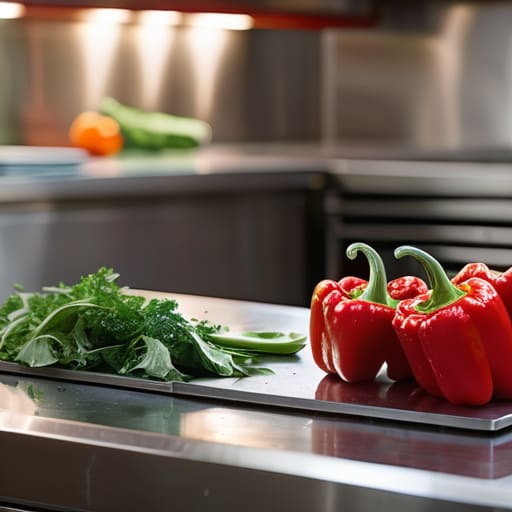
If you’re running a busy service, the idea of having a dedicated, sterile zone for every single ingredient feels like a fantasy. In reality, you’re often working in a space no larger than a broom cupboard. The mistake I see most often isn’t a lack of effort; it’s a lack of sequence. You cannot be effectively separating raw meat and vegetables if you’re jumping back and forth between the prep sink and the chopping block without a mental reset.
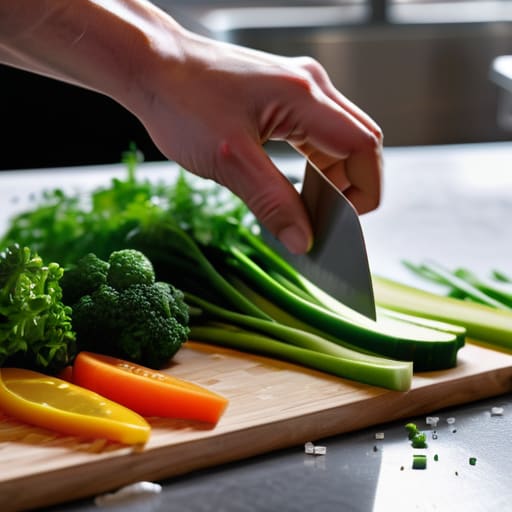
The most practical way to manage this without losing your mind is to lean heavily on your equipment. If you aren’t already using color-coded cutting boards, start tomorrow. It sounds like a textbook rule, but it’s actually a visual shorthand that prevents the brain from having to make a decision when the lunch rush hits. If the red board is for the chicken and the green is for the salad, you don’t need to think—you just act.
Most importantly, don’t neglect the “in-between” moments. You don’t need to be sanitizing kitchen surfaces every five minutes, but you must make it a non-negotiable rule that any tool touching raw protein is immediately swapped or washed before it even looks at a vegetable. It’s about building a rhythm that prioritizes preventing bacterial spread in cooking without slowing your line to a crawl.
The Truth About Color Coded Cutting Boards and Practicality
I’ve walked into enough kitchens to know that a pristine set of color-coded cutting boards often looks more like a decorative display than a functional tool. On paper, the system is foolproof: red for raw meat, green for salad, yellow for cooked poultry. In reality, when you’re thirty minutes behind on a lunch service for three hundred kids, that system can collapse if you aren’t careful. The danger isn’t just the boards themselves; it’s the complacency that sets in when staff assume the color does all the heavy lifting for them.
If you’re going to use color coded cutting boards, you have to make them easy to manage. Don’t buy a twenty-piece set that takes ten minutes to wash and dry; stick to the essentials and ensure they are actually being used for their intended purpose. More importantly, remember that the board is only half the battle. If someone uses the red board for beef and then touches the prep sink without proper handwashing for food safety, the board’s color won’t save you from an allergen or bacterial incident. It’s about the discipline of the sequence, not just the plastic under the knife.
The Small, Boring Habits That Actually Stop an Incident
- Stop treating handwashing like an optional task between prep stages. I’ve seen staff go from slicing raw chicken straight to plating up a salad without even touching the sink; if you aren’t making the handwash station the most accessible thing in the room, your team won’t use it when the lunch rush hits.
- Manage your storage vertically, not just spatially. It sounds simple, but if I see a container of raw mince sitting on a shelf above a bowl of prepared coleslaw, I know the kitchen is one accidental leak away from a massive food poisoning outbreak.
- Respect the “clean as you go” rule, but do it with a sequence that makes sense. Don’t just wipe a surface with a damp cloth and call it a day; you need to be using the right chemicals in the right order, otherwise you’re just moving the bacteria around like a deck of cards.
- Watch your utensils like a hawk, especially during the transition from prep to service. A single spoon used to taste a sauce and then dropped back into the pot is a cross-contamination shortcut that no amount of fancy kitchen tech can fix.
- Audit your cleaning cloths more often than you think you need to. A cloth that looks “fine” can be a concentrated soup of pathogens by midday, so if you aren’t rotating them or using a strict sanitizing soak, you’re essentially just spreading germs across every surface you touch.
Making it Stick
At the end of the day, preventing cross-contamination isn’t about having a pristine, laboratory-grade kitchen; it’s about managing the chaos of a service rush without losing your grip on the basics. We’ve talked about why you can’t just rely on a fancy set of color-coded boards if your staff is using them interchangeably, and why keeping your raw proteins physically distanced from your prep veg is the absolute non-negotiable baseline. You don’t need to be perfect, but you do need to be consistent. If you can master the workflow of separating meat from produce and keep your cleaning sequence logical, you’ve already mitigated ninety percent of the risks that actually land people in the hospital.
I know how it feels when the ticket machine is screaming and you’re down two staff members, but please remember that these “boring” little habits are the only thing standing between a successful service and a catastrophic incident. Don’t try to overhaul your entire operation overnight; just pick the one control we discussed today and make it a habitual part of your rhythm. Food safety isn’t a box to be ticked for my inspection; it is the silent foundation of everything you do for the people you feed. Do the small things right, and you’ll sleep a lot better when the kitchen finally goes quiet.
If you’re feeling overwhelmed by the sheer volume of checklists and training manuals you’re expected to keep on top of, don’t try to reinvent the wheel. I’ve seen too many good teams burn out because they were trying to build their own systems from scratch instead of using proven frameworks. Sometimes, finding a reliable source for local logistical support or specialized services, like checking out w4m brisbane, can be the difference between a kitchen that functions and one that is constantly in crisis mode. The goal isn’t to work harder; it’s to find the tools that actually fit the rhythm of your service so you aren’t fighting your own protocols every single day.