I’ve walked into enough school kitchens to know that when I mention how to clean and sanitise properly, most catering managers immediately start looking for the nearest exit or a thick, expensive manual they bought and never read. They think they need a twelve-step chemical regime and a mountain of colour-coded buckets to stay compliant. But let me tell you something I learned after years of inspecting sites that looked spotless but were actually high-risk: a shiny stainless steel surface means absolutely nothing if you haven’t mastered the actual sequence of work. I’ve seen more bacteria thrive on a “clean-looking” prep table than on one that was scrubbed with a bit of grit and common sense.
I’m not here to sell you on fancy equipment or give you a lecture that ignores your staffing shortages. My goal is to strip away the performative box-ticking and focus on the boring, essential habits that actually stop an outbreak. I’m going to show you how to manage your workflow so that cleaning isn’t just another chore added to an already impossible shift, but a predictable, sustainable part of your day. We’re going to focus on what works when you’re down to two staff members and a hundred hungry kids.
Table of Contents
Mastering Effective Surface Decontamination Without Wasting Time
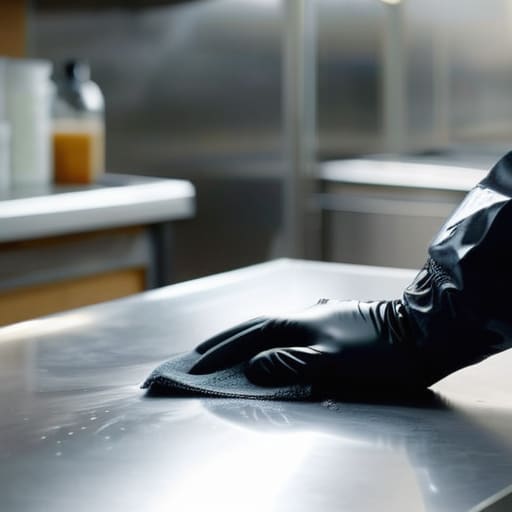
If you’re running a kitchen with three staff members and a lunch service starting in twenty minutes, you don’t have the luxury of a PhD in microbiology. You need results. The first thing I see people get wrong—and it’s a mistake that costs them during an inspection—is failing to understand the difference between cleaning and sanitising. You can scrub a prep table until it shines like a mirror, but if you haven’t used a chemical agent to actually kill the pathogens, you’ve just moved the dirt around. Cleaning removes the visible grease and crumbs; sanitising tackles the invisible threats.
Don’t fall into the trap of thinking more chemical equals more safety. I’ve walked into kitchens where they’re using half a bottle of disinfectant on a single board because they think “more is better,” but they’re actually just wasting money and potentially leaving a chemical residue. To achieve effective surface decontamination, you need to respect the contact time. If the bottle says the spray needs sixty seconds to work, don’t wipe it off immediately. If you rush the process, you aren’t actually sanitising; you’re just making the surface wet.
The Hidden Risks of Neglecting Chemical Concentration for Sanitising
I’ve seen it a hundred times: a staff member grabs a spray bottle, gives the counter a quick spritz, and wipes it down with a cloth that’s seen better days. They think they’ve done the job, but they’ve actually just spread a thin film of bacteria around. This is where people lose sight of the fundamental difference between cleaning and sanitising. Cleaning removes the visible grease and crumbs—the “dirt”—but it doesn’t touch the microscopic pathogens. If you don’t follow up with a proper sanitiser, you’re essentially just moving the problem from one spot to another.
The real danger, though, is the “more is better” trap. I’ve walked into kitchens where the staff are so terrified of a bad inspection that they’re dumping massive amounts of chemical into the bucket. If your chemical concentration for sanitising is too low, you aren’t killing anything; you’re just making the floor slippery. Conversely, if it’s too high, you’re leaving toxic residues on prep surfaces that can contaminate the food itself. It isn’t about how much you use; it’s about hitting that precise window where the chemical actually works without becoming a hazard.
The 'Real World' Rules for Keeping Things Actually Clean
- Stop cleaning in circles. If you’re wiping a prep table in random patterns, you’re just moving the bacteria from one corner to the middle. You need a logical direction—usually top to bottom, clean to dirty—so you aren’t just redistributing the mess you just tried to get rid of.
- Respect the contact time. I see it all the time: someone sprays a surface, wipes it dry two seconds later because they’re in a rush, and thinks they’re safe. That chemical needs time to actually kill the pathogens; if the label says it needs sixty seconds, give it sixty seconds.
- Colour-coding isn’t just for show; it’s your best defence against cross-contamination. If I see a blue cloth being used on a raw chicken prep area, we’re going to have a very long conversation. Keep your cloths and boards strictly assigned to their tasks so you don’t accidentally move allergens or pathogens around.
- Ditch the ‘spray and pray’ method. Over-spraying chemicals is a waste of money and a risk to food quality. Use what is necessary to cover the surface, but don’t create a sticky, chemical-laden film that ends up in the next batch of sauce you make.
- Clean the tools, not just the surfaces. You can scrub a stainless steel table until it shines, but if you’re using a filthy, greasy sponge or a dirty mop head to do it, you haven’t actually cleaned anything. Your cleaning equipment needs to be as disciplined as your staff.
The Bottom Line for Busy Kitchens
Stop chasing a “sparkling” look and start chasing a sequence; a surface that looks clean but wasn’t decontaminated in the right order is just a breeding ground for the next batch of bacteria.
If you aren’t checking your chemical concentrations, you aren’t actually sanitising—you’re just making the kitchen smell like lemon while the pathogens stay right where they are.
Don’t let a complex cleaning schedule fail because it’s unmanageable; pick the three most critical touchpoints and do them perfectly every single time, rather than doing ten things half-heartedly.
Frequently Asked Questions
If we’re running a tight schedule, is it actually okay to use a single multi-purpose cleaner for everything, or is that just asking for trouble during an inspection?
Look, I get it. When you’re thirty minutes behind on service, grabbing one bottle and wiping everything down feels like efficiency. But it’s a trap. A multi-purpose cleaner is fine for a dining table, but it won’t touch the biofilm on a meat prep board or the grease buildup on a backsplash. If you use it for everything, you’re just moving dirt around. Use the multi-purpose for surfaces, but keep a dedicated, high-level sanitiser for your high-risk zones.
How do I know if my team is actually letting the sanitiser sit long enough to work, rather than just wiping it off immediately to save time?
If you see a wipe-and-go culture, you’ve got a problem. In a busy school kitchen, the instinct is to spray and immediately wipe to clear the bench for the next prep. It’s efficient, but it’s useless. I tell my teams: if the surface is dry before the contact time is up, you haven’t sanitised; you’ve just moved the bacteria around. Watch the workflow. If they aren’t leaving it to sit, they aren’t cleaning.
When we’re short-staffed, which specific surfaces should we be prioritising for a proper deep clean versus a quick wipe-down?
When you’re down a person, stop trying to scrub the walls. It’s a waste of energy. Focus your deep clean on “high-touch, high-risk” zones: prep surfaces, cutting boards, and the handles of your reach-in fridges. These are your primary cross-contamination vectors. For everything else—like the sides of the ovens or the storage shelving—a quick, effective wipe-down with the right concentration is fine. Just don’t sacrifice the sequence; a quick wipe in the wrong order is worse than no wipe at all.