I remember standing in a school kitchen three years ago, the midday rush just beginning, watching a prep cook use the same cutting board for raw chicken and then immediately slice up salad tomatoes. There was no grand conspiracy or lack of expensive equipment involved; it was just a moment of exhaustion where the small, boring rules were ignored. Most people think that understanding how campylobacter is controlled requires a degree in microbiology or a massive budget for high-tech sanitizers, but that’s nonsense. In reality, the battle against Campylobacter isn’t won in a lab; it’s won in the thirty seconds between tasks when your team is deciding whether or not to wash their hands or swap a board.
I’m not here to give you a lecture or a list of impossible standards that will fall apart the moment your second cook calls in sick. Instead, I’m going to show you the practical, sustainable controls that actually work when you’re serving four hundred meals on a shoestring budget. We are going to focus on the high-impact habits—like strict temperature discipline and correct cleaning sequences—that move the needle. I’ll tell you exactly where to focus your limited energy so you can stop worrying about the paperwork and start focusing on the food.
Table of Contents
Safe Poultry Handling Practices for Understaffed Teams
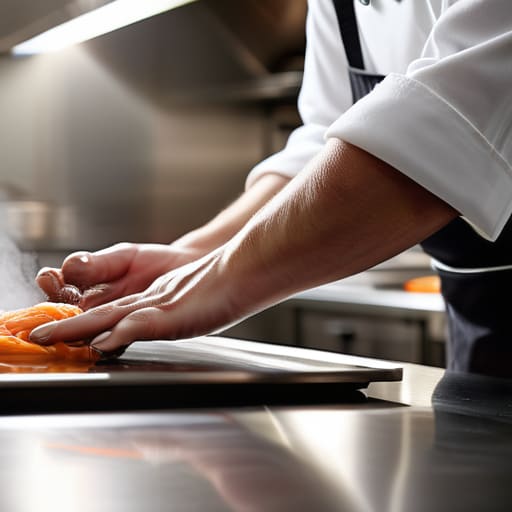
When you’re running a kitchen with two people doing the work of four, the temptation to “batch” tasks is massive. I see it constantly: someone takes a tray of raw chicken out, preps it, and then leaves the board on the counter while they go to deal with a delivery or a spilled drink. That is exactly how you end up with a cross-contamination nightmare. Real safe poultry handling practices aren’t about complex systems; they are about the discipline of finishing one task completely before starting the next. If you don’t have the hands to clean as you go, you need to change your workflow so that raw prep is isolated and finished in a single, focused burst.
It’s also about knowing when to stop guessing. I’ve walked into kitchens where staff were relying on the “look and feel” of a chicken breast to decide if it was done. In a high-pressure environment, “looking cooked” is a recipe for disaster. You need to rely on your probe. Following strict internal meat temperature guidelines is the only way to guarantee you’ve actually achieved bacterial growth inhibition. It might feel like an extra step when the lunch service is screaming for food, but a five-second probe check is significantly faster than dealing with a foodborne illness outbreak.
Bacterial Growth Inhibition Through Realistic Temperature Discipline
I’ve sat in too many kitchens where the fridge thermometer reads 7°C, but the staff member tells me, “Oh, it’s just been a bit busy, we haven’t had a chance to check it.” That 2-degree difference isn’t just a paperwork error; it is the difference between a safe service and a massive outbreak. When you are managing high volumes of poultry, you aren’t just fighting bacteria; you are fighting time. Bacterial growth inhibition relies entirely on your ability to keep that temperature tight and consistent. If your cold storage is drifting, you are essentially giving Campylobacter a head start before the meat even hits the prep table.
Realistically, I don’t expect you to hover over the fridge door all day. What I do expect is a system that works when you’re slammed. This means moving away from “checking when we can” and moving toward a disciplined routine where temperature logs are treated with the same urgency as a fire drill. If your cooling or storage temperatures are even slightly off, your foodborne illness prevention strategy is already failing. It isn’t about being perfect; it’s about catching the drift before the drift becomes a crisis.
Five Non-Negotiables for Keeping Campylobacter Out of the Serving Line
- Stop the ‘double-dipping’ habit with your prep tools. I see it all the time—someone uses a knife to crack a chicken package, then uses that same knife to slice a salad garnish because they’re in a rush. If you don’t have the luxury of a dedicated poultry station, you must have a strict “one task, one tool” rule. Once that poultry touches a surface, that surface is dead to you until it’s been cleaned and sanitised.
- Prioritise your colour-coding, even if it feels like a chore. It isn’t about being fancy or having a designer kitchen; it’s about visual cues that work when the brain is tired. If your team is using the same chopping boards for raw chicken and cooked deli meats, no amount of handwashing is going to save you from a cross-contamination spike.
- Check the ‘danger zone’ logic, not just the thermometer. It’s easy to record a temperature because you’re ticking a box, but I want you to look at the timing. If a batch of chicken is sitting on a prep bench for twenty minutes while someone handles a delivery, you’ve just given Campylobacter a head start. Keep the meat in the fridge until the exact second you are ready to cook it.
- Master the sequence of your cleaning. You can use the strongest chemical in the cupboard, but if you wipe a raw poultry spill and then immediately wipe a prep table without a proper intermediary clean, you’ve just painted the bacteria across the whole kitchen. Clean from clean to dirty, and always follow the sequence: scrape, wash, rinse, sanitise.
- Watch the handwashing, especially after the ‘hidden’ tasks. Everyone remembers to wash after using the toilet, but they forget after handling a leaking chicken pack or emptying the poultry scrap bin. If the hands touch the source, the hands must be scrubbed. It’s the most boring rule in the book, and it’s the one that fails most often when the lunch rush hits.
The Reality Check: What Actually Stops the Spread
Forget the complex manuals; Campylobacter control lives or dies by two things: keeping raw poultry strictly separate from everything else and ensuring your fridge isn’t a graveyard for lukewarm food.
If your team is too slammed to follow a cleaning sequence, you aren’t saving time—you’re just inviting a breakout that will take up ten times more of your afternoon.
Don’t aim for perfection that breaks by lunchtime; aim for the boring, repeatable habits—like checking temperatures and washing hands properly—that your staff can actually sustain when the lunch rush hits.
Frequently Asked Questions
If we're already following the standard cleaning schedule, why am I still seeing cross-contamination risks during the lunch rush?
Because a schedule on a piece of paper doesn’t account for the chaos of a lunch rush. You’ve likely got the “what” and “when” sorted, but the “how” is breaking down when the pressure hits. I see it constantly: a chef grabs a clean knife for prep, then uses it for a quick slice of tomato without thinking, or a prep area gets cluttered with both raw and ready-to-eat items because there isn’t enough space. It’s not a cleaning failure; it’s a flow failure.
How do I actually prove to an inspector that our temperature logs are reliable when we're short-staffed and rushing to get meals out?
Look, I’ve seen the “fudged” logs—the ones where every temperature is a perfect 4°C written in the same pen at 3:00 PM. I know you’re rushing, but that’s a red flag, not a safety net. To prove reliability, show me consistency, not perfection. If a fridge hits 6°C because a door was left ajar during service, log it. Show me the corrective action you took. Real data proves you’re in control; “perfect” data proves you’re lying.
We know poultry needs to be cooked through, but what's the most practical way to check this without slowing down the entire service line?
Look, I know the pressure when the lunch bell rings and you’ve got a queue out the door. You can’t be probing every single chicken nugget. The trick is to stop treating the probe like a chore and start using it as a gatekeeper. Pick your highest-risk items—the bulk chicken breasts or the roast pieces—and check them at the start of service. If those are hitting 75°C, your process is working. Once you’ve verified the batch, trust your temperature logs and your team’s training. Focus your eyes on the outliers, not every single plate.