I remember standing in a school kitchen back in 2014, the lunch rush was ten minutes away, and the air was thick with the smell of overcooked pasta and frantic energy. I watched a cook pull a massive tray of Bolognese out of the oven and leave it sitting on a prep table to “cool down” while they dealt with a broken dishwasher. In that moment, I wasn’t thinking about theoretical microbiology; I was watching exactly how the danger zone works in real-time. That tray wasn’t just cooling; it was becoming a breeding ground for every nasty pathogen we spend our lives trying to stop, all because the staff felt they didn’t have the ten seconds required to move it safely.
I’m not here to lecture you with textbook definitions that belong in a classroom rather than a busy service. My goal is to strip away the jargon and tell you what actually matters when you are short-staffed and running behind. I will show you the practical, unglamorous reality of managing temperatures so you can stop guessing and start controlling the risk.
Table of Contents
Bacterial Growth Temperatures the Invisible Risk in Your Rush
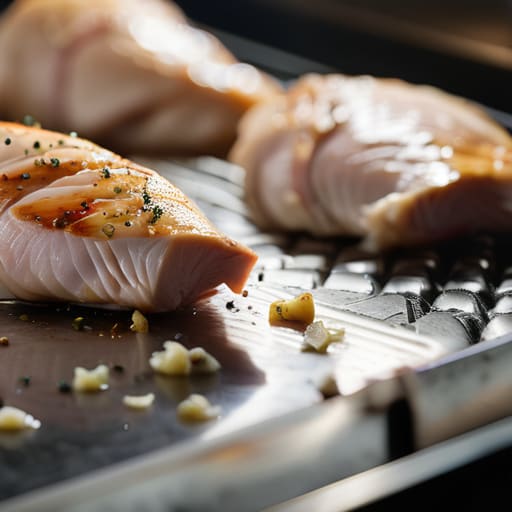
Bacterial growth temperatures aren’t just numbers on a thermometer; they are the speed at which a kitchen loses control. When I walk into a school kitchen during the lunch rush, I’m not looking for perfection, but I am looking for the “drift.” That’s when a tray of cooked chicken sits on a prep table for twenty minutes too long while someone deals with a delivery or a broken dishwasher. In that window, bacteria aren’t just sitting there; they are multiplying at an exponential rate. It’s not a slow crawl; it’s a sprint.
The reality is that perishable food storage rules only work if they are applied when you are at your busiest. Most incidents I investigate don’t happen because a chef is incompetent; they happen because the team is exhausted and the food has been left out just a little too long. If you aren’t hitting your safe internal cooking temperatures or if your cooling process is sluggish, you are essentially creating a breeding ground. You cannot out-clean a temperature failure. Once those microbes have hit their stride in the danger zone, no amount of surface sanitizing is going to fix the problem inside the food.
Perishable Food Storage Rules for When Youre Short Staffed
When you’re staring down a lunch service with two people missing and a mountain of prep, the temptation is to leave that crate of raw chicken on the counter “just for a minute.” That minute is exactly where things go wrong. If you can’t follow every single one of the formal perishable food storage rules to the letter, then you need to at least master the priority of placement. If the fridge is crowded, don’t just cram everything in; ensure your high-risk items—the dairy, the cooked meats, the ready-to-eat salads—are tucked into the coldest, most stable parts of the unit.
I’ve seen too many kitchens fail because they treated refrigeration as a “set and forget” task. When you are understaffed, your best defense is a strict refrigeration and freezing guidelines workflow: nothing stays in the “danger zone” during the transition from delivery to storage. If the delivery driver arrives during the peak of service, don’t let those chilled goods sit on a loading bay. If you can’t get them in the fridge immediately, get them under temperature control by any means necessary. It’s not about being perfect; it’s about making sure the most dangerous items never have the chance to sit in the heat.
Five Ways to Stop the Clock from Running Against You
- Stop treating the thermometer like an optional extra; if you aren’t checking the internal temp of that chicken mid-service, you aren’t managing risk, you’re just hoping for the best.
- Batch your cooking rather than leaving massive trays of sauce to sit on the counter; the middle of that tray stays in the danger zone long after the edges have cooled, creating a perfect incubator.
- Respect the ‘two-hour rule’ not because a manual says so, but because once that food has been lingering at room temperature, your window for safe reheating or service starts shrinking rapidly.
- If your fridge is packed to the ceiling because you’re trying to save space, the air can’t circulate, which means your temperature log might say 4°C while the food in the back is actually drifting upward.
- When you’re understaffed and the rush hits, prioritise the ‘high-risk’ items—dairy, meat, and cooked grains—over the stuff that can sit out for a bit; if you’re going to cut corners, don’t cut them on the things that actually grow pathogens.
The Reality Check: What Actually Matters When the Rush Hits
Stop treating temperature logs like a chore and start seeing them as your only proof of safety; if you haven’t checked the thermometer, you aren’t managing risk, you’re just hoping for the best.
Focus your limited energy on the high-risk items—the dairy, the cooked meats, the sauces—rather than trying to obsess over every single ingredient in the building.
If your team is too slammed to move food from the delivery van to the fridge within that critical window, your workflow is broken, and no amount of “best intentions” will fix the bacterial growth happening in the background.
Frequently Asked Questions
If we're already running a hot service, does the time the food spends sitting in the pass during a rush actually count towards that two-hour limit?
Yes, it absolutely counts. That’s where the math gets dangerous. If your food has been sitting in the fridge, then being prepped, then being held in a bain-marie, and then it sits on the pass for twenty minutes while you hunt for a clean plate, those minutes are cumulative. The clock doesn’t reset just because the food moved to a different station; the bacteria don’t care about your service flow, they only care about the time.
How do I know if my probe thermometer is actually giving me a real reading or if it's just lying to me because it hasn't been calibrated in months?
If you haven’t checked your probe in months, you’re essentially flying blind. Don’t guess; do the ice water test right now. Fill a glass with crushed ice and a bit of water, stir it, and plunge your probe in. It should read 0°C. If it’s reading 1.5°C or -1°C, your thermometer is lying to you, and your food safety logs are just fiction. Calibrate it today, or stop trusting it.
We struggle to keep up with the logs; is there a way to monitor temperatures that doesn't involve someone standing there with a pen every twenty minutes?
Look, I get it. If you’re mid-service and a delivery arrives, the last thing you want to do is hunt for a pen. But “forgetting” isn’t a strategy. If manual logs are failing, look into automated probe systems or wireless sensors that ping your phone if a fridge drifts. They aren’t cheap, but they’re better than a paper trail full of guesswork. If you can’t afford tech, pick one “temperature lead” per shift—one person responsible, no excuses.