I’ve sat in too many cramped, humid kitchens where the manager was trying to explain a massive cross-contamination error by pointing at a brand-new, expensive digital management tablet. It’s a joke. You can buy all the software in the world, but if your prep cook is moving from raw chicken to salad greens because they’re rushing to meet a service deadline, that tablet won’t save you. People think “risk management” is about fancy tools, but they completely miss the point of how workflow reduces risk in a real-world environment. Real safety isn’t found in an app; it’s found in the physical sequence of how a human being moves through a room when they are tired, stressed, and understaffed.
I’m not here to sell you on complicated systems that look great on a spreadsheet but fall apart by 11:30 AM. Instead, I want to talk about the practical, slightly boring stuff that actually works when the lunch rush hits. I’m going to show you how to build a sequence that protects your staff and your students without requiring a miracle. We are going to focus on what you can actually sustain when you’re running a kitchen on a shoestring budget and a prayer.
Table of Contents
Standard Operating Procedures for Error Reduction in Busy Kitchens
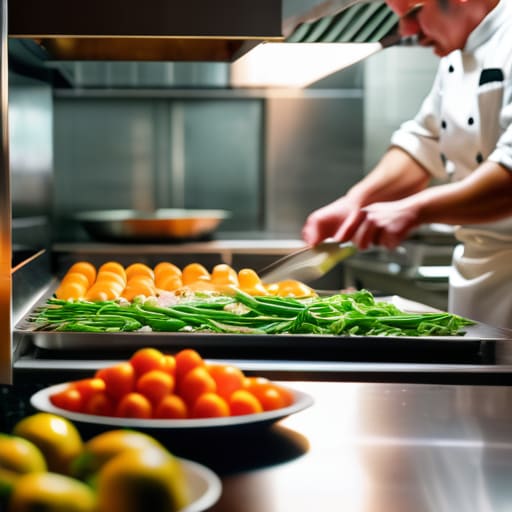
Look, I’m not here to hand you a thirty-page manual that will end up gathering grease in a drawer. In a kitchen serving hundreds, a Standard Operating Procedure (SOP) isn’t a textbook; it’s a survival guide. When the lunch rush hits and the printer starts screaming, your staff won’t have the mental bandwidth to “decide” how to handle a cross-contamination risk. They need a sequence that is so ingrained it becomes muscle memory. This is where standard operating procedures for error reduction actually matter—they take the guesswork out of the chaos.
If you try to automate everything, you’ll lose the human oversight that actually keeps kids safe. Instead, focus on streamlining tasks to prevent bottlenecks during the most high-risk windows, like allergen prep or mid-service temperature checks. I’ve seen too many teams fail because they tried to do everything at once. Pick three critical, non-negotiable sequences—like how a prep station is broken down or how the dishwasher is loaded—and master those first. If you can’t sustain the routine when you’re short-staffed, the procedure isn’t worth the paper it’s printed on.
Streamlining Tasks to Prevent Bottlenecks During Peak Service
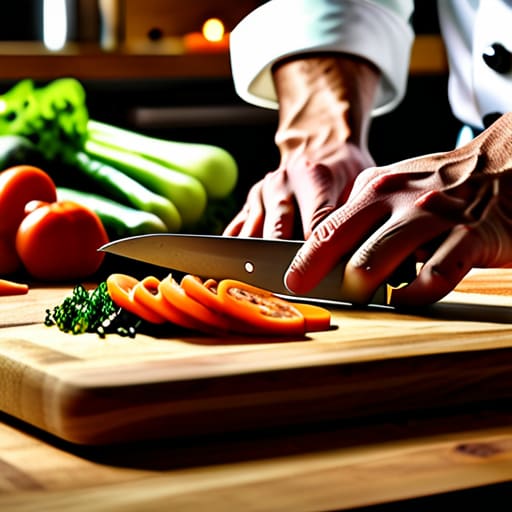
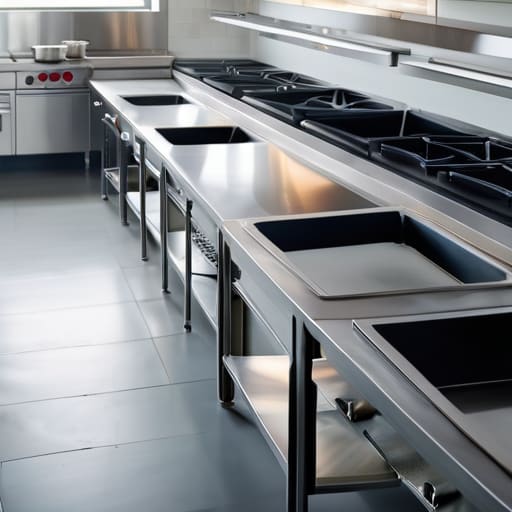
When the lunch bell is about to ring and you’ve got two hundred hungry kids waiting, “efficiency” isn’t a buzzword—it’s survival. I’ve seen too many kitchens crumble because they tried to do everything in a chaotic scramble. The secret isn’t working faster; it’s about streamlining tasks to prevent bottlenecks before the pressure hits. If your prep station is positioned so that the person chopping veg is constantly tripping over the person loading the dishwasher, you haven’t just got a layout problem; you’ve created a massive window for cross-contamination.
You have to look at your peak service window as a sequence of movements rather than a list of chores. I always tell my trainees that if you can spot a moment where three people are trying to use the same sink or the same narrow aisle, you’ve found your breaking point. This is where mitigating human error in business processes becomes a physical reality. When the flow is logical, people don’t have to think about where they are going; they just move. By smoothing out those physical transitions, you stop the frantic, distracted mistakes that lead to the exact kind of incidents I spent years investigating.
Five ways to stop your workflow from becoming a hazard
- Clean in a sequence, not just when you see a mess. If you’re jumping from raw poultry prep straight to vegetable chopping because “it looks dirty,” you’re inviting cross-contamination. Map out a flow that moves from clean to dirty, or high-risk to low-risk, so you aren’t fighting your own setup halfway through service.
- Use your labeling as a roadmap, not a chore. I’ve seen too many kitchens where the “use by” dates are a guessing game because the labels are handwritten, smeared, or missing. A workflow that builds labeling into the moment something is opened—rather than leaving it for the end of the shift—is the only way to ensure your stock rotation actually works.
- Master the “handoff” during shift changes. The most dangerous time in a school kitchen is that frantic thirty minutes when the morning crew is leaving and the lunch rush is hitting. If your workflow doesn’t include a formal, five-minute briefing on what’s mid-prep or what fridge temp looks dodgy, that’s exactly when an error slips through.
- Stop the “multi-tasking” myth with allergen stations. When things get busy, the temptation is to grab a bit of milk for a coffee while you’re mid-way through a dairy-free prep. Don’t do it. Your workflow needs a hard rule: allergen-specific tasks happen in their own dedicated window or space, period. No exceptions for being “in a rush.”
- Build your temperature checks into the rhythm, not the diary. If you’re waiting until the end of the day to fill out your logs, you’re not monitoring food safety; you’re just performing paperwork. Make the probe part of the task—check the chicken as it comes out of the oven, not when you’re cleaning up the pans.
The Bottom Line for Busy Kitchens
Don’t aim for perfection; aim for consistency. A simple, three-step cleaning sequence that your staff actually follows is infinitely safer than a twenty-page manual that sits gathering grease on a shelf.
Protect your most vulnerable by mastering the handovers. Most errors don’t happen during the rush; they happen in the gaps when one person is leaving and another is stepping in without knowing exactly what’s been checked.
If a workflow feels impossible to follow during a lunch rush, it’s a bad workflow. Strip it back to the essentials—temperature, allergens, and hygiene—and ignore the rest until you have the hands to manage it.
Frequently Asked Questions
I’ve got a team that’s been doing things the same way for ten years; how do I introduce these new sequences without them feeling like I'm micromanaging or slowing them down?
Don’t frame it as “new rules”; frame it as “protecting the team.” If they’ve done it one way for ten years, they have pride in their rhythm. Instead of handing down a manual, ask them where the chaos usually starts. Say, “I’ve noticed we almost trip over ourselves at 11:30; how can we tweak the sequence to make that hour less frantic?” Make the workflow the tool that saves them time, not the leash that holds them back.
If we are already running at full capacity, where do we actually find the time to document these workflows without the kitchen falling apart?
You don’t find the time; you carve it out during the quietest hour of the week. If you try to write procedures mid-service, you’ll just produce nonsense that no one follows. Grab a clipboard when the lunch rush is over and the prep is done. Don’t write a novel—just jot down the three non-negotiable steps for your most high-risk task. If it isn’t practical enough to read while standing up, it isn’t worth writing.
How do I know if my current "workflow" is actually working, or if I'm just following a sequence that isn't actually tackling our biggest risks?
Look at your incident logs—not the ones for broken plates, but the ones for near-misses and temperature spikes. If your “workflow” is just a checklist that everyone signs off on at 2:00 PM without looking, it’s failing. A real workflow should act as a safety net. If your staff are constantly improvising to keep up, your sequence isn’t managing risk; it’s just a piece of paper masking a chaotic kitchen.