I’ve sat in enough sweltering, cramped school kitchens to know that a glossy, hundred-page training manual is nothing more than expensive kindling. I once walked into a secondary school catering unit where the manager proudly showed me a stack of completed “comprehensive training modules,” yet the staff couldn’t tell you the difference between a clean prep board and a contaminated one to save their lives. We spend far too much money on theoretical nonsense when the real question of how kitchen staff should be trained should be about muscle memory and discipline, not how well they can pass a multiple-choice quiz in a quiet office.
I’m not here to give you a lecture on perfection or sell you on a digital platform that your team will ignore the moment the lunch rush hits. Instead, I am going to show you how to focus your limited time on the high-stakes basics that actually prevent an incident. We are going to talk about the small, repetitive, and admittedly boring habits that keep children safe when the pressure is on. Tell me what your staffing levels look like, and I will tell you exactly where to put your energy.
Table of Contents
Mastering the High Stakes Basics of Food Safety Protocols
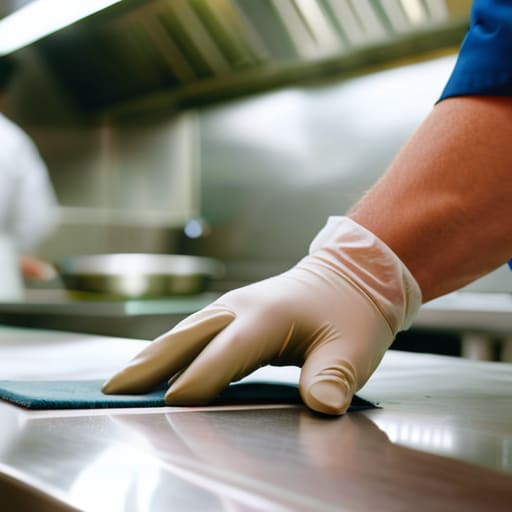
When I walk into a kitchen, I’m not looking for a chef who can make a perfect soufflé; I’m looking for the person who knows exactly why they just wiped that board with a specific cloth. During a new employee’s kitchen onboarding process, we often make the mistake of treating food safety like a lecture rather than a habit. You don’t need them to memorize the entire HACCP manual on day one. Instead, focus on the non-negotiables: handwashing discipline, preventing cross-contamination, and the absolute necessity of temperature checks. These aren’t just “rules”; they are the actual barriers between a successful service and a call from a parent or a doctor.
If your standard operating procedures are fifty pages of dense text tucked in a binder, they are useless. In a high-pressure school kitchen, staff need protocols that are visual, immediate, and repeatable. I’ve seen more disasters caused by “I thought he did it” than by genuine ignorance. Don’t aim for a staff that knows everything; aim for a staff that consistently executes the basics even when the lunch rush is hitting and the oven is screaming. That is where real safety lives.
Building a Sustainable Kitchen Onboarding Process
If you try to dump your entire HACCP manual on a new hire during their first four-hour shift, you haven’t trained them; you’ve just given them something to use as a coaster. A successful kitchen onboarding process isn’t about memorising every regulation in the book; it’s about survival and consistency. I’ve seen too many talented cooks fail because they were expected to master complex culinary skill development before they even knew where you kept the colour-coded chopping boards. Start with the “why” behind your most critical movements. If they understand that a specific cleaning sequence isn’t just a chore, but the only thing standing between a child and an anaphylactic shock, they’ll actually do it.
Instead of a mountain of paperwork, focus on demonstrated competency. Don’t just hand them a checklist and walk away to deal with a delivery; stay in the thick of it. Watch them handle a knife, watch them check a temperature, and watch how they react when the lunch rush hits. You aren’t looking for perfection on day one, but you are looking for the foundational habits that make your standard operating procedures stick when things get chaotic.
Stop Training for Perfection: Five Practical Focus Areas
- Forget the hundred-page manual that sits in a grease-stained folder; instead, drill your staff on the three most repetitive, high-risk tasks they do every single shift. If they can’t do the basics of handwashing and cross-contamination prevention in their sleep, the rest of your training is just wasted paper.
- Train for the “Why,” not just the “How.” If a cook understands that a temperature log isn’t just a chore for the manager but the only thing standing between a child and an anaphylactic shock, they’ll actually bother to do it when you aren’t looking.
- Use “Live” scenarios rather than classroom lectures. I’ve seen more mistakes made in ten minutes of a busy lunch service than in three hours of a PowerPoint presentation; take them onto the floor, point at a cutting board, and ask them exactly what the risk is in that moment.
- Prioritize allergen communication as a core skill, not an elective. Your staff needs to know that “I think it’s fine” is the most dangerous sentence in a kitchen, and they must be trained to stop everything and check the label every single time.
- Build in “Micro-Training” moments during the lull. You don’t need a dedicated seminar day; five minutes of discussing a specific cleaning sequence during a quiet period is more effective—and much more realistic—than trying to pull a full team off the line for an hour.
The Essentials for a Safer, Simpler Kitchen
Stop chasing perfection in training manuals; instead, drill the three or four “boring” repetitive tasks—like temperature logging and allergen separation—that actually prevent a crisis when the lunch rush hits.
Build your training around what is sustainable for your specific staffing levels, because a protocol that works on paper but fails during a busy service is just a dangerous illusion.
Focus on onboarding that prioritises practical competence over theoretical knowledge, ensuring new staff can demonstrate they can handle the tools and the risks before they are left alone on the line.
Frequently Asked Questions
I don't have a dedicated training budget or a trainer on staff; how do I ensure the basics are being covered without it feeling like a chore?
You don’t need a training budget; you need a culture of “checking as you go.” Stop treating training like a classroom event and start treating it like a kitchen habit. Use your existing prep time to run three-minute “micro-demos”—show them exactly how to calibrate that probe or how to spot cross-contamination on a cutting board. If it isn’t happening during the rush, it isn’t real training. Make the correct way the easiest way.
How often should I actually be re-checking my staff on these protocols to make sure they haven't slipped back into old, lazy habits?
If you wait for a formal quarterly review, you’ve already lost. Habits don’t break overnight; they erode. I don’t look for a scheduled “audit”—I look for the drift. Check one specific, high-risk thing every single week. One week it’s the colour-coded boards; the next, it’s the way they’re storing raw poultry. Keep it unannounced and keep it brief. If you catch a slip early, it’s a coaching moment; if you wait, it’s an incident.
When we have a sudden rush or a staff shortage, what are the absolute non-negotiable safety tasks that must never be skipped, even if the kitchen is drowning?
When the tickets are flying and you’re down two chefs, you have to triage. Forget the deep-clean of the dry store; that can wait until tomorrow. You focus on the “Big Three”: temperature checks, cross-contamination, and hand hygiene. If you can’t guarantee the chicken is cooked through, or that the gluten-free pasta hasn’t touched the regular batch, you stop the line. I’d rather explain a delay to a hungry crowd than an anaphylaxis incident to a coroner.