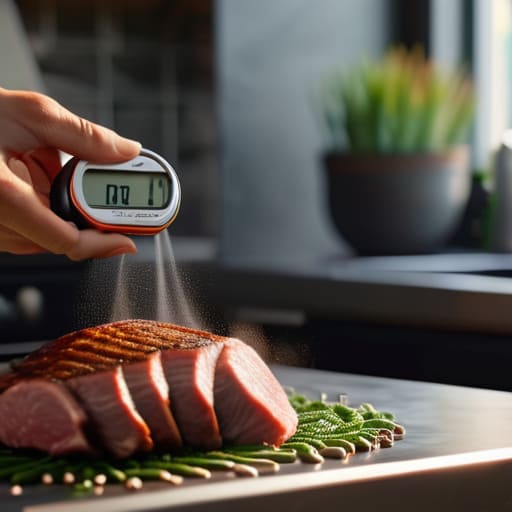
I’ve walked into enough school kitchens to know that when people talk about food safety, they usually go straight to the high-tech stuff—expensive digital sensors, complex HACCP software, or elaborate training modules that nobody actually reads. But after sixteen years on the ground, I can tell you that’s not how food poisoning actually happens. It isn’t some mysterious, scientific anomaly that strikes a perfectly managed facility; it’s usually something much more banal. It’s the thermometer left in a drawer because the staff were too busy serving three hundred hungry kids to find it, or that one “quick” wipe-down of a cutting board that didn’t actually happen.
I’m not here to lecture you on theoretical risks or give you a checklist that’s impossible to follow when you’re short-staffed and running behind schedule. My goal is to strip away the jargon and show you the real-world friction points where things go wrong. I’m going to tell you exactly which small, boring habits are worth your limited energy and which ones are just box-ticking exercises that won’t actually keep your students safe.
Table of Contents
The Bacterial Contamination Process in a Busy Kitchen
I’ve seen it a hundred times: a kitchen is humming, the lunch rush is ten minutes away, and someone grabs a knife that was just used on raw chicken to slice up some tomatoes for a salad. That is the exact moment the bacterial contamination process kicks into gear. It isn’t some cinematic explosion; it’s quiet, invisible, and incredibly efficient. You aren’t just moving food around; you are moving microscopic hitchhikers from a high-risk surface straight onto a plate that is about to be served to a child.
Once those pathogens land on a piece of ready-to-eat food, the clock starts ticking. If that food sits out on a prep table in a warm kitchen, you are essentially providing a luxury hotel for them. This is where microbial growth in food becomes an exponential problem. Bacteria don’t just sit there; they multiply at a staggering rate in the “danger zone” temperatures. By the time that meal reaches the dining hall, what started as a single cell on a cutting board can become a colony large enough to trigger a serious outbreak.
Understanding the Foodborne Pathogen Lifecycle Under Pressure
Here is the reality of the foodborne pathogen lifecycle: it isn’t some sudden, dramatic explosion of germs. It is a slow, quiet build-up that happens when the pressure is on. When your team is rushing to get three hundred lunches out before the bell rings, they aren’t thinking about biology; they are thinking about the clock. But while they are focused on speed, bacteria are busy using that warmth and moisture to multiply. If a tray of cooked chicken sits on a prep table for twenty minutes too long because the oven is running behind, you aren’t just losing time—you are providing the perfect environment for microbial growth in food.
The danger is that by the time you see the symptoms of foodborne illness in a child, the “event” actually happened hours, maybe even a day, earlier in your kitchen. It’s the cumulative effect of small lapses. It’s the knife that touched raw poultry and then moved to the salad because the wash station was too crowded. It’s the lukewarm sauce that stayed in the danger zone just a little too long. These aren’t massive, sweeping failures; they are the tiny, invisible gaps in safe food handling practices that occur when the pressure becomes too much to manage.
Where the cracks actually appear when things go wrong
- Stop treating your fridge temperature logs like a chore for the end of the shift. If you’re only writing down the numbers when you have a spare minute at 2:00 PM, you aren’t monitoring anything; you’re just guessing. I’ve seen more incidents caused by a faulty seal or a door left ajar than by actual bad luck, and a real log tells you the truth before the food starts to turn.
- The “cross-contamination” lecture is usually too vague to be useful, so let’s talk about the real culprit: the shared cutting board. In a rush to get lunch out for four hundred kids, it is incredibly easy to slice raw chicken and then, without thinking, grab the same board for the salad. If you don’t have a strict colour-coded system that people actually follow when the pressure is on, you’re just waiting for a disaster.
- Watch your cooling times like your job depends on it, because it does. I see so many kitchens try to save time by putting a massive, steaming pot of stew straight into the walk-in fridge. You aren’t “saving time”; you’re just warming up your entire fridge and creating a massive danger zone in the middle of that pot where bacteria can go into overdrive. Use an ice bath, use smaller containers—do whatever you have to, but get that temperature down fast.
- Handwashing isn’t just about a quick splash of water before you touch a sandwich. It’s about the transition points: coming back from the bin, moving from raw meat to prep, or after a quick break. If your staff are skipping the soap because they’re “too busy,” they aren’t being efficient; they’re being dangerous. It takes twenty seconds, and it’s the single most effective barrier you have.
- Cleaning is not the same thing as sanitising. You can scrub a surface until it shines, but if you haven’t used the right chemical at the right concentration, you haven’t actually killed the pathogens. I’ve walked into kitchens that looked spotless but had a high bacterial load because they were using diluted, ineffective cleaners just to save a few pennies. If the chemical isn’t doing the job, the cleaning is just theatre.
What to actually watch for when the rush hits
Stop chasing perfection and start chasing the high-risk moments; it’s rarely a lack of general hygiene that causes an incident, but rather the specific, frantic shortcuts taken during a mid-service temperature lapse or a cross-contamination slip.
If your paperwork is perfect but your fridge temperature log hasn’t been touched in three days, you aren’t managing risk—you’re just performing for an inspector.
Focus your limited energy on the “boring” fundamentals—consistent temperature discipline and clear allergen separation—because those are the only controls that actually hold up when the kitchen is under pressure.
Frequently Asked Questions
If we're following our cleaning schedule, how can bacteria still find a way to jump from a prep surface to a finished plate?
Here’s the thing: a cleaning schedule is a plan, not a shield. You can follow it to the letter, but bacteria don’t care about your timetable. They travel on the things we stop thinking about—the “invisible” vectors. It’s the cloth you used on the prep bench that you then used to wipe a tray, or the chef who touched a raw chicken fillet and then adjusted their cap or handled a garnish. It’s the cross-contamination that happens in the seconds between tasks.
I know temperature control is vital, but what actually happens to the food when it sits in the "danger zone" for just a little too long during a busy lunch service?
Think of the “danger zone” as a green light for bacteria. When food sits in that lukewarm middle ground, you aren’t just waiting for bacteria to exist; you’re providing a high-speed highway for them to multiply. It isn’t a slow crawl; it’s exponential. A few hundred cells can turn into millions in just a couple of hours. By the time that tray hits the serving line, the bacterial load might be high enough to actually make someone sick.
We have different staff members handling everything from raw chicken to salad; at what specific point does the risk of cross-contamination become unavoidable if we're short-staffed?
It becomes unavoidable the moment you stop treating “flow” as a physical rule. If you’re short-staffed, the risk spikes when a single person starts jumping between tasks—moving from prepping raw poultry to chopping salad without a full, documented reset. You can’t avoid it if you’re trying to “multitask” with one cutting board or one pair of gloves. If you can’t manage the separation of raw and ready-to-eat, you aren’t managing a kitchen; you’re managing a crisis.