I’ve stood in the corner of many a school dining hall, clipboard in hand, and felt that specific, physical vibration in my chest—the kind of roar that makes it impossible to hear your own thoughts, let alone a child asking for a napkin. Most consultants will tell you that you need expensive acoustic ceiling tiles or high-tech sound-masking machines to fix it, but frankly, that’s a waste of a budget that should be going toward better ingredients. If you are looking for how to reduce lunchtime noise, you won’t find the answer in a massive capital expenditure; you’ll find it in the way your staff are positioned and how the physical flow of the room is managed.
I am not here to sell you on architectural miracles or complicated sensory integration plans. My promise is much more grounded than that. I’m going to show you the small, slightly boring, but highly effective tweaks to your service sequence and seating arrangements that actually work when you’re short-staffed and under pressure. We are going to focus on sustainable, practical controls that won’t fall apart the moment the bell rings and the chaos begins.
Table of Contents
Managing Student Lunchroom Volume Through Realistic Spatial Logic
Managing Student Lunchroom Volume Through Realistic Spatial Logic
When I walk into a dining hall that feels like a jet engine is idling in the corner, my first instinct isn’t to look at the ceiling; it’s to look at the floor plan. Most schools try to tackle managing student lunchroom volume by throwing expensive acoustic foam at the walls, but if your layout forces three hundred kids to congregate in a narrow bottleneck near the serving hatch, no amount of foam will save you. You have to look at the flow. If the movement of students is congested, the volume spikes instantly.
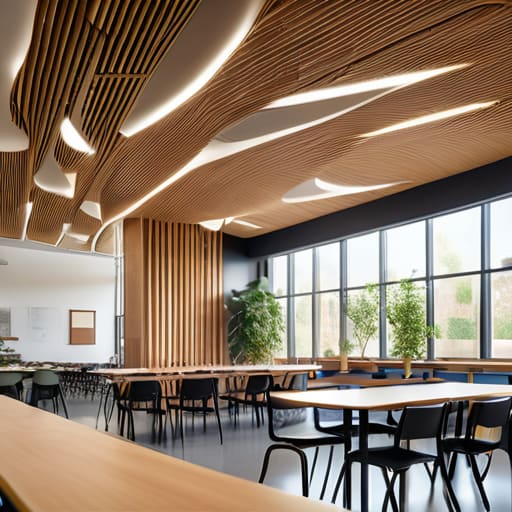
Instead of chasing high-tech solutions, think about cafeteria layout and noise control as a way to break up the sound waves. If you can’t afford massive structural changes, look at how you seat them. Breaking up large, echoing blocks of long tables with smaller, staggered groupings can prevent a single massive roar from building up. It’s about creating “pockets” of space. We aren’t looking for a library; we are looking for a space where a student can actually hear their friend without having to scream.
Cafeteria Layout and Noise Control for Overstretched Staff
Let’s be honest: most school budgets aren’t sitting around waiting for a massive renovation project. When I talk to kitchen managers about cafeteria layout and noise control, they usually look at me like I’ve suggested they install a professional recording studio. I get it. You have a limited window to get three hundred kids fed, and you can’t exactly rebuild the hall between second and third period.
However, you don’t need a million-pound budget to start reducing dining hall decibel levels. If you can’t afford high-end school cafeteria acoustic treatments, stop looking at the ceiling and start looking at the surfaces. Hard plastic chairs on a polished floor are a recipe for a sensory nightmare. Even something as simple as adding heavy-duty floor mats or choosing durable, non-reflective table surfaces can break up the way sound bounces around the room. It isn’t about achieving total silence—that’s impossible in a school—it’s about preventing that sharp, ringing echo that leaves your staff feeling absolutely drained by 2:00 PM. Focus on the small, practical barriers that soak up the initial impact of the roar.
Five Practical Ways to Dampen the Din Without a Budget for Renovations
- Stop the ‘echo effect’ by getting rid of hard, empty surfaces; if you can’t afford acoustic tiling, even heavy-duty, wipeable PVC table mats can absorb a surprising amount of the high-frequency clatter that makes a room feel deafening.
- Control the sound at the source by managing the cutlery and tray shuffle; swapping metal cutlery for high-quality melamine or heavy-duty plastic isn’t just about preventing theft, it’s about removing the sharp, metallic ‘clack’ that pierces through a busy room.
- Use your staff as human anchors rather than shouting instructors; instead of trying to yell over the noise—which only adds to the decibel level—position your team at key transition points to guide student movement quietly and calmly.
- Implement a ‘soft start’ to the lunch period by staggering the arrival of different year groups; if you let four hundred kids burst through the doors at once, you’ve already lost the battle to noise, no matter how much padding you put on the chairs.
- Audit your cleaning sequence to reduce the ‘clatter’ during the rush; if your staff are moving heavy trolleys or stacking plastic crates during the peak period, that mechanical noise is being amplified by the students’ own voices, creating a feedback loop of chaos.
What You Can Actually Control When the Room Goes Loud
Stop looking for expensive acoustic magic; focus on the small, boring wins like how you sequence your staff movements and where you place your high-traffic service points to prevent bottlenecked shouting.
Don’t try to silence the students entirely—that’s a losing battle—instead, use your physical layout to direct the energy and prevent the noise from building into a deafening, unmanageable roar.
Prioritize sustainable changes that don’t add more work to an already overstretched team; if a noise control measure requires constant supervision, it will fail by Tuesday.
Frequently Asked Questions
We don't have the budget for acoustic panels or a complete layout redesign; what are the zero-cost tweaks we can make to the way we manage the flow of students?
Look, I’ve sat in enough school kitchens to know that “budget” is a word that usually means “nothing.” If you can’t move walls or buy foam, you move people. Focus on the transitions. It’s the sudden surge at the serving hatch that spikes the decibels. Stagger your release times by even three minutes, or change the way they queue—one line for cutlery, one for food—to stop that frantic, high-pitched clustering. It’s small, it’s boring, but it works.
How do I balance the need for a quieter environment with the reality that my staff are already stretched thin and can't spend their time policing student volume?
Stop trying to police the noise; you’ll lose that battle every time, and your staff will burn out trying to win it. Instead, bake the quiet into the workflow. If the environment is structured—clearer pathways, logical service points, and sensible acoustic buffers—the volume naturally drops. Don’t ask your team to be bouncers. Ask them to manage the flow. If the system works, the noise settles without anyone having to raise their voice.
If we implement new seating or spatial rules to dampen the noise, how do we make sure we aren't accidentally creating new safety risks, like bottlenecks or tripping hazards in the serving line?
Look, I’ve seen plenty of “solutions” for noise that ended up causing a different kind of chaos. If you move a table to dampen sound but end up blocking a fire exit or creating a bottleneck where kids are tripping over bags, you haven’t solved a problem; you’ve just traded a headache for a hazard. Before you move a single chair, walk the line. If the flow feels tight or the path to the bin is suddenly narrow, don’t do it. Safety isn’t negotiable, even for the sake of a quieter room.