I’ve spent sixteen years walking into kitchens where the staff are staring at a stack of shiny, expensive manuals, looking like they’ve been told a “complete guide to cleaning and sanitising” requires a chemistry degree and a twenty-step ritual. Most of those guides are absolute rubbish; they’re written by people who have never had to mop a floor while a lunch rush for four hundred hungry kids is screaming at the door. I once saw a school kitchen spend a fortune on a high-end foaming system that ended up gathering dust because it was too complicated for a tired team to use during a busy service. We don’t need more gadgetry or jargon; we need methods that actually work when the pressure is on.
I’m not here to give you a theoretical lecture or a list of products that will drain your budget. Instead, I’m going to give you the practical, sequence-based reality of what keeps a kitchen safe. We are going to focus on the high-risk zones and the specific timings that actually kill pathogens, rather than wasting energy on box-ticking exercises that change nothing. Tell me what your staffing levels look like, and I will show you a routine you can actually sustain without burning out your team.
Table of Contents
Why Hygiene Management Protocols Fail Under Pressure
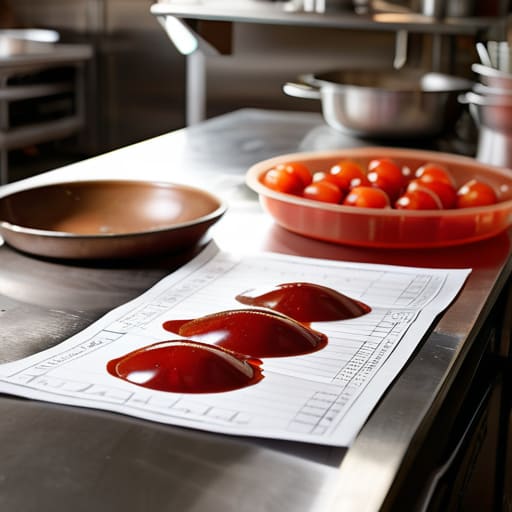
I’ve seen it a hundred times: a kitchen staff member pulls out a perfectly printed set of cleaning frequency checklists, only for those sheets to end up in a puddle of spilled sauce or tucked into a drawer, untouched for three days. The problem isn’t usually a lack of will; it’s that most hygiene management protocols are designed for a laboratory, not a school kitchen during the lunch rush. When you have forty minutes to get three hundred meals out the door, a twenty-step cleaning procedure feels like an insult. People don’t stop cleaning because they’re lazy; they stop because the system they were given is impossible to follow when the pressure is on.
When things get frantic, the first thing to go is the nuance. Instead of following specific surface disinfection methods, staff revert to whatever is closest—often a generic spray and a quick wipe that looks clean but does nothing for microbial control. They skip the contact time because they’re rushing to the next task, or they use a chemical concentration for sanitising that is so diluted it’s essentially just scented water. We don’t fail because we don’t care about food safety sanitation standards; we fail because we try to implement rigid perfection in a chaotic, high-speed environment.
Building Cleaning Frequency Checklists That Actually Stick
Most cleaning frequency checklists I see in school kitchens are a work of fiction. They are long, over-ambitious lists printed on A4 sheets that get tucked behind a bin or, worse, signed off in a frantic rush five minutes before I walk through the door. If your list requires a staff member to perform twenty different deep-cleaning tasks during a thirty-minute lunch service window, it isn’t a tool; it’s a trap. You need to strip these lists back to the essentials. Focus on the critical touchpoints—the prep boards, the slicers, and the handles—rather than trying to mandate a pristine floor every single hour.
Instead of a generic list, build your schedule around the actual flow of your kitchen. Group tasks by “high-frequency” and “end-of-shift” so the team knows exactly what requires immediate microbial control procedures during the rush and what can wait until the ovens are off. A realistic checklist doesn’t just say “clean the surfaces”; it specifies the method and the necessary chemical concentration for sanitising to ensure the job actually gets done right. If it’s too complex to follow when the lunch bell rings, it won’t be followed at all.
Five Ways to Stop Cleaning Like You’re Just Ticking Boxes
- Stop treating “cleaning” and “sanitising” as the same thing. You can scrub a prep table until it shines, but if you haven’t applied a food-safe chemical and let it sit for the required contact time, you haven’t actually killed the bacteria. Clean the dirt away first, then sanitise the surface.
- Focus your limited energy on the “high-touch” sequence. In a school kitchen, it isn’t just the cutting boards; it’s the fridge handles, the tap levers, and the spice containers. If your staff is rushing, make sure they at least hit those points every hour.
- Ditch the massive, overwhelming master list. If a checklist has fifty items on it, your team will stop reading it by Wednesday. Break it down into “Shift Start,” “Mid-Service,” and “Close Down.” Small, manageable chunks are much harder to ignore when the lunch rush hits.
- Colour-code your cloths, but make it logical. Don’t just buy a rainbow of rags and hope for the best. Use one specific colour for allergen-free prep zones and another for raw meat areas. It’s a visual cue that works even when someone is exhausted and half-distracted.
- Check the chemical dilution, not just the bottle. I’ve walked into far too many kitchens where the staff are just “eye-balling” the spray bottles. If the solution is too weak, you’re just spreading germs around; if it’s too strong, you’re leaving toxic residue on the plates. Get a measured dispensing system if you can—it saves money and it saves lives.
The Bottom Line: What Actually Keeps the Kitchen Safe
Stop trying to clean everything at once; identify your high-risk zones—like allergen prep areas and raw meat stations—and make sure those are non-negotiable, even when the lunch rush is hitting the fan.
A checklist is just a piece of paper if it doesn’t match your reality; build your cleaning schedule around your actual staffing levels and the specific flow of your kitchen, not some theoretical ideal.
Consistency beats intensity every single time—I’d much rather see a crew that reliably sanitises their surfaces between tasks than a team that does one massive deep-clean once a month but ignores the small, boring risks in between.
Frequently Asked Questions
How do I know if my staff are actually using the right contact time for the sanitiser, or if they're just spraying and wiping immediately to save time?
If you want to know the truth, stop asking them and start watching. I’ve seen it a thousand times: a staff member sprays a surface, wipes it dry two seconds later, and moves on. They think they’re being efficient, but they’re just spreading bacteria around.
If we’re short-staffed on a Tuesday afternoon, what are the absolute non-negotiables we can't skip without risking a cross-contamination incident?
When the afternoon rush hits and you’re down two staff members, stop trying to polish the stainless steel. Forget the floors for now. You focus on three things: colour-coded boards, hand hygiene, and surface sanitisation. If you can’t guarantee that the knife used for the raw chicken hasn’t touched the salad prep area, you don’t touch the salad. Prioritise the high-risk touchpoints and the allergen zones. Everything else is just aesthetics; these are the life-savers.
When is "clean enough" actually a danger zone, and how do I spot the difference between a kitchen that looks tidy and one that is actually hygienic?
A tidy kitchen is often a trap. I’ve walked into rooms that looked spotless because the floors were swept, but the prep boards were still holding microscopic traces of raw chicken protein. “Clean enough” becomes a danger zone the moment you mistake tidiness for sanitisation. Don’t look at the floor; look at the contact points. If the handles, switches, and prep surfaces haven’t been chemically sanitised in the last hour, that “tidy” kitchen is lying to you.