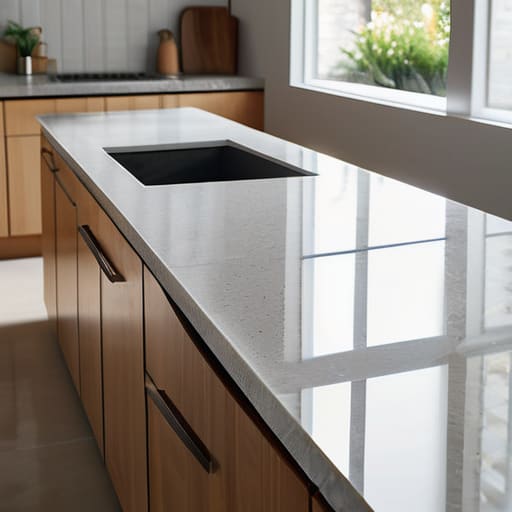
I remember standing in a school kitchen three years ago, watching a frantic midday service unfold while staring at a brand-new, “designer” stone countertop that had been installed just months prior. It looked stunning in the procurement catalog, but as the staff struggled to scrub away a spilled sauce, I saw the liquid seeping into microscopic fissures that shouldn’t have been there. That’s the problem with the industry; people get so caught up in aesthetics that they completely forget how kitchen surfaces should be specified for actual, heavy-duty use. A surface isn’t “high quality” just because it’s expensive; it’s high quality if it can survive a brutal, high-speed sanitization cycle without becoming a breeding ground for bacteria.
I’m not here to sell you on the latest expensive trends or give you a lecture on theoretical hygiene standards that only work in a laboratory. Instead, I’m going to tell you what actually works when you’re short-staffed and under pressure. We are going to look at the practicalities of durability, the reality of cleaning sequences, and how to choose materials that won’t fail you during a rush. I will help you find the balance between your budget and real-world safety, focusing on what you can actually maintain every single day.
Table of Contents
The Truth About Non Porous Surface Selection Under Pressure
The Truth About Non-Porous Surface Selection Under Pressure
When I’m standing in a school kitchen during the lunch rush, I’m not looking at how expensive the stone looks; I’m looking at how the staff interacts with it. You can buy the most expensive, high-end non-porous surface on the market, but if the impact of surface texture on sanitation isn’t considered, it’s useless. I’ve seen “premium” materials that look beautiful in a showroom but have microscopic fissures that trap flour or dairy proteins. In a high-pressure environment, your team isn’t going to spend ten minutes detailing every tiny crevice with a toothbrush; they are going to wipe, move on, and hope for the best.
If a material can’t withstand a vigorous, rapid scrub with a standard sanitizer, it fails the most basic hygiene requirements for food preparation areas. I often tell managers to stop obsessing over the aesthetic and start looking at the reality of the wipe-down. A surface that looks sleek but requires specialized, delicate cleaning chemicals is a liability, not an asset. You need materials that can take a beating and still be effectively sanitized in the thirty seconds between service windows.
Why Kitchen Design Technical Specifications Often Fail Real Cooks
The problem is that most kitchen design technical specifications are written by people who have never had to wipe down a prep station while a timer is screaming and thirty school lunches are waiting to be plated. They focus on the theoretical “ideal”—the perfect grade of stainless steel or a high-end composite—without considering how that material actually behaves when it’s hit with industrial degreaser every single night.
I see it all the time: a beautiful, expensive countertop is installed that meets every official regulatory standard on paper, but the impact of surface texture on sanitation is a nightmare in practice. If the spec calls for a micro-textured finish that looks sleek but traps flour, grease, and microscopic food particles in the grain, it isn’t a hygienic surface; it’s a breeding ground.
We need to stop treating hygiene requirements for food preparation areas as a checklist of expensive materials and start treating them as a test of durability. A surface is only as good as the person’s ability to clean it in a single, swift motion. If your spec doesn’t account for the reality of a heavy-duty cleaning cycle, you aren’t designing a kitchen; you’re designing a liability.
Five Non-Negotiables for Your Next Surface Spec
- Prioritize “scrubbability” over aesthetics. I’ve seen beautiful, expensive stone surfaces in school kitchens that became a nightmare because the grain trapped flour and grease, making it impossible for a tired staff member to actually get them clean in the ten minutes between service and prep.
- Demand seamless transitions. If your specification allows for gaps between the countertop and the backsplash, or where the prep table meets the wall, you are essentially creating a home for bacteria. If a rag can’t wipe right into the corner without catching, the spec is wrong.
- Specify chemical resistance, not just “durability.” A surface might survive a heavy pot being dropped on it, but if your cleaning team uses a heavy-duty, high-alkaline sanitizer to get through the lunch rush and that surface starts to pit or discolor, you’ve just created a porous surface that’s impossible to sanitize.
- Check the edge profiles. Avoid anything decorative, rounded, or overly complex. In a high-pressure environment, you want flat, clean edges that don’t harbor debris and don’t cause a staff member to catch a sleeve or a tool while they’re moving quickly.
- Think about the “wet zones” specifically. Don’t use the same spec for a dry prep area as you do for the area around the pot wash. If you aren’t specifying high-grade, moisture-impermeable materials for the areas prone to standing water, you’re inviting mold and structural rot that no amount of cleaning will fix.
The Bottom Line: What Actually Matters When the Rush Hits
Stop chasing the “perfect” catalog surface; if your team can’t scrub it clean in thirty seconds between service windows, it isn’t a food safety feature, it’s a liability.
Prioritize seamlessness over aesthetics—every unnecessary joint, grout line, or decorative edge is just a hiding place for bacteria and a nightmare for your cleaning schedule.
Buy for the reality of your staff, not the dream of your floor plan; a surface is only as safe as the person’s ability to sanitize it consistently under pressure.
Frequently Asked Questions
If I can't afford high-end stainless steel for every prep station, what’s the absolute minimum standard I should demand from a supplier so I'm not left with a cleaning nightmare?
Look, I’ve seen too many budgets stretched thin to justify full-scale stainless steel everywhere, and I get it. But don’t compromise on the grade. Demand at least 304-grade stainless steel for your primary prep areas; anything lower, like 430, will pit and trap bacteria once the salt and acids start working on it. If you’re looking at laminate, ensure it’s high-pressure and has sealed edges. If the seam isn’t watertight, it’s just a breeding ground.
How do I know if a surface is actually "non-porous" in a real-world sense, or is it just marketing jargon that will fail the first time a heavy pot gets dragged across it?
Marketing jargon is a hell of a thing. A manufacturer will call a surface “non-porous” because it passed a lab test in a sterile room, but they aren’t accounting for your team. If a heavy stockpot leaves a gouge or a scratch, that “non-porous” surface just became a microscopic canyon for bacteria and allergens to hide in. If it can’t survive a heavy-duty scrub and a few accidental impacts without scarring, it isn’t non-porous for your kitchen.
When we're looking at new specs, how do I balance the need for durable, heavy-duty materials with the reality that my staff needs to be able to sanitize them quickly between allergen-sensitive prep?
Look, don’t get blinded by “industrial strength” if that strength comes with a complicated texture. If you spec a heavy-duty material that has microscopic pits or a grain that traps flour and nut dust, you’ve just built an allergen trap. I’ve seen it a dozen times. Prioritize “wipe-ability” over pure toughness. If a staff member can’t clear a surface with one decisive swipe during a rush, that spec has failed your kitchen.