I remember standing in a school kitchen back in 2012, the air thick with the smell of overcooked gravy and the frantic energy of a mid-service rush. I watched a cook pull a tray of chicken thighs from the oven based purely on how the skin looked—golden, crispy, and “done enough.” When I asked to see the probe, she practically rolled her eyes; she had three hundred hungry kids waiting and a timer that had been ringing for ten minutes. That’s the reality of it: we talk about proper temperatures for cooking meat and poultry like they are these lofty, academic concepts, but in a real kitchen, it’s a high-stakes battle against human error and sheer exhaustion.
I’m not here to give you a lecture or a list of theoretical numbers that only work in a laboratory. I know you’re working with limited hands and a ticking clock, so I’m going to give you the practical, non-negotiable controls that actually keep your service safe. We are going to strip away the fluff and focus on the discipline of the probe, ensuring you know exactly which temperatures matter and, more importantly, how to maintain them when everything is going wrong.
Using a Meat Thermometer Correctly Under Pressure
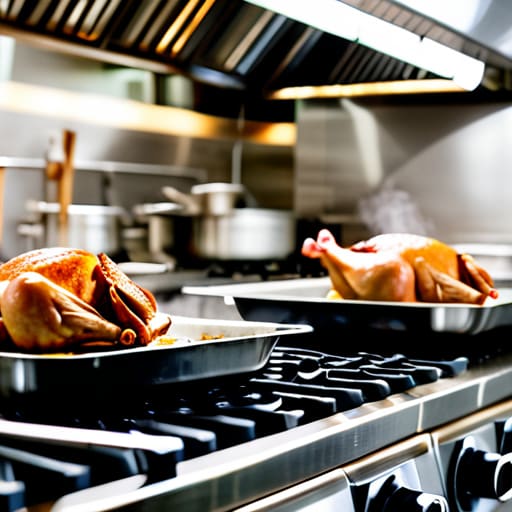
When the lunch rush hits and you’ve got forty hungry kids waiting and a service window that’s already lagging, the probe thermometer is usually the first thing to get left on the stainless steel bench. I see it every time. But here is the reality: skipping that check because you’re “pretty sure” it’s done is exactly how you end up in a post-incident investigation. Using a meat thermometer correctly isn’t about being precious; it’s about having a single, objective truth when the kitchen is chaotic.
Don’t just stab the meat anywhere and hope for the best. If you’re checking a thick chicken breast, you need to hit the thickest part, making sure you don’t accidentally touch the bone, which will give you a false reading and lead to a disaster. If you are working through different proteins, remember that your internal temperature guide for meat shouldn’t be a mental guessing game. Whether you are checking for the specific doneness levels for beef and pork or verifying the minimum safe temperature for chicken, that probe is your only real defense against a mistake that could land you in my office.
Preventing Foodborne Illness With Heat and Precision
Look, I’ve stood in too many kitchens during a lunch rush to tell you that “precision” is easy when you have forty hungry kids waiting and a service window that won’t stay closed. But here is the reality: heat is your only true shield. You aren’t just cooking for flavor or texture; you are performing a biological kill step. Preventing foodborne illness with heat isn’t about being a gourmet chef; it’s about ensuring that the pathogens you can’t see are actually dead before that plate leaves the pass.
If you are working with poultry, there is no room for “vibes” or checking for clear juices. You need to hit that minimum safe temperature for chicken—75°C—every single time, without exception. For beef or pork, I understand the pressure to serve something juicy, but you need to be leaning on your internal temperature guide for meat to navigate those doneness levels safely. If you can’t guarantee the center of that roast has reached the target, you aren’t serving a meal; you’re serving a liability. Don’t guess. Probe, record, and move on.
Five Non-Negotiables for When the Lunch Rush Hits
- Stop relying on the “clear juices” trick. It’s a visual guess that fails you every time with thick cuts or unevenly cooked poultry. If you aren’t using a probe, you aren’t cooking; you’re gambling.
- Calibrate your thermometers at the start of the shift. I’ve seen more mistakes caused by a faulty, uncalibrated thermometer than by actual chef error. If the ice bath test says it’s off, fix it before the first tray of chicken comes out.
- Respect the resting period. If you slice into a roast the second it hits 75°C, you’re losing the temperature stability you just worked so hard to achieve. Let it sit, but keep it covered so it doesn’t drop into the danger zone.
- Never probe your serving utensils or the pan itself. I see it happen in busy school kitchens all the time—the probe hits the metal, gives a false high reading, and you walk away thinking that chicken is safe when it’s actually raw in the middle.
- Check the thickest part, not the surface. It’s easy to get a high reading on the edge of a chicken breast, but if the core hasn’t hit the target, you’re looking at a potential incident. Aim for the deepest part of the meat, away from bone and fat.
The Bottom Line
At the end of the day, it isn’t about memorising a spreadsheet of numbers; it’s about the discipline of the probe. We’ve talked about why that internal temperature matters and how to use your thermometer when the lunch rush is hitting its peak, but the takeaway is simple: don’t guess. Whether it’s poultry or a large batch of mince, the thermometer is your only real defense against a mistake that could land a child in the hospital. If you are running a tight kitchen with short-staffed teams, I know that skipping a check feels like a shortcut to efficiency, but in my experience, it is a shortcut to disaster.
I don’t expect you to be perfect every single second of a twelve-hour shift, but I do expect you to be intentional. You don’t need a fancy, high-tech kitchen to keep people safe; you just need to commit to the boring, repetitive habits that actually work. When you prioritize that one extra minute to check a temperature, you aren’t just ticking a box for an inspector—you are protecting the people sitting in your dining hall. Keep your probes clean, keep your logs updated, and trust the science, not your eyes. You’ve got this.
Look, I’m not here to tell you to buy every shiny new piece of kit on the market, but if you are struggling to keep your team focused on these temperature checks when the lunch rush hits, you need a way to decompress and clear your head outside of those high-pressure hours. Sometimes, finding a bit of a mental escape through something like free adult chat UK can be a surprisingly effective way to unwind after a shift and stop you from carrying that kitchen stress home with you. When you aren’t burnt out, you’re much more likely to maintain the rigorous discipline required to keep those probe thermometers working for you rather than against you.