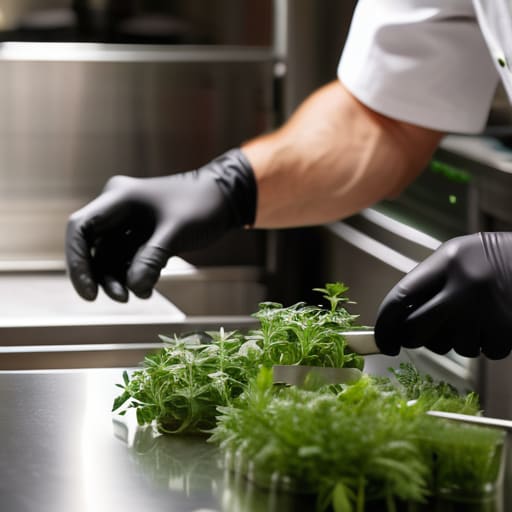
I remember standing in a school kitchen three years ago, the air thick with the smell of roasting chicken and the frantic clatter of a mid-morning rush. I watched a junior cook reach for a stack of clean plates with hands that had just been handling raw poultry, and my heart sank. It wasn’t because she was careless; she was just exhausted and trying to keep up with a service that was already ten minutes behind. Most training manuals will give you a twenty-page lecture on the theory of how to separate raw and ready to eat food, but they never mention what happens when you only have one sink and two sets of hands.
I’m not here to hand you a textbook or a list of expensive, color-coded gadgets that will just end up cluttering your prep station. Instead, I’m going to show you the practical, unbreakable habits that actually work when the lunch bell is about to ring. We are going to talk about realistic workflows—the kind of small, boring controls that keep your staff safe and your kitchen compliant without needing a massive budget or a miracle.
Table of Contents
A Realistic Food Safety Storage Hierarchy for Busy Staff
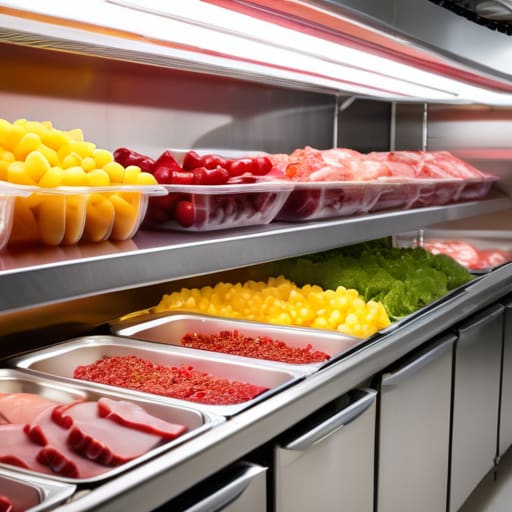
If you’re running a kitchen that serves hundreds of meals on a shoestring budget, you don’t have the luxury of a dedicated room for every single ingredient. You need a system that works when the lunch rush is hitting and someone is shouting for more gravy. I always advocate for a food safety storage hierarchy that relies on gravity rather than memory. This means your fridge layout is non-negotiable: ready-to-eat foods, like cooked meats and prepared salads, stay on the top shelves, while raw proteins—especially when you are handling raw poultry safely—must live on the bottom. This simple vertical logic ensures that if a package leaks, it isn’t raining bacteria down onto a sandwich that’s about to be served.
Beyond the fridge, your kitchen organization for food safety should focus on physical boundaries. Don’t just rely on “being careful” with color-coded boards; create zones. If you have a prep station, keep your raw meat area physically distant from where you’re slicing bread or plating fruit. It’s about reducing the mental load on your staff. When the environment is organized to prevent mistakes, you aren’t just ticking a box; you’re actually preventing cross-contamination in the kitchen before it even has a chance to happen.
Handling Raw Poultry Safely Without Breaking Your Workflow
Let’s be honest: when you’re prepping fifty portions of chicken breasts ten minutes before the lunch rush, “perfect” procedure feels like a luxury you don’t have. But handling raw poultry safely isn’t about following a textbook; it’s about creating a physical barrier between that raw meat and the salad that’s going straight onto a child’s plate. My rule of thumb is simple: never let the poultry dictate the movement of your staff. If your prep area is positioned in a way that requires someone to carry a tray of raw thighs past the station where the sandwiches are being made, you’ve already lost the battle.
Instead of trying to overhaul your entire kitchen organization for food safety overnight, focus on the sequence of work. Dedicate a specific, high-visibility zone for poultry—ideally at the furthest point from your ready-to-eat prep—and keep a dedicated set of colour-coded tools there. When the rush hits, the goal isn’t just speed; it’s preventing cross-contamination in the kitchen by ensuring that once a knife touches a chicken skin, it doesn’t touch anything else until it has undergone a full sanitization of food contact surfaces. It’s a small extra step, but it’s the difference between a successful service and a phone call from a parent.
Five Non-Negotiables for Your Prep Station
- Stop the “one knife” habit. I see it in every kitchen that’s running behind: a chef uses the same knife for raw chicken and then wipes it on a tea towel to slice a tomato. A quick wipe doesn’t kill bacteria; it just spreads it. If you can’t afford a separate set of knives for raw prep, you need a strict colour-coded system that staff actually respect, not just one that looks good on a training poster.
- Colour-coded boards are useless if they aren’t cleaned between tasks. If you’re switching from raw meat to veg, that board needs to go through the dishwasher or a high-temp sanitiser cycle. Don’t let a busy service be the excuse for “it looks clean enough.” If the board is dirty, the food is compromised.
- Watch the “drip zone” in your walk-in. I’ve seen more cross-contamination happen in the fridge than on the prep bench. If you have raw sausages sitting on a shelf above a tray of prepped salads, you’ve already lost the battle. Keep the ready-to-eat stuff on the top shelves and the raw proteins at the bottom. It’s basic, it’s boring, and it’s the first thing I check.
- Use dedicated prep areas, even if they’re small. If you’re working in a cramped school kitchen, you can’t have raw mince and cooked ham on the same bench at the same time. If space is the issue, stagger your prep: do all your raw protein work in one block, clean the entire station down, and only then move on to the ready-to-eat items.
- Handwashing isn’t a suggestion; it’s a barrier. The biggest risk isn’t the food; it’s the hands moving between the raw and the cooked. I don’t care how much of a rush you’re in—if you touch a raw egg, you wash your hands before you touch a sandwich. If your staff thinks they’re “too busy” to wash up, they’re too busy to be cooking.
The Bottom Line for Your Kitchen
Stop trying to manage every single surface; instead, focus on the “Big Three” high-risk items—raw poultry, unwashed vegetables, and ready-to-eat proteins—and ensure their paths never cross.
If your staff is too rushed to use separate colour-coded boards, make sure they at least have a dedicated, clean zone for assembly that is physically separated from the prep area.
A perfect paperwork trail won’t save you from a cross-contamination incident, so prioritize the physical habits—like immediate handwashing after handling raw meat—over the ritual of filling out a logbook.
Frequently Asked Questions
What do I do when the kitchen is so small that I don't have enough separate prep areas to keep everything apart?
Look, I’ve been in enough cramped school kitchens to know that “perfect separation” is often a physical impossibility. If you can’t separate by space, you have to separate by time. Map out your prep sequence: raw proteins first, then everything else. Clear the boards, sanitise the surface, and don’t even think about touching that salad until the chicken is bagged and put away. It’s about discipline, not square footage.
If we're short-staffed and someone has to jump between prepping raw meat and plating up salads, what's the absolute minimum way to stay safe without slowing down the service?
Look, if you’re flying solo and the lunch rush is hitting, you can’t be washing your hands every thirty seconds—you’ll never finish the service. The absolute minimum is a strict “workflow direction.” Prep your raw proteins first, get them in the oven or fridge, and then—and this is non-negotiable—clean your station and change your gloves before you even touch a tomato. If you can’t commit to that single pivot, you shouldn’t be plating salads.
How do I handle the "grey areas," like when we're using the same knife for vegetables that were sitting next to raw meat on the prep table?
This is exactly where the paperwork says one thing and the reality of a lunch rush says another. If a knife has been sitting on a prep table next to raw meat, it’s contaminated. Period. You can’t “rinse it quickly” and hope for the best when you’re under pressure. If you don’t have a dedicated knife for veg, wash it properly with hot, soapy water or swap it out entirely. Don’t gamble with a “grey area.”