
I remember standing in a primary school kitchen three years ago, the air thick with the smell of industrial bleach and the frantic, rhythmic thud-thud-thud of a stressed chef trying to scrub a prep table that just wouldn’t get clean. They were in the middle of a Norovirus spike, and they were trying to follow a fifty-page manual that might as well have been written in Martian. Most of the “complete guide to outbreak response” materials I see in professional training are absolute nonsense—they’re written by people who have never had to manage a dozen sick children and a skeleton crew at the same time. They give you a mountain of paperwork when what you actually need is a way to stop the spread without losing your mind.
I’m not here to give you a lecture or a checklist that will just end up in the bin. Instead, I’m going to give you a realistic framework for what actually matters when the first person goes home sick. We are going to focus on the high-impact, low-effort movements: how to isolate the risk, how to communicate clearly with your team, and how to clean with purpose rather than just moving dirt around.
Table of Contents
Implementing Rapid Containment and Mitigation Strategies
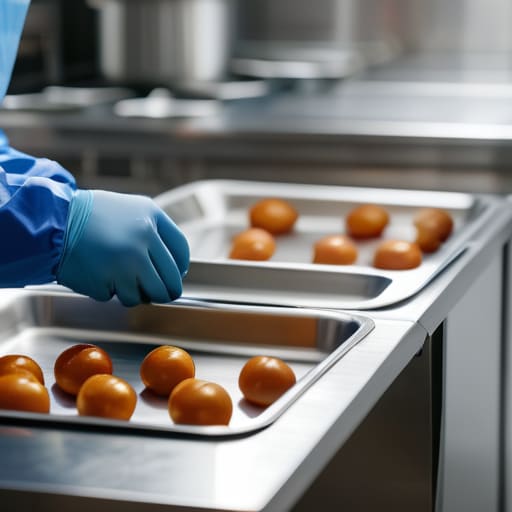
When the first few reports of stomach bugs or feverish children hit your desk, your instinct is to go into overdrive. You want to scrub every surface and check every single delivery note. Stop. If you try to implement every theoretical containment and mitigation strategy at once, you’ll just paralyze your team. In a busy school kitchen, you don’t have the luxury of a laboratory setting. You need to focus on the high-impact, low-effort moves: isolate the suspected batch, pause the specific menu item, and move to single-use service ware if you have to.
Real-world infectious disease control measures aren’t about perfection; they are about breaking the chain of transmission before it reaches the next classroom. This means being ruthless about handwashing stations and ensuring your staff aren’t “heroically” working through symptoms just to get the lunch service done. I’ve seen more outbreaks caused by a well-meaning, symptomatic cook than by a single lapse in temperature logging. Focus on the immediate physical barriers—clean hands, clean surfaces, and clear separation—rather than getting lost in the paperwork while the problem is still spreading.
Navigating Public Health Emergency Management Without Panic
When the phone rings and it’s a parent reporting three children with identical symptoms, your heart rate is going to spike. That’s natural. But here is the reality: if you start running around the kitchen like the building is on fire, you’ve already lost the battle. Effective public health emergency management isn’t about frantic cleaning; it’s about steady, methodical documentation. You need to step back and look at your records—not just the cleaning logs, but the delivery notes and the staff sickness files. Panic creates gaps in your data, and gaps in your data make it impossible for health officers to do their jobs.
The goal isn’t to be perfect; it’s to be precise. Instead of trying to guess what went wrong, lean on your existing infectious disease control measures. This means following your established protocols for isolating suspected batches and pausing specific menu items immediately, rather than waiting for “proof.” If you act on suspicion rather than waiting for a laboratory result, you stop the spread before it becomes a headline. Focus on the sequence: isolate, document, and then report. It feels slow when you’re under pressure, but deliberate action is what actually closes the loop.
The Survival List: What Actually Matters When the Calls Start Coming In
- Stop the “deep clean” frenzy immediately. I’ve seen kitchens try to scrub every inch of the building while an outbreak is active, which just moves pathogens from a countertop to a mop bucket and then onto a clean surface. Clean what is critical for the next service, but don’t turn your staff into frantic, ineffective cleaners.
- Lock down your traceability records before you touch a sponge. When the health department or the school governors start asking questions, “I think we used that batch” is a phrase that will end your career. Get your delivery notes and temperature logs in one pile so you can prove exactly what went in and when.
- Be brutally honest about your staff capacity. If half your team is off sick with the same symptoms, you cannot run at 100% capacity. It is better to scale back the menu to low-risk, simple items than to push an exhausted, symptomatic team to prepare complex, high-risk meals.
- Over-communicate the “why” to your team, not just the “what.” Don’t just tell them to use a different color board; tell them that we are currently in a containment phase and every cross-contamination error right now carries ten times the weight it did yesterday. They need to understand the stakes to stay disciplined.
- Focus on the “big three” hand hygiene points. Forget the complex chemical rotations for a second; if your staff aren’t washing their hands correctly after every single touchpoint—especially after handling waste or high-risk allergens—none of your other mitigation strategies will matter.
What You Actually Need to Carry Out of This
Stop trying to overhaul your entire HACCP plan in the middle of a crisis; focus on the two or three high-risk controls—like handwashing compliance and temperature monitoring—that will actually stem the tide.
Communication must be blunt and immediate, not buried in a polite memo; if a staff member isn’t 100% clear on why a specific prep area is closed, they won’t respect the boundary when the lunch rush hits.
Use the aftermath to fix the “boring” stuff, because most outbreaks aren’t caused by dramatic failures, but by the small, repetitive lapses in discipline that everyone thought they could skip just once.
Frequently Asked Questions
What do I do if my staff are the ones getting sick, and I'm already short-handed?
This is the nightmare scenario, isn’t it? You’re already running on a skeleton crew and now the remaining staff are falling ill. Stop trying to maintain your usual service standards; you can’t. Simplify the menu to items requiring minimal prep and zero high-risk handling. If you don’t have enough healthy, asymptomatic staff to manage the critical control points—like temperature checks and allergen separation—you have to close. It’s better to serve nothing than to serve something that makes more people sick.
How do I explain to parents why we're closing a specific part of the service without sounding like we've lost control?
Don’t hide behind “operational adjustments” or vague corporate-speak; that’s exactly how you lose their trust. Be blunt. Tell them: “We’ve identified a specific risk in [Area X], and as a precaution, we are pausing service there while we resolve it.” Explain that you are prioritizing safety over convenience. When you frame it as a deliberate, controlled decision to protect their children, you aren’t losing control—you’re demonstrating exactly how much of it you have.
When is it actually time to stop the "wait and see" approach and call in the formal authorities?
Stop playing detective. If you’ve seen two or more people with similar, unexplained symptoms, or if one person is heading to the hospital, the “wait and see” period is over. Don’t wait for a pattern to become a crisis. If your internal logs show a breach you can’t immediately trace, call them. I’ve seen too many managers try to “manage” an outbreak privately, only to realize they’ve turned a small incident into a legal nightmare.