I’ve stood in the middle of school dining halls during the 12:15 rush, and let me tell you, it doesn’t look like a textbook diagram. It looks like chaos: three hundred hungry Year 9s, two staff members trying to plate up hot meals, and a sudden, frantic bottleneck at the cutlery station that makes everyone lose their temper. Most consultants will try to sell you on some fancy digital sequencing software or a complex “flow optimization” algorithm, but they’ve clearly never tried to manage a line of teenagers while a tray of gravy is spilling. They want to talk about high-tech solutions, but in a real, high-pressure kitchen, understanding how queue management works isn’t about the gadgets; it’s about preventing the pile-up before it starts.
I’m not here to give you a lecture on theoretical logistics or expensive hardware you don’t have the budget for. Instead, I’m going to show you the practical, slightly unglamorous ways to control the movement of people and food so your staff can actually breathe. We are going to look at the small, repeatable adjustments—like where you place the napkins or how you sequence the serving line—that make a massive difference. I’ll tell you what is actually sustainable when you’re short-staffed, and what is just a waste of your time.
Table of Contents
Applying Queueing Theory Principles to a Busy Service Flow
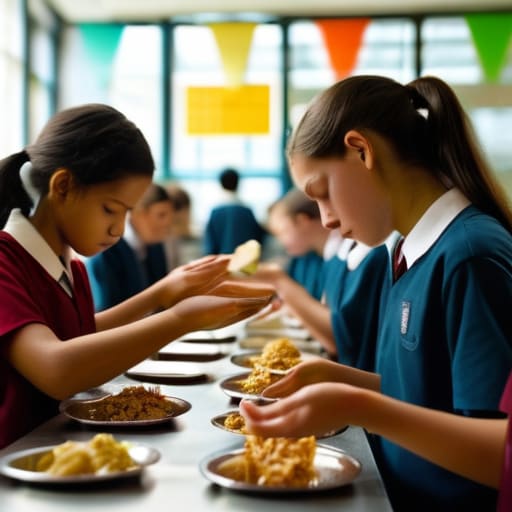
Now, I’m not going to sit here and lecture you on mathematical formulas or academic models. When I’m standing in a school canteen at 12:15 PM, I don’t care about the abstract beauty of queueing theory principles; I care that the Year 9s are getting restless and the staff are starting to snap at each other. In a practical sense, managing flow is about identifying where the “clog” happens. Is it the person struggling to find their meal card, or is it the bottleneck at the cutlery station? You can’t fix a flow issue if you haven’t identified the specific point where the movement stops.
Instead of looking for a magic fix, focus on service flow optimization through small, physical changes. Sometimes, that means moving the water station ten feet away from the main serving line so people aren’t hovering. You don’t need expensive virtual queuing technology to make a line move faster; you just need to ensure that by the time a student reaches the server, they are actually ready to make a decision. If you can shave five seconds off every interaction by prepping the environment, you’ve won.
Where Service Flow Optimization Meets Real World Staffing Limits
Here is the reality: you can study all the queueing theory principles you want, but they don’t mean a thing if you’re trying to apply them with two staff members who are already running behind on prep. In a school kitchen, service flow optimization isn’t about fancy software; it’s about acknowledging that your capacity is fixed by the number of hands you have on deck. If you try to force a high-speed service model when you’re short-staffed, you don’t get efficiency—you get mistakes, like a missed allergen warning or a cold meal.
I’ve seen managers get seduced by the idea of virtual queuing technology or automated ticketing systems to solve their problems. Unless you’re running a high-end retail customer experience, those tools often just add another layer of digital clutter that your team doesn’t have the headspace to manage. Instead of chasing high-tech fixes, focus on matching your service speed to your actual staffing levels. It is far better to have a predictable, steady line than a chaotic rush that breaks your team and compromises safety.
Stop Managing the Crowd and Start Managing the Bottleneck
- Identify your single point of failure. In a school kitchen, it’s rarely the person serving the tray; it’s usually the person struggling with a jammed serving hatch or a slow-loading hot plate. If you don’t know where the physical slowdown is happening, you’re just moving people around without actually speeding anything up.
- Build in “buffer zones” for the unexpected. Queueing theory tells us that when things go wrong—a spilled sauce, a student with a complex allergy requirement, a broken utensil—the whole line stalls. You need a designated “side-track” or a secondary station where these delays can be handled without stopping the entire flow of four hundred hungry kids.
- Visual cues beat verbal instructions every time. When a queue gets long, staff get stressed and start shouting, which makes the students more chaotic. Use clear, physical markers—floor tape, signage, or even just a specific color-coded tray system—so the “flow” is intuitive and doesn’t require a staff member to play traffic warden.
- Respect the “service interval.” You cannot push a kitchen to move faster than the physical reality of the equipment allows. If your bain-marie can only hold a certain amount of heat or your portioning takes ten seconds per child, your queue management must be built around that math, not around how much you hope your staff can scramble.
- Use the lull to prep the next surge. Real-world queueing isn’t a steady stream; it’s a series of violent waves. If you aren’t using the ten minutes before the bell to stage your most high-volume items in an easy-to-grab position, you’ve already lost the battle before the first student even walks through the door.
What to Carry Out of This (Without the Fluff)
Stop trying to solve a staffing shortage with a complex new system; instead, identify the one specific bottleneck—whether it’s the plating station or the allergen check—and build a repeatable, manual process around it.
Efficiency isn’t about moving faster; it’s about reducing the “guesswork” for your team so they aren’t burning mental energy trying to figure out what comes next when the lunch rush hits.
A process is only as good as its weakest link; if your queue management relies on a staff member being “extra careful” during a peak period, you haven’t built a system, you’ve just built a way to fail.
Frequently Asked Questions
How do I stop the "bottleneck" from turning into a food safety risk when the queue gets too long?
When the queue builds, the first thing to go is usually the “boring” stuff: temperature logs, handwashing, and allergen checks. People start rushing, and that’s when mistakes happen. My advice? Don’t try to speed up the food; speed up the communication. If the line is out the door, designate one person as the “flow controller”—not to serve, but to ensure the person plating the food isn’t skipping the allergen check just to clear the window.
We don't have the budget for fancy tech; what are the low-cost, manual ways to keep the line moving without losing control?
Forget the expensive tablets and digital screens. If you’re running a school kitchen on a shoestring, your best tools are visual and physical. Use a simple colour-coded ticket system or even just a physical “marker” to show which order is next. More importantly, designate a single “flow controller”—someone who isn’t cooking but is watching the bottleneck. It’s about clear, manual signals that stop people from guessing when the rush hits.
How do I train staff to manage a rush without them panicking or cutting corners on basic hygiene?
You don’t train for the rush by shouting about speed; you train for it by making the “right way” the easiest way. If your handwashing station is tucked behind a stack of crates, they won’t use it when the ticket machine starts screaming. Teach them that hygiene isn’t an extra task—it’s the rhythm. Drill the sequence until it’s muscle memory, so when the pressure hits, they fall back on the system rather than the panic.