I can still hear the deafening, rhythmic thud of three hundred plastic trays hitting the stainless steel counters all at once—the sound of a service that has completely lost its rhythm. I remember standing in the corner of a primary school canteen three years ago, watching a kitchen team struggle because their midday rush wasn’t a flow, but a tidal wave. They had been told by a consultant that a complex, staggered schedule was the answer, but they hadn’t accounted for the reality of having only two servers and one oven that takes ten minutes to reheat. When we talk about how sittings are organised, most people focus on the clock, but they forget about the human bottleneck that happens when the schedule meets the actual physical space of the kitchen.
I’m not here to give you a theoretical management textbook or a complicated spreadsheet that will fall apart the moment a staff member calls in sick. Instead, I’m going to show you how to build a sitting structure that actually protects your food safety controls while keeping your team sane. We’re going to look at what you can realistically sustain with the hands you have on deck, focusing on the small, boring logistical tweaks that prevent the chaos from turning into a cross-contamination nightmare.
Table of Contents
Why Poor Exam Session Scheduling Breeds Kitchen Chaos
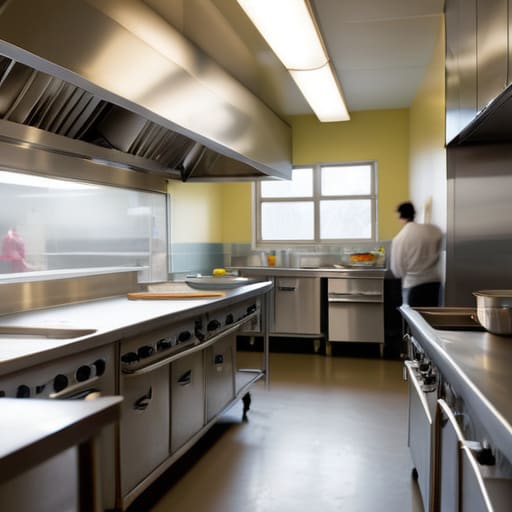
When I walk into a school kitchen during an exam period, I don’t just look at the prep stations; I look at the clock and the hallway. If your exam session scheduling is a mess, your kitchen is going to feel it. It’s not just about the sudden influx of hungry teenagers; it’s about the unpredictable waves of demand. When three different cohorts finish their papers at slightly different times, you don’t get a steady flow—you get a tidal wave. This lack of predictable student cohort distribution means your staff are constantly oscillating between standing around and absolute, frantic panic.
That frantic energy is where the real danger lives. When the pressure is on because the lunch bell is ringing and a hundred students are hovering outside the door, people start cutting corners. They skip the temperature checks, they forget to wipe down the surfaces between batches, and they stop communicating about allergens. If your time slot allocation doesn’t account for the reality of how students move through the building, you aren’t just managing a schedule; you are setting your kitchen staff up for a safety failure.
The Danger of Unmanaged Venue Capacity Management
When people talk about venue capacity management, they usually focus on fire exits and chair counts. But when I walk into a school kitchen during an exam period, I’m looking at the sheer volume of bodies hitting the hatch at once. If your examination logistics planning hasn’t accounted for the reality of how many students are actually moving through the corridors, you aren’t just looking at a seating problem; you’re looking at a massive food safety risk.
If you cram too many students into a single window because the scheduling was rushed, you end up with a bottleneck. In that chaos, staff start cutting corners. They skip the secondary check on an allergen label because three different people are shouting orders at once, or they leave a tray of high-risk food sitting on a prep bench for ten minutes too long while they try to clear the rush. You can have the best training in the world, but if your student cohort distribution is fundamentally broken, you are essentially setting your staff up to fail. You cannot expect precision when the sheer volume of the crowd overrides your ability to control the environment.
Five Ways to Stop Your Sitting Schedule from Breaking Your Kitchen
- Stop treating every sitting like a separate event; group them by menu complexity. If you have one group needing high-risk allergen-free meals and another wanting standard service, don’t schedule them back-to-back without a massive buffer. You need time to clear the decks and reset, or you’re just asking for cross-contamination.
- Build in a “buffer sitting” that isn’t actually a sitting. I’ve seen too many managers try to squeeze five sittings into a window meant for four. That extra thirty minutes isn’t “wasted time”—it’s your window to check fridge temperatures, restock the line, and actually breathe before the next rush hits.
- Match your staffing levels to the sitting intensity, not just the headcount. A sitting of fifty people eating sandwiches is a different beast than fifty people eating hot, cooked meals. If you schedule a heavy meal sitting with a skeleton crew, your temperature controls will be the first thing to slip.
- Standardise your “reset” protocol between sittings. Don’t just tell staff to “clean up”; give them a specific sequence that happens the moment the last plate leaves the floor. If the cleaning isn’t scheduled as part of the sitting transition, it won’t happen, and you’ll be starting the next service in a dirty kitchen.
- Communicate the “hard stop” to the people running the sittings. If the exam hall or the meeting room needs to be cleared by 1:00 PM, ensure the kitchen knows the food service must conclude by 12:30 PM. If you let the sitting bleed over, you lose your window to sanitise, and you’re essentially running a high-risk operation in a mess.
The Bottom Line: What You Can Actually Control
Stop trying to feed everyone at once; if your sitting schedule forces a massive, simultaneous rush, your temperature logs will be the first thing to suffer, and that’s where the danger starts.
Match your capacity to your actual headcount, not your ideal headcount, because a kitchen running on empty staff can’t maintain food safety standards when they’re drowning in a sudden surge of orders.
Treat your sitting schedule as a food safety tool, not just a logistics one—a predictable flow of sittings means predictable cleaning cycles and manageable allergen control.
Frequently Asked Questions
I know the schedule is a mess, but what do I do when the school insists on a single, massive sitting that my staff simply can't handle safely?
Look, I’ve been in this position. When the school pushes a single, massive sitting that defies your staffing levels, you have to stop being polite and start being practical. Don’t just say “no”—show them the math. Map out your prep-to-service timeline and highlight exactly where the temperature control or allergen checks will fail. If they won’t budge on the sitting, you must demand more hands or a simplified, lower-risk menu. You cannot cook your way out of a math problem.
How much "buffer time" do we actually need between sittings to ensure cleaning isn't just a superficial wipe-down?
If you’re only leaving ten minutes, you aren’t cleaning; you’re just moving crumbs around. In a school setting, that “quick wipe” is where cross-contamination lives. I tell my teams: you need enough time to follow a sequence—clear the surfaces, sanitise, let it dry, then reset. Realistically, aim for thirty minutes of dedicated transition. If you can’t afford that, we need to look at your staffing levels, not your cleaning speed.
If we have to stagger sittings to manage the flow, how do I make sure the allergen information stays accurate for the second wave of students?
The danger with a second wave is “information drift.” By the time the second sitting rolls around, the kitchen is mid-rush, the chef is stressed, and that crucial allergen note on the prep sheet is suddenly buried under a pile of dirty pans.