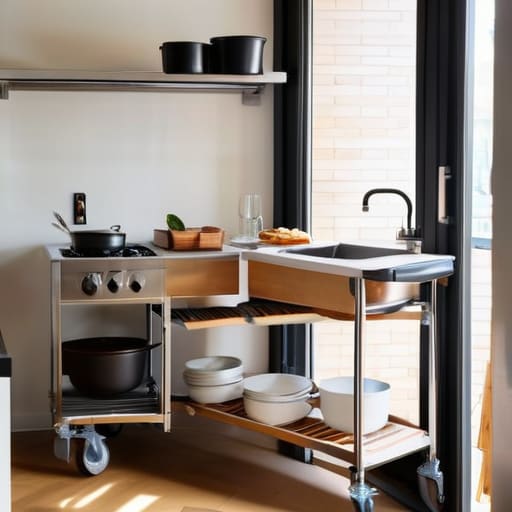
I’ve spent enough time standing in the mud at festival sites and cramped event marquees to know that most manuals on how mobile and temporary kitchens work are absolute rubbish. They assume you have a fixed water connection, a stable floor, and a team of five with nothing to do but monitor probe thermometers. In reality, you’re usually fighting a losing battle against a temperamental generator, a sloping patch of grass, and a staff that is exhausted by the time the first lunch rush hits. If you try to implement a high-street kitchen’s workflow in a temporary setup, you aren’t just being ambitious—you’re asking for a food safety incident.
I’m not here to sell you on fancy, expensive modular units or complex digital logging systems that will inevitably fail when the Wi-Fi drops out. Instead, I want to talk about the unvarnished reality of managing risk when your walls are made of canvas and your floor is uneven. I’m going to show you how to strip your processes down to the absolute essentials, focusing on the critical controls you can actually sustain when things inevitably go sideways.
Table of Contents
Pop Up Kitchen Setup Logistics Where the Chaos Begins
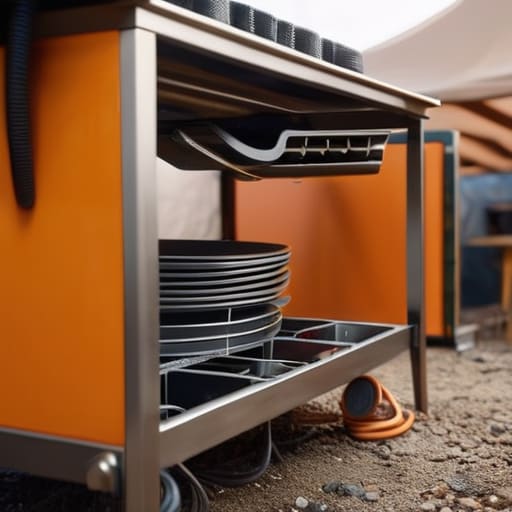
When you move from a fixed site into a pop-up, the biggest mistake people make is assuming the “bones” of the kitchen will just work. They don’t. In a permanent site, I know exactly where the water shuts off and which socket won’t trip the breaker when the oven kicks in. With pop-up kitchen setup logistics, you are suddenly playing a high-stakes game of Tetris with your infrastructure. You aren’t just arranging tables; you are managing a volatile mix of power loads and water pressure that wasn’t designed to support a commercial-grade workflow.
The chaos usually starts at the connection points. I’ve walked into setups where the temporary kitchen plumbing and electrical needs were treated as an afterthought, only to find a single extension lead daisy-chained to a heavy-duty fryer. That isn’t just bad practice; it’s a fire hazard waiting to happen. You cannot scale your menu until you have mastered your utilities. If your power supply can’t handle the simultaneous load of your refrigeration and your cooktop, your entire safety plan is built on sand. Focus on the stability of your supply before you even think about the menu.
Mobile Catering Equipment Installation Small Errors Large Consequences
When you’re dealing with commercial kitchen rental services, it is easy to get seduced by the shiny stainless steel and the promise of a “plug-and-play” setup. But in a temporary environment, nothing is truly plug-and-play. I have walked into sites where the mobile catering equipment installation looked professional on the surface, only to find that the heavy-duty fryers were positioned inches away from a plastic-clad workstation. It’s a recipe for disaster. You aren’t just fighting a clock; you are fighting the physical realities of a space that wasn’t designed for high-volume heat and moisture.
The real danger, however, lies in the invisible stuff—the temporary kitchen plumbing and electrical needs that everyone forgets until the first rush hits. If your hand-wash station is three meters away from your prep area because the water hookup was slightly off-center, your staff will stop using it. They won’t do it out of malice; they’ll do it because they are trying to keep up with a hundred orders. Don’t let a minor logistical oversight turn into a major cross-contamination event. If the setup doesn’t support the workflow, the safety protocols will fail every single time.
Five Non-Negotiables When You’re Working Out of a Box
- Stop pretending your paperwork is perfect; if you’re moving locations, your temperature logs need to be physical and waterproof, not tucked away in a digital folder you can’t access when the Wi-Fi drops in a field.
- Water is your biggest headache, so don’t just check that you have it—check your pressure and your drainage; if you can’t rinse a prep board properly because the flow is pathetic, you’ve already lost the battle.
- Cross-contamination doesn’t take a holiday just because you’re in a temporary unit, so stop trying to use one cutting board for everything; if you haven’t got the space for colour-coded sets, you shouldn’t be prepping raw protein in that unit at all.
- Handwashing stations are the first thing people compromise when space gets tight, but they are the absolute baseline; if your staff are using the food prep sink to wash their hands because the dedicated basin is too small, you are begging for a breakout.
- Plan your “cold chain” around your actual movement, not your ideal scenario; if you have to move stock from a van to a pop-up, that transition needs to take seconds, not minutes, or you’re just playing a dangerous game with the middle of your meat.
The Reality Check: Three Things That Actually Matter When You’re on the Move
Stop trying to replicate a static kitchen in a trailer. You have limited space and even more limited power; pick your three most critical temperature-controlled zones and focus your energy there rather than trying to monitor everything and failing at all of it.
Your paperwork is your only shield when things go sideways. If you haven’t logged the fridge temp since you pulled into the site, you don’t have a record—you have a guess, and in an inspection or an incident, a guess won’t protect you.
Cross-contamination isn’t just about different cutting boards; it’s about the chaos of movement. In a cramped mobile setup, the physical flow of raw to cooked is much harder to control, so you need a strict, repeatable sequence for cleaning that doesn’t rely on staff “remembering” to do it when they’re rushed.
Frequently Asked Questions
How do I keep my temperature logs accurate when I don't have a fixed, reliable power source?
If you’re running on generators or battery power, you can’t rely on digital logs that sync to a cloud you can’t reach. Forget the fancy apps for a moment. Get a pack of waterproof pens and a physical, laminated temperature sheet. If the power flickers and your digital probe dies, you’re flying blind. Record your checks manually every two hours. It feels old-fashioned, but a paper trail doesn’t disappear when the fuel runs out.
What are the absolute minimum cleaning requirements for a temporary site that won't leave me failing an inspection?
Look, I know you’re working with limited water and even more limited time, but you can’t skip the basics. Focus on the “big three”: high-touch surfaces, raw meat prep areas, and your handwash station. If your sink is a mess or your cloths are sitting in grey water, you’ve already lost me. Keep a strict cleaning schedule for those specific zones. If you can prove you’re controlling the filthiest spots, we can talk about the rest.
How can I manage allergen cross-contamination when my prep space is basically a glorified cupboard?
If you’re working out of a cupboard, you don’t have the luxury of “zones.” Forget about color-coded cutting boards; they’ll just get lost in the clutter. Instead, focus on the clock. Prep your allergens first, clean the entire surface with a fresh cloth and sanitizer, then move to the non-allergens. If you can’t manage the sequence, you can’t manage the risk. It’s not about fancy equipment; it’s about the discipline of the workflow.