I’ve spent sixteen years walking into kitchens where the air is thick with steam and the sound of clattering trays, and if there is one thing I’ve learned, it’s that most “management experts” have never actually stood on a greasy floor during a lunch rush. They’ll try to sell you a fancy, digital-first complete guide to dining hall management that requires a degree in software engineering just to log a fridge temperature. It’s nonsense. You don’t need a high-tech dashboard to run a safe kitchen; you need a team that knows why we don’t use the same tongs for the gluten-free pasta and the regular batch, and you need a system that doesn’t collapse the moment someone calls in sick.
I’m not here to give you a theoretical lecture or a checklist designed for a kitchen with unlimited staff and a massive budget. Instead, I’m going to give you the practical, unvarnished truth about what actually keeps a dining hall running without a catastrophe. We are going to focus on the boring, essential controls—the stuff that actually prevents an allergen incident or a temperature failure—and I will show you how to implement them in a way that is actually sustainable when you’re serving four hundred hungry kids on a shoestring.
Table of Contents
Where Cafeteria Workflow Optimization Meets Human Error
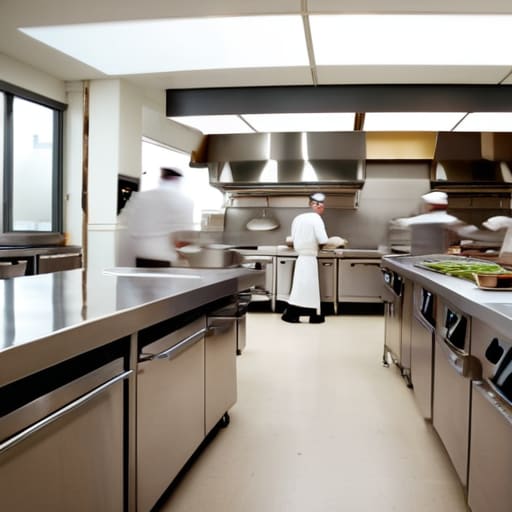
When I walk into a kitchen during the lunch rush, I don’t look at the menu first; I look at the feet. I watch how people are moving. If your team is constantly crossing paths, tripping over each other, or doubling back to the same prep station for a single knife, you aren’t just losing time—you’re creating a breeding ground for mistakes. True cafeteria workflow optimization isn’t about buying fancy new equipment; it’s about ensuring the physical path from the walk-in fridge to the serving line is a straight, logical line that doesn’t force a tired teenager to weave through a crowd of hungry students.
The reality is that most accidents happen when we try to squeeze too much into a broken system. When you’re understaffed and the clock is ticking, “cutting corners” becomes a survival mechanism, but that is exactly when food safety compliance in large scale dining falls apart. If your layout forces a staff member to handle raw poultry and then immediately pivot to plating a salad because the prep area is too cramped, no amount of training will save you. You have to design the space so that doing the right thing is the easiest thing to do.
Food Safety Compliance in Large Scale Dining Without Burnout
Let’s be honest: when you’re staring down a service window with three hundred hungry students arriving in ten minutes, a thick manual of HACCP procedures is the last thing on your mind. Most of the time, food safety compliance in large scale dining fails not because people are lazy, but because the systems are too heavy to carry when the kitchen is understaffed. If your safety checks require twenty minutes of paperwork for every ten minutes of cooking, your team will eventually start cutting corners just to keep the line moving.
The trick isn’t to add more tasks; it’s to integrate them into the rhythm of the room. Instead of treating dining hall staff training as a once-a-year lecture in a windowless meeting room, make it part of the daily huddle. Show them how a quick, disciplined check of the cooling logs actually saves them from a massive headache later. I tell my clients all the time: don’t aim for perfection, aim for consistency. If you can’t manage a twenty-page checklist, then focus on mastering three non-negotiables—like cross-contamination prevention and temperature discipline—and make those your absolute bedrock.
Five Non-Negotiables for When the Rush Hits
- Stop treating your allergen folder like a decoration. If your staff has to hunt through a three-inch binder while forty hungry kids are staring them down, they won’t do it. Keep a simplified, laminated “Red Flag” sheet for the most common allergens right at the plating station. It’s not about being fancy; it’s about making the right choice the easiest one.
- Master the “Clean-as-you-go” sequence, not just the deep clean. I’ve seen too many kitchens that look sparkling at 2 PM but were a biohazard at 12 PM. Train your team to clear and sanitise surfaces in a specific order—workstations first, then prep areas, then floors—so you aren’t chasing a mountain of filth at the end of a double shift.
- If the fridge temperature log isn’t being filled out, the fridge might as well be a cupboard. I don’t care how busy you are; if you aren’t checking those temps, you’re flying blind. Make it a ritual—part of the morning setup, part of the handover—rather than a chore someone tries to “catch up on” at the end of the week.
- Build “Buffer Zones” into your prep schedule. If you’re planning your workflow down to the exact minute, one broken dishwasher or one staff member calling in sick will collapse your entire safety protocol. Always aim to have your high-risk prep—like chopping veg or handling proteins—finished thirty minutes earlier than you actually need it.
- Focus your training on the “Why,” not just the “How.” Don’t just tell a new hire to wear gloves; tell them that cross-contamination is how a child ends up in A&E. When people understand that these boring little habits are actually their shield against a catastrophe, they stop seeing them as chores and start seeing them as part of the job.
The Three Things That Actually Keep Your Kitchen Safe
Stop chasing perfection and start chasing consistency; a simple, handwritten temperature log that is actually filled out is worth ten digital systems that everyone ignores when the lunch rush hits.
Prioritise your “high-risk” zones—if you only have ten minutes of breathing room, spend it on allergen separation and handwashing, not on reorganising the dry storage cupboard.
Build your safety protocols around your weakest staffing moment, not your best one; if your team is most stretched at 11:30 AM, that is exactly when your most critical food safety checks must be non-negotiable.
Frequently Asked Questions
How do I keep my staff focused on temperature logs when they're already running behind on the lunch service?
Stop treating the logs like homework to be done at the end of the shift. If they’re rushing to catch up at 1:30 PM, those numbers are going to be guesswork, and that’s when mistakes happen. Make the log part of the movement. Don’t ask them to “do the paperwork”; ask them to check the temperature as they pull the trays out. If it isn’t recorded the moment the probe hits the food, it didn’t happen.
What are the absolute non-negotiables for allergen safety when I'm dealing with a massive volume of different meals?
Look, when you’re pushing out hundreds of plates, you can’t rely on memory. It’s too risky. Your first non-negotiable is a foolproof, written allergen matrix that is updated every single time a recipe changes—not just once a term. Second, physical separation: dedicated equipment for allergen-free prep, even if it’s just a specific color-coded board. If your staff is too rushed to check the label on a new batch of pre-made sauce, you’ve already lost.
If I can't afford to hire more people, how do I restructure my cleaning schedule so it actually works without burning everyone out?
Stop trying to clean everything every day. You’ll burn out by Tuesday. Instead, audit your high-risk zones—the prep surfaces and the allergen-dedicated equipment—and make those non-negotiable, every single shift. Everything else? Move to a rolling schedule. If the floor deep-clean happens on a Tuesday rotation rather than every night, it’s still controlled, but it’s sustainable. Focus your limited hands on the things that actually prevent an outbreak, not just the things that look shiny.