I’ve spent sixteen years walking into kitchens where the air smells of industrial degreaser and frantic energy, and if there is one thing I’ve learned, it’s that most “complete guide to food safety in schools” manuals are absolute rubbish. They are written by people who have never had to serve four hundred hungry Year 6s with only two staff members on the line and a budget that wouldn’t cover a decent set of thermometers. They give you fifty pages of legalistic jargon and expensive digital tracking systems that no one actually has the time to use when the lunchtime rush hits.
I’m not here to hand you a pile of box-ticking exercises that won’t actually stop a child from getting sick. Instead, I’m going to give you the version of a complete guide to food safety in schools that actually works when things get chaotic. We are going to focus on the non-negotiables—the small, boring, high-impact habits like rigorous allergen communication and disciplined temperature checks—that actually prevent incidents. I’ll tell you what you can realistically sustain in a high-pressure environment, and we’ll leave the useless fluff at the door.
Table of Contents
Mastering Haccp Principles for School Kitchens Without Burnout
Most people hear “HACCP” and immediately start sweating, picturing mountains of paperwork that serve no purpose other than to sit in a folder until an inspector arrives. In a school setting, that’s a recipe for disaster. If your HACCP plan is so complex that your team ignores it the moment the lunch rush hits, it isn’t a safety system; it’s a fiction. You don’t need a theoretical masterpiece; you need practical HACCP principles for school kitchens that actually work when you’re three staff members short and forty minutes behind schedule.
The secret is to strip the process down to the critical control points that actually prevent a crisis. Forget the fluff and focus on the non-negotiables: temperature control for school meals and rigorous cross-contamination prevention. If your team can’t manage the flow of raw to cooked foods or the cooling of a large batch of pasta, the rest of the paperwork won’t save you. I tell my trainees: don’t try to document everything perfectly; just make sure you are measuring the things that matter and recording them accurately. That is how you prevent foodborne illnesses in students without burning your staff to the ground.
Temperature Control for School Meals the Non Negotiable Basics
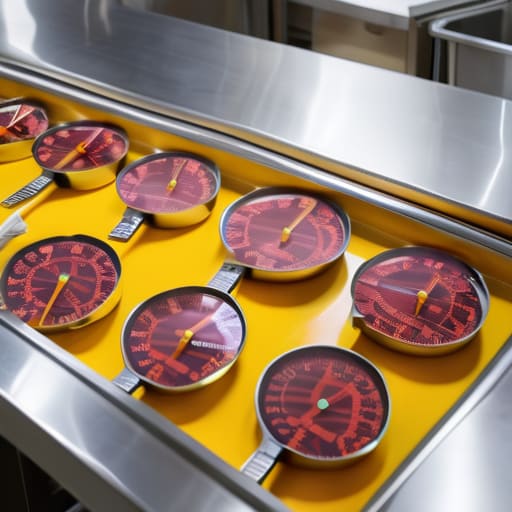
I’ve walked into enough kitchens to know that the thermometer is usually the first thing to be ignored when the lunch rush hits. It’s easy to treat temperature logs like a chore to be finished at the end of a shift, but that’s where the danger lies. If you aren’t recording temperatures when they happen, you aren’t actually managing risk; you’re just filling out paperwork. For anyone tasked with temperature control for school meals, the goal isn’t to create a perfect paper trail for an inspector—it’s to ensure that a batch of chicken left on a prep table for twenty minutes doesn’t become the catalyst for an outbreak.
You have to focus on the “danger zone” with a bit of healthy paranoia. I don’t care if your staff is exhausted, but they must understand that consistent cooling and reheating are the two areas where things most frequently go wrong. If you’re trying to maintain high school cafeteria hygiene standards with a skeleton crew, don’t try to micromanage every single ingredient. Instead, pick your high-risk items—the meats, the dairy, the cooked grains—and make sure those specific checks are non-negotiable. If the temperature isn’t right, the food doesn’t go out. Period.
The High-Risk Zones: Where Most Schools Actually Trip Up
- Stop treating allergen management like a paperwork exercise. It’s not enough to have a binder of spec sheets tucked away in an office; if the person plating the pasta doesn’t know that the pre-made sauce contains celery, your HACCP plan is just a piece of fiction. Make sure your allergen info is right there, at the point of service, in a way that is impossible to miss even during the midday rush.
- Cross-contamination isn’t always about a dirty knife; it’s often about the ‘invisible’ stuff, like shared prep surfaces or even the way staff move between raw and ready-to-eat areas. If you’re short-staffed, you can’t be perfect, but you can be disciplined about colour-coded boards and dedicated prep times. It’s about creating a physical flow that makes it hard to do the wrong thing.
- Cleaning isn’t just about making the stainless steel shine for an inspection; it’s about the sequence. I see too many kitchens that “clean” by wiping surfaces with a cloth that’s been sitting in a bucket of grey water all morning. You need a structured schedule that prioritises high-touch points and ensures that cleaning actually removes the bacteria rather than just spreading it around.
- Personal hygiene is the most basic control, but it’s also the most frequent failure point. I’m not talking about just having soap in the sink—I’m talking about the culture. If your team feels they don’t have the thirty seconds to properly wash their hands after handling waste because the lunch bell is ringing, you have a systemic problem. You have to build those thirty seconds into your operational workflow.
- Your staff are your most important sensors. I’ve seen more food safety issues caught by a keen-eyed kitchen assistant noticing a slightly odd smell in the fridge than by any expensive digital monitoring system. Encourage them to speak up when something looks “off”—whether it’s a delivery that arrived too warm or a fridge that’s struggling to hold its temperature. If they’re afraid to tell you there’s a problem, you’re flying blind.
The Essentials: What Actually Keeps the Kids Safe
Stop trying to perfect every single line on the paperwork and focus your energy on the high-risk zones—specifically allergen separation and temperature logs—because that’s where the real danger lives.
Build your food safety culture around “why,” not just “do it”; a staff member who understands the consequence of a missed cooling check is ten times more reliable than one who is just ticking a box to avoid a lecture.
Accept that your staffing levels aren’t infinite, so design your cleaning and prep sequences to be sustainable rather than aspirational, ensuring the most critical tasks are never the ones that get skipped when the lunch rush hits.
Frequently Asked Questions
How do I manage allergen communication when I have a rotating menu and staff who are constantly being pulled away on different tasks?
If you’re juggling a rotating menu and a team that’s constantly being pulled into different corners, you can’t rely on memory. You’ll fail. You need a “Single Source of Truth”—one physical, updated allergen matrix that stays in the service area, not a folder in the office. When staff are rushed, they need a glanceable, foolproof way to verify ingredients. If the menu changes, the matrix changes immediately. Don’t trust the verbal hand-off; trust the paper.
If my cleaning schedule is falling behind during the lunch rush, which specific areas should I prioritise to actually mitigate risk?
If the lunch rush is hitting and your cleaning schedule is slipping, stop trying to scrub the floor and focus on the high-risk touchpoints. Prioritise your food contact surfaces—prep boards and knives—and the handles of your refrigeration units. If you can’t clean everything, at least ensure your cross-contamination barriers stay intact. I’ve seen more incidents from a dirty knife than a dusty shelf. Do the basics well, rather than doing everything poorly.
What are the most common mistakes I'll see in paperwork during an inspection, and how can I make sure my team's logs are actually meaningful rather than just box-ticking?
The biggest red flag isn’t a missing signature; it’s “perfect” data. If every fridge temperature is exactly 3.0°C for a month straight, you aren’t monitoring; you’re guessing. That’s box-ticking, and it’s dangerous. To make logs meaningful, stop treating them like a chore and start treating them like a tool. Tell your team: “I don’t care if the temp is 4.2°C; I care that you noticed it and adjusted it.” Real data is messy.