I remember standing in a secondary school kitchen during a Tuesday lunch rush—steam everywhere, the frantic clatter of trays, and a trainee staff member nearly colliding with a boiling pot because they were trying to navigate a narrow walkway while carrying a heavy tray. It wasn’t a lack of expensive safety training or a fancy new manual that caused the near-miss; it was simply the chaos of a kitchen trying to do too much with too little. When people ask me how burns and scalds are prevented, they usually expect a lecture on high-tech sensors or complex risk assessments that look great in a binder but fall apart the second the lunch bell rings.
I’m not here to give you a list of theoretical rules that only work in a quiet, empty room. My promise to you is much more practical: I am going to show you the small, unglamorous habits that actually keep skin intact when the pressure is on. We are going to talk about realistic movement patterns, sensible equipment placement, and the kind of disciplined communication that works even when you are understaffed and exhausted. I’ll tell you what you can actually sustain, and we’ll focus on the boring stuff that actually saves lives.
Table of Contents
Practical Thermal Injury Prevention for Overstretched Teams
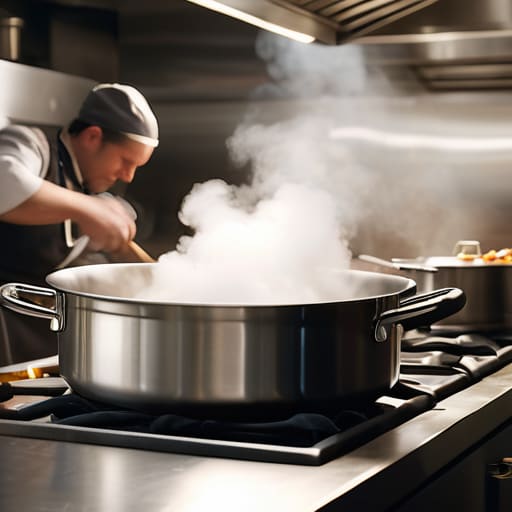
If you are running a school kitchen during a mid-morning rush, you aren’t looking for a thirty-page manual; you are looking for ways to stop someone from getting hurt when the pressure is on. Real thermal injury prevention isn’t about fancy equipment; it’s about the small, logical habits that survive a chaotic service. For instance, I always tell teams to stop the “one-handed carry” habit. If a staff member is trying to balance a steaming pot of soup while simultaneously reaching for a lid or a cupboard door, they are one slip away from a disaster.
Instead of complex occupational hazard mitigation strategies that no one reads, focus on the physical flow of the room. Keep the “hot zone” clear of clutter—no stray tea towels or half-empty crates left in the path between the stove and the serving hatch. If your team is exhausted or understaffed, the temptation to rush is massive, but that is exactly when the most serious accidents happen. Make sure the staff knows that moving slowly with hot liquids is better than moving fast and ending up in A&E.
Why Burn Injury Risk Assessment Matters More Than Fancy Gear
I’ve seen it a hundred times: a kitchen manager spends half their budget on the latest high-tech induction hobs or expensive, ergonomic utensils, thinking they’ve solved the problem. But you can have the most advanced equipment in the world, and if your team is still tripping over a loose floor mat while carrying a pot of boiling pasta water, that gear is useless. A burn injury risk assessment isn’t about buying shiny new things; it’s about looking at the actual, messy reality of your floor plan. It’s about noticing that the walk-in fridge door swings out right into the path of the person handling the deep fat fryer.
Real occupational hazard mitigation happens in the small, unglamorous details of how people move. I’m talking about the “why” behind the chaos. Why are staff rushing? Is it because the prep schedule is unrealistic? Is the hot liquid safety tip being ignored because the person responsible is covering two stations at once? If your safety plan only exists in a binder on a shelf, it isn’t a plan—it’s just paperwork. You need to identify the specific moments when people are most likely to slip or splash, and then build your workflow around those high-risk junctions.
Five Boring, Non-Negotiable Habits That Actually Keep Skin Intact
- Stop the ‘hot pot’ shuffle. If you’re moving a heavy, steaming saucepan across a crowded kitchen, you don’t just wing it. You clear the path first, you announce “hot behind” loudly enough for the person with headphones on to hear you, and you never, ever try to multitask a heavy carry while someone else is reaching for a cupboard.
- Respect the steam. I see it all the time—staff lifting a lid off a massive stockpot directly into their face because they’re in a rush to get the next batch moving. It takes two seconds to lift the lid away from your body and let the steam escape safely, but a second-degree scald to your face will end your shift (and your career) pretty quickly.
- The ‘Dry Hands’ Rule is more than a hygiene thing. If someone is reaching for a tray coming out of a high-speed oven or grabbing a hot pan handle, their hands better be bone dry. Water is a conductor; it turns a hot surface into an instant heat transfer that’ll cook your skin through your glove or your grip before you can even react.
- Don’t let ‘good enough’ cleaning become a hazard. I’ve walked into kitchens where grease has built up on the handles of ovens or the edges of hobs. That’s not just a hygiene fail; it’s a slip and burn waiting to happen. If a handle is slick with oil, someone is going to lose their grip mid-manoeuvre, and that’s when the hot liquid hits the floor—and their legs.
- Manage your equipment, don’t just use it. If a kettle is scaling up and spitting, or if a deep fat fryer’s thermostat is acting temperamental, don’t just ‘make do’ because you’re short-staffed. A faulty piece of kit is a ticking time bomb. Report it, tag it out, and get it fixed. I’d rather deal with a broken fryer than a staff member in A&E.
The Bottom Line for Your Kitchen
Stop chasing expensive gadgets and start watching your people; most burns happen because someone is rushing, exhausted, or working around a broken process, not because they lack the right gloves.
A risk assessment isn’t a document to hide in a folder for me to see; it’s a living map of where your team is most likely to get hurt when the lunch rush hits and the pressure is on.
Focus on the “boring” stuff—stable equipment, clear communication about hot liquids, and manageable workloads—because those are the only controls that actually hold up when things get chaotic.
Frequently Asked Questions
If I'm already short-staffed during a lunch rush, how do I actually enforce these safety steps without the kitchen falling behind schedule?
You don’t enforce them by adding more tasks; you enforce them by changing the sequence. If you’re short-staffed, the temptation is to move faster, but that’s exactly when the accidents happen. Instead, bake the safety into the prep. Don’t ask them to “be careful” with hot liquids—make it a rule that heavy pots only move when two people are free, or when the rush hits a specific lull. It’s about managing the workflow, not just the people.
We have plenty of PPE, but how do I know if it’s actually being used correctly or just sitting in a drawer because it's uncomfortable?
If your PPE is gathering dust in a drawer, it’s because it’s a nuisance, not a tool. I’ve seen it a thousand times: staff won’t wear heavy, heat-resistant gloves if they can’t feel the knife or if they slip off mid-task. Don’t just audit the cupboard; audit the workflow. Watch them during the rush. If they’re ditching the gear to save time or gain dexterity, your “safety equipment” is just a false sense of security.
How do I balance the need for strict temperature controls with the reality of staff who are exhausted and prone to cutting corners?
You stop trying to fight the exhaustion and start designing around it. If your temperature logs are getting ignored, it’s because they’re a chore, not a tool. Simplify the process: use digital probes that sync to a tablet if you can afford it, or move to a “critical point only” system. Don’t ask them to log every single thing; ask them to log the three things that actually keep people alive. Focus on the high-risk moments, not the busywork.