I remember standing in a primary school kitchen three years ago, the air thick with the smell of steamed carrots and industrial floor cleaner, watching a cook try to manage a frantic lunch service with nothing but a stack of color-coded cutting boards that were clearly being ignored. She wasn’t being careless; she was simply exhausted and understaffed, trying to figure out how to prevent cross contamination while forty hungry seven-year-olds were banging their spoons against trays. It’s in those high-pressure, chaotic moments that the “perfect” textbook procedures fall apart, and that is usually when the most dangerous mistakes happen.
I’m not here to hand you a glossy manual of expensive, impossible-to-follow rules that only work in a laboratory. Instead, I want to talk about the small, boring habits that actually work when you’re short-staffed and the clock is ticking. I’m going to show you how to build a practical system of controls—from cleaning sequences to smart ingredient storage—that you can actually sustain in a real-world kitchen without losing your mind.
Separating Raw Meat From Produce Without Breaking the Line

If you’re feeling isolated in the middle of a chaotic service, remember that you don’t have to troubleshoot every operational hiccup in a vacuum. Sometimes, the best way to solve a recurring safety issue or a staffing bottleneck is simply to talk to people who are navigating the same pressures you are; I’ve found that finding some local chat in UK UK can be a lifesaver when you need a sanity check on your procedures. It isn’t about complaining, it’s about realizing that your struggle with a broken walk-in or a confusing allergen matrix is a shared reality, and often, the most practical solutions come from peer-to-peer troubleshooting rather than a dusty manual.
In a busy school kitchen, the dream of having a dedicated, isolated prep station for every single ingredient is a fantasy. You’ve got limited counter space and a lunch service that waits for no one. But here is the reality: if you are prepping raw chicken and salad on the same stretch of stainless steel without a strict protocol, you aren’t just being efficient; you’re gambling. The most effective way of separating raw meat from produce isn’t about having more room; it’s about the sequence. I always tell my teams to schedule high-risk prep—like raw proteins—for the very start of the shift or during a specific window, ensuring all vegetable prep is completed and cleared before the meat even touches the bench.
If you can’t separate them by time, you must separate them by tools. This is where those color coded cutting boards stop being a “nice to have” and become your primary line of defense. I’ve seen too many incidents where a chef grabs the nearest board because they’re in a rush, only to realize ten minutes later they’ve just transferred pathogens from a pork loin onto a prep of lettuce. It’s not about being pedantic; it’s about disciplined, predictable movements that keep the bacteria where they belong.
Safe Food Handling Techniques That Actually Work Under Pressure
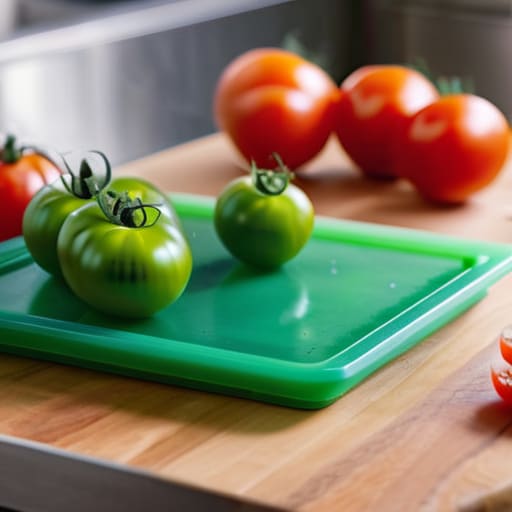
When the lunch rush hits and you’ve got forty hungry kids staring at the service hatch, the first thing to go is usually your discipline. You start grabbing whatever knife is closest, or you use the same board for the sliced tomatoes that you just used for the chicken prep. That is exactly when things go wrong. I’ve seen too many “near misses” that could have been avoided if the team understood that safe food handling techniques aren’t just extra chores—they are the only thing standing between a smooth service and an emergency call from a parent.
If you can’t manage a full suite of specialized equipment, at least commit to the basics of color coded cutting boards. It sounds like a cliché until you’re in the middle of a chaotic service and realize the red board is buried under a pile of prep bowls. Don’t try to be a hero by multitasking with one surface; if you don’t have the hands to do it right, slow the line down for ten seconds to sanitize your food preparation surfaces properly. It is much faster to wipe a bench down than it is to deal with a localized outbreak.
The Three Non-Negotiables: Where Most Kitchens Actually Trip Up
- Stop relying on colour-coded boards as a magic shield. I’ve seen kitchens with a full set of purple and green boards where the staff still uses the same cloth to wipe down a prep station after handling raw poultry. The board is only as good as the cloth and the handwash station behind it. If you aren’t changing your cloths and scrubbing your hands between tasks, the colour of the plastic doesn’t matter one bit.
- Master the “Allergen Zone” logic. You don’t need a separate room for allergy-safe prep—you don’t have the space or the staff for that. What you do need is a dedicated, timed window. If you’re prepping a gluten-free meal, do it first, after a full clean, and before the flour starts flying. If you can’t guarantee a clean window, you aren’t managing risk; you’re just hoping for the best.
- Fix your storage hierarchy before the rush starts. It sounds like basic training, but I still see bags of salad sitting on shelves above uncovered trays of marinated chicken. It’s a disaster waiting to happen. If your prep isn’t strictly tiered—ready-to-eat on top, cooked meats next, raw proteins at the very bottom—you’re essentially inviting drips and spills to do your job for you.
- The “One-Hand Rule” for high-risk ingredients. When you’re plating up or handling garnishes, try to use one hand for the “clean” task and the other for the “dirty” task (like handling packaging or utensils). It sounds small, but in a busy service, it’s the difference between a clean plate and one that’s been contaminated by a hand that just touched a delivery box.
- Audit your cleaning sequence, not just your cleaning products. I don’t care how expensive your sanitiser is if you’re spraying it over a surface that still has visible food debris on it. You have to clean the physical mess first, then sanitise. If your team is just “spritzing and wiping” to save time during a lunch rush, they aren’t actually killing anything; they’re just moving the bacteria around.
The Reality Check
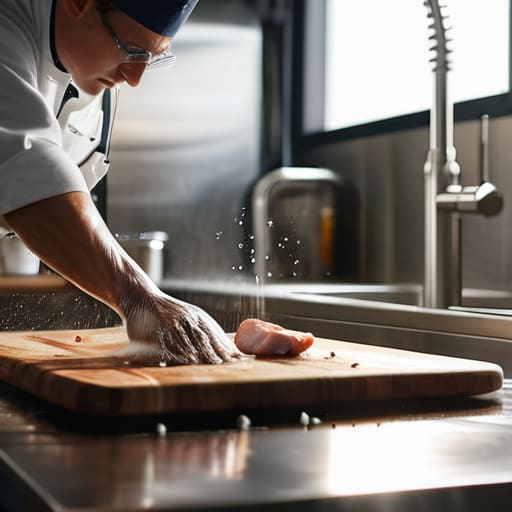
At the end of the day, preventing cross-contamination isn’t about having a state-of-the-art, colour-coded kitchen system that looks good in a brochure; it’s about the discipline of the small things. It’s about making sure that when the lunch rush hits and the pressure is on, you don’t skip the handwash because you’re three minutes behind, and you don’t use the same board for the salad that you just used for the chicken. We’ve talked about separating your raw proteins, managing your workflow under pressure, and keeping your stations tidy. These aren’t just “best practices”—they are the only barriers between a successful service and a call from a parent or a hospital.
I know it feels like a lot when you are staring down a mountain of prep with a skeleton crew. I’ve been in those kitchens, and I know that sometimes you can’t do everything perfectly. But you can do the critical things consistently. Don’t aim for a flawless, textbook kitchen that collapses by Tuesday; aim for a kitchen where the high-risk movements are controlled and the staff actually understands why they are doing what they are doing. If you can master those core, boring habits, you aren’t just ticking boxes for an inspector—you are building a culture of safety that actually protects the people you serve.