I’ve spent sixteen years walking into kitchens where the staff immediately stiffen when they see my clipboard, and I can tell you right now: most of the advice you find online about how to audit your own kitchen is absolute rubbish. You don’t need a twenty-page, color-coded spreadsheet that requires a degree in logistics to manage, and you certainly don’t need to spend three hours a week chasing “compliance” that doesn’t actually stop a child from getting sick. Most of those high-level audits are just expensive box-ticking exercises designed to make consultants feel important, rather than helping a kitchen manager who is currently trying to plate up three hundred meals with only two staff members on the line.
I’m not here to give you a theoretical lecture; I’m here to tell you which fires actually need putting out. I want to show you how to strip away the fluff and focus on the critical, boring controls—the temperature logs that actually get filled, the allergen labels that aren’t peeling off, and the cleaning sequences that actually work when you’re in the weeds. I’ll show you how to build a routine that is actually sustainable for your team, so when a real inspector walks through that door, you aren’t scrambling—you’re just doing what you do every day.
Table of Contents
Kitchen Inventory Management Finding the Hidden Risks
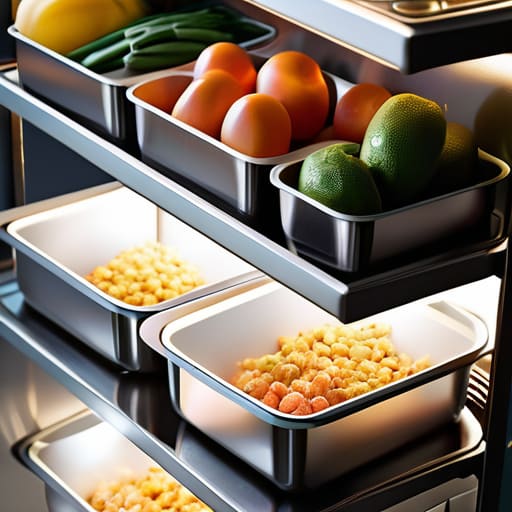
When I walk into a walk-in fridge, I’m not just looking for a stray piece of raw chicken; I’m looking at how you manage your stock. If your shelves are a chaotic jumble of half-used containers and unlabeled bags, you aren’t just losing money—you’re creating a playground for cross-contamination. Effective kitchen inventory management isn’t about having a perfect spreadsheet; it’s about knowing exactly what is in that room and exactly how long it has been there. If you can’t tell me when that opened carton of cream arrived without digging through three other boxes, you have a problem.
I’ve seen too many kitchens struggle with expired food identification because they try to do too much at once. Don’t aim for a complete overhaul of your entire storeroom in a single shift. Instead, focus on the high-risk zones first. Start by implementing a strict “first-in, first-out” (FIFO) system that actually works for your staff, rather than one that looks good on paper but gets ignored during the lunch rush. If you can master the flow of your dry goods and perishables, you’ll find that food waste reduction strategies stop being a management buzzword and start becoming a practical way to protect your budget and your students.
Expired Food Identification the Cost of Neglectful Storage
I’ve lost count of how many times I’ve walked into a walk-in fridge and found a container of sauce that had become a science experiment because it was pushed to the back of a shelf. It’s not usually a lack of care; it’s the chaos of a service that’s running behind. But here is the reality: expired food identification isn’t a task you can leave for the end of a Friday shift when everyone is exhausted. If you aren’t checking dates during your morning prep, you aren’t managing a kitchen; you’re just hoping for the best.
Effective food waste reduction strategies actually start with how you label your prep. If a container doesn’t have a clear “use by” date or a prep timestamp, it shouldn’t be in the fridge. I tell my teams that a tidy fridge is a safe fridge, but let’s be honest—it’s about visibility. If your staff has to move three different tubs just to see what’s underneath, they aren’t going to check the date on the bottom one. Stop hiding your stock. Make it impossible to ignore the expiration dates, and you’ll find that the risk of a food safety incident drops significantly.
Five things I look for when I’m walking through your door
- Stop looking at the shiny stuff. A gleaming stainless steel prep table doesn’t mean a thing if your temperature logs have gaps from Tuesday to Thursday. Audit your paperwork first; if the logs aren’t being kept during the quiet hours, they certainly won’t be kept when the lunch rush hits.
- Watch the handwashing stations, not just the sinks. I don’t care if the sink is clean if there’s no soap, no paper towels, or if the staff are using the handwash basin to rinse a tea towel. If the setup isn’t functional for a person in a rush, the protocol is already broken.
- Check your allergen separation with a critical eye. Don’t just ask if they know about the gluten-free requirements; look at where the flour is stored and see if the dedicated allergen utensils are actually kept in a way that prevents cross-contact. If they’re buried in a drawer with the regular spatulas, you’ve failed the audit.
- Follow the cleaning sequence, not just the result. I’ve seen kitchens that look spotless but have a “clean as you go” culture that’s actually just “hide the mess until the end of the shift.” Audit whether your cleaning schedule follows a logical flow—top to bottom, clean to dirty—or if people are just wiping surfaces with the same cloth they used on the floor.
- Test your staff’s “why,” not just their “what.” Pick a junior member of the team and ask them why a certain food is being stored on the bottom shelf or why they’re using a specific probe. If they can only give you the “because the manual says so” answer, your training hasn’t stuck; if they understand the risk, you’ve actually got a safe kitchen.
What to Actually Carry Away From This
Stop chasing perfection and start chasing consistency; a messy but accurate temperature log is worth infinitely more than a pristine folder full of guesswork.
Focus your limited energy on the high-risk “boring” stuff—like checking labels on decanted containers—rather than wasting time on superficial tidiness that doesn’t stop an outbreak.
Use your audit to find the friction points in your workflow, because if a safety rule is too hard for your staff to follow during a lunch rush, they won’t follow it, and that’s where your real risk lives.
Frequently Asked Questions
If I don't have the staff to do a full walk-through every day, which three things should I prioritise checking when the pressure is on?
If you’re short-staffed and the lunch rush is looming, stop trying to do everything. You’ll just end up doing a mediocre job of it all. Focus on the “Big Three” that actually prevent hospital visits: first, check your allergen labeling—if a staff member is guessing, you’ve already lost. Second, verify your high-risk fridge temperatures; if the cold chain breaks, the food is gone. Third, watch your cross-contamination during prep. If those three are solid, you’ve managed the highest risks.
How do I know if my staff are actually filling out the temperature logs honestly, or if they're just "dry-labbing" them at the end of a shift?
If you see a log that looks like a work of art—perfectly even handwriting, identical temperatures every single day, or entries all filled in with the same pen at 3:00 PM—you’re being lied to. That’s “dry-labbing,” and it’s dangerous. Don’t just check the numbers; check the timing. Walk in at 10:00 AM and ask to see the fridge. If the log says it was 3°C at 9:30 AM, but the unit is struggling at 8°C, you have a problem.
When I find a gap in my inventory or an expired item during my own audit, how do I fix the system rather than just throwing the food away and moving on?
If you just bin the food and move on, you’re just treating the symptom, not the disease. When I see a gap or an expired tub, I don’t want to hear about the waste; I want to know why the system allowed it to happen. Was it a delivery error, or did someone skip the morning check because the lunch rush hit early? Fix the process—tighten your rotation, adjust your ordering, or retrain the person responsible. Stop the leak at the source.