I remember standing in a school kitchen three years ago, staring at a massive, steaming tray of pilau rice that had been sitting on a warming trolley for far too long. The staff weren’t being lazy; they were simply trying to survive a lunch rush that felt like a battlefield. They thought the heat was keeping everything safe, but they didn’t realise they were actually creating a perfect playground for bacteria. This is the reality of how bacillus cereus affects rice dishes: it doesn’t care about your busy schedule or your best intentions; it only cares that you’ve left the rice in the “danger zone” long enough for spores to wake up and start producing toxins.
I’m not here to give you a lecture filled with scientific jargon that you can’t use when you’ve got forty minutes to get three hundred plates out the door. Instead, I want to talk about practical survival. I am going to show you the specific, boring temperature controls that actually work in a high-pressure environment, and we will figure out a cooling workflow that fits your actual staffing levels. No fluff, no expensive equipment requirements—just real-world discipline to keep your kitchen safe.
Table of Contents
The Resilience of Bacterial Spores in Cooked Grains
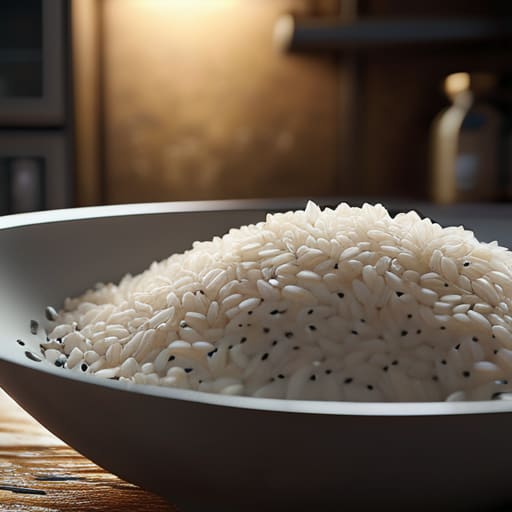
Here is the hard truth about why rice is such a high-stakes ingredient in a busy kitchen: it’s not just about the bacteria itself, but how it survives your cleaning routines. When we talk about bacterial spores in cooked grains, we aren’t just talking about germs that get killed by heat. Bacillus cereus produces spores that are essentially biological armored tanks. You can boil that rice until it’s mush, and while you might kill the active bacteria, those spores will sit there, completely unfazed, waiting for the temperature to drop into the danger zone.
Once the rice cools down—and in a school kitchen, I know how hard it is to get large batches down quickly—those spores wake up. They start multiplying and, more importantly, they start pumping out an emetic toxin. This is the specific toxin responsible for that sudden, violent vomiting that characterizes food poisoning from leftover rice. The real nightmare for a kitchen manager is that once this toxin is produced, you can’t “cook it out” of the next batch. You can re-heat that rice to 75°C all day long, but the toxin stays put. It’s a silent, heat-stable threat that ignores your best intentions.
Why the Emetic Toxin in Bacillus Cereus Defies Heat
Here is where most kitchen teams get caught out. You can boil that rice until it’s practically mush, and you can certainly blast it in a high-heat oven, but if the emetic toxin in Bacillus cereus has already been produced, you are essentially fighting a losing battle. This isn’t like some other bacteria that simply die off when things get hot; this specific toxin is heat-stable. This means that even if you kill the living bacteria, the poison they left behind remains active and ready to cause havoc.
I’ve seen it happen in school kitchens where a massive batch of rice is cooked for lunch, left to sit in a warm pot for an hour while staff deal with a service rush, and then shoved into a walk-in fridge. By the time that rice is reheated the next day, the bacteria might be dead, but the toxin is still very much alive. This is why preventing foodborne illness in rice isn’t about the cooking temperature—it’s about the window of time between the pot and the fridge. If you aren’t managing that middle ground, you’re just reheating a hazard.
Five Ways to Keep Your Rice from Becoming a Biohazard
- Stop the “Room Temperature” Habit: I’ve seen too many kitchens leave massive pots of rice on the counter to “cool down naturally” while the team handles service. That is exactly when the spores wake up. If you can’t get it into a shallow pan and into the fridge within an hour, you are playing a dangerous game with your lunch service.
- The Shallow Pan Rule: Don’t try to chill a deep, heavy pot of rice in the walk-in; the core will stay warm for hours, creating a perfect incubator. Spread your cooked rice out in shallow, food-grade containers. It takes an extra minute of labor, but it’s the difference between a safe starch and a liability.
- Reheating is Not a Reset Button: You cannot “cook the toxins out” once they’ve formed. If that rice has sat out too long, no amount of high-heat reheating in a pan or microwave will make it safe. Once the emetic toxin is there, it’s there. If you’re unsure about the temperature history, bin it. It’s cheaper than a food poisoning outbreak.
- Labeling for the Next Shift: In a busy school or care kitchen, the person reheating the rice tomorrow might not be the person who cooked it today. If your labels don’t clearly state the cooking time and the cooling time, your staff is flying blind. Clear documentation isn’t just for me—the inspector—it’s for their own protection.
- Batch Cooking Over Bulk Storage: If your workflow allows it, stop cooking enough rice for the whole day in one go. It is much safer to cook smaller batches throughout the service. It keeps the volume manageable for rapid cooling and ensures you aren’t trying to manage a massive, temperature-sensitive mountain of grain during the afternoon rush.
What This Means for Your Kitchen Service
Stop relying on heat to save you; once the toxin is produced, no amount of reheating or boiling will make that rice safe again.
Your biggest risk isn’t the cooking stage, it’s the “danger zone” hours spent waiting for large batches to cool down on the counter.
If your staff is too slammed to manage rapid cooling, you need a better system—like smaller, shallow containers—rather than just hoping for the best.
Frequently Asked Questions
If I'm reheating rice for a lunch service, am I actually making it safe or just playing a dangerous game with the toxins?
If you’re reheating rice that’s been sitting out too long, you aren’t making it safe; you’re just heating up a toxin. You can kill the bacteria, but you can’t kill the poison they’ve already left behind. Reheating is a tool for service, not a rescue mission for poorly managed leftovers. If that rice wasn’t cooled rapidly and stored correctly from the start, no amount of steam or microwave time will fix it.
We struggle with getting staff to use the blast chiller; is there a realistic way to cool large batches of rice when we're short-handed?
Look, I get it. If you’re short-staffed, the blast chiller feels like a luxury you don’t have time to load. But if that rice sits in a deep pot, it’s a ticking clock. If you can’t use the chiller, skip the big pots. Spread the rice out in shallow, wide trays—as many as you have. It increases the surface area, lets the steam escape, and gets the temperature down fast enough to actually be safe.
How do I actually prove to an inspector that my rice cooling process is working if my temperature logs are a mess?
Look, I’ve seen the messy logs. If your paperwork is a disaster, stop trying to fake a perfect history; it’s transparent and it won’t save you. Instead, show me your process in real-time. Demonstrate the specific method you use—whether that’s shallow trays or an ice bath—and show me you’re actually checking the core temperature with a probe. If you can prove you understand the why and the how, we can work on fixing the when.