I’ve sat in too many school kitchens where the “Nut Policy” is nothing more than a thick, dusty binder sitting on a high shelf, gathering grease and neglect. Most of the guidance out there is written by people who have never had to serve four hundred hungry kids in a forty-minute window; they tell you to ban everything, audit every supplier, and cross-reference every single ingredient label, as if you have a magic wand to stop microscopic dust. But here is the truth: if your policy is so complicated that your team ignores it during the lunch rush, you haven’t actually managed how to manage a nut policy—you’ve just created a paperwork trap that won’t stop an anaphylactic reaction.
I’m not here to give you a checklist of impossible ideals that will fall apart the moment a delivery driver is late or a staff member calls in sick. Instead, I’m going to show you the practical, high-impact controls that actually work when the heat is on. We are going to focus on the small, repeatable habits—the specific cleaning sequences and the communication shortcuts—that keep children safe without turning your kitchen into a laboratory. Let’s talk about what you can realistically sustain when the bell rings.
Table of Contents
Practical Allergen Management Protocols for Busy Kitchens
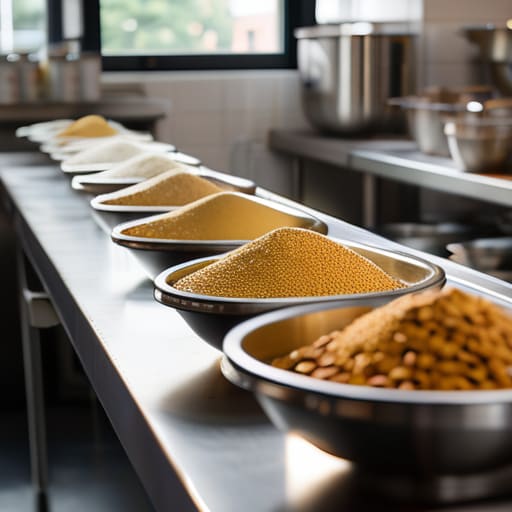
If you’re running a kitchen during the lunch rush, you don’t have time for a twenty-page manual that no one reads. Real allergen management protocols aren’t about thick binders; they are about the physical separation of ingredients. I’ve seen too many “nut-free” environments compromised because a prep cook used the same scoop for almond flour and plain flour. If you want to actually lower your risk, you need to move your high-risk ingredients to a dedicated, lower shelf or a separate cupboard entirely. Don’t just tell your team to “be careful”—give them a physical barrier that makes it harder to make a mistake when they are tired and rushing.
Next, let’s talk about your staff. You can run all the nut allergy awareness training you want, but if it’s just a slideshow once a year, it won’t save a child in an emergency. I want to see “active” training: ask them where the EpiPens are kept, or ask them to identify the hidden peanut oil in a jar of pesto. It’s about building muscle memory. If they can’t find the emergency kit in under thirty seconds while the oven timer is going off, your policy isn’t working.
Establishing Sustainable School Nut Free Zones
If you’re trying to enforce strict school nut-free zones, you have to stop treating it like a suggestion and start treating it like a physical barrier. I’ve seen too many schools try to police this by just telling kids “don’t bring nuts,” which is about as effective as trying to hold back a tide with a broom. Instead, you need to look at your supply chain. If your kitchen is even slightly cross-contaminated because you’re buying cheap, bulk-packed snacks that aren’t clearly labelled, your policy is dead on arrival. You need a formal risk assessment for food allergies that actually looks at the delivery bay, not just the lunch tray.
Once you’ve tightened the perimeter, you have to train the people standing in the middle of it. This isn’t about a glossy PowerPoint session once a year; it’s about practical nut allergy awareness training that focuses on the “what if.” What if a child arrives with a hidden peanut butter sandwich? What if a supplier changes their ingredient list overnight? Your staff needs to know exactly where the line is drawn, and more importantly, they need to know that following the protocol is more important than saving thirty seconds during a busy service.
Five Non-Negotiables for When the Rush Hits
- Stop relying on memory and start relying on the labels. In a busy kitchen, “I thought that was the nut-free spread” is how a child ends up in A&E. If it’s in the building, it needs a dedicated, labelled spot that isn’t next to the gluten-free prep area, and your staff needs to check the packaging every single time, not just when the delivery arrives.
- Make handwashing a hard rule, not a suggestion, during ingredient transitions. You don’t need a ten-minute scrub, but you do need a disciplined “change of task” protocol. If someone has been prepping a pesto or a granola, they aren’t touching the school’s standard sandwich bread until they’ve hit the sink. It’s a small time sink that prevents massive cross-contamination.
- Simplify your prep to reduce the “danger zones.” If you’re struggling to maintain a nut-free environment, stop trying to use complex, multi-ingredient sauces that hide allergens. The simpler the component, the easier it is for your team to verify it’s safe. Complexity is the enemy of food safety when you’re serving four hundred kids.
- Audit your cleaning sequence, not just your cleaning products. It doesn’t matter if you use a high-grade sanitizer if you’re wiping a nut-contaminated bench and then immediately using that same cloth on a salad station. I want to see a sequence where “high risk” items are handled first, or where cleaning tools are colour-coded so the “nut cloth” never sees a nut-free surface.
- Train for the “why,” not just the “how.” If you tell a kitchen assistant to “be careful with the peanut butter,” they’ll nod and then forget by lunchtime. If you tell them, “This specific child has an anaphylactic reaction to this exact ingredient, and we have no margin for error,” the conversation changes. They need to understand the stakes, not just the rulebook.
The Bottom Line: What Actually Keeps Kids Safe
Stop aiming for “zero risk”—it’s a fantasy that leads to burnout and corner-cutting. Instead, focus your energy on the high-impact, non-negotiable habits, like rigorous colour-coded utensil use and dedicated prep windows, that your team can actually maintain when the lunch rush hits.
A policy is only as good as the person who last cleaned the prep table. If your staff doesn’t understand why they are switching boards or washing hands after handling a single stray peanut, they won’t do it when you aren’t looking; invest in their “why,” not just their “how.”
Documentation shouldn’t be a mountain of paperwork that sits in a folder gathering dust. Keep your allergen logs simple, visible, and quick to complete so that when I walk in and ask to see them, they actually reflect what happened in the kitchen ten minutes ago.
Frequently Asked Questions
What do I actually do when a parent sends in a lunchbox that clearly breaks the policy—do I confiscate it, or is that just a losing battle?
Confiscate it? Honestly, that’s a losing battle that just makes you the villain in the staff room. You can’t police every lunchbox, and trying to will only exhaust your team. Instead, don’t make it a confrontation; make it a conversation. Document the incident, notify the parent calmly, and focus on the “why”—the safety of the child in the next seat. Manage the risk through supervision, not through a kitchen-wide war on sandwiches.
How can I realistically keep my kitchen nut-free when my suppliers keep sending me products with "may contain" warnings on the labels?
This is the headache that keeps me up at night. You can’t control the factory, but you can control your receiving bay. If a delivery arrives with a “may contain” label that contradicts your policy, it doesn’t go in the pantry—it goes back on the van. Don’t try to “manage” the risk by hiding it in a corner; just reject it. It’s frustrating and a pain for your budget, but it’s the only way to stay honest.
If I'm short-staffed on a Tuesday afternoon, which specific cleaning steps can I skip and which ones are non-negotiable to prevent cross-contamination?
Look, I’ve been there—it’s 1:30 PM, the lunch rush is over, and you’re down two staff members. You can skip the deep scrub of the floor drains or the detail-cleaning of the wall tiles for now. But do not—under any circumstances—skimp on the “contact surface” sequence. You must wipe down prep boards, knife handles, and utensil bins with a fresh cloth and approved sanitiser. If you don’t control the surfaces that touch the food, nothing else matters.