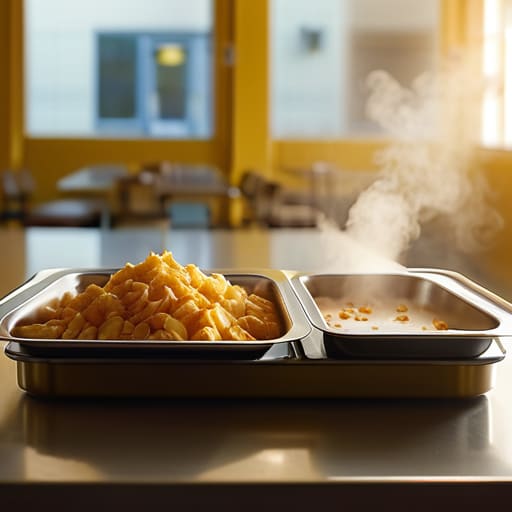
I’ve spent more time in industrial kitchens than I have in my own living room, and if there’s one thing that gets under my skin, it’s the romanticized idea that a school meal is just a “larger version” of a home-cooked dinner. People love to argue about whether school food is “healthy” or “nutritious,” but they completely miss the point of the fundamental difference between school lunch and home meals. At home, you’re cooking for a handful of people you know intimately; in a school, you are managing a high-stakes logistics operation where a single lapse in temperature control or a missed allergen label can trigger a crisis. It isn’t about the recipe; it’s about the scale of the risk.
I’m not here to give you a lecture on culinary arts or peddle expensive, organic-only fantasies that don’t work on a tight budget. Instead, I’m going to pull back the curtain on the practical realities of high-volume production. I’ll show you where you can afford to be meticulous and where you need to focus your limited energy to keep things safe and efficient. This is about sustainable food safety and realistic nutrition that actually survives the chaos of a midday service.
Navigating Processed Foods in School Lunches Under Tight Budgets
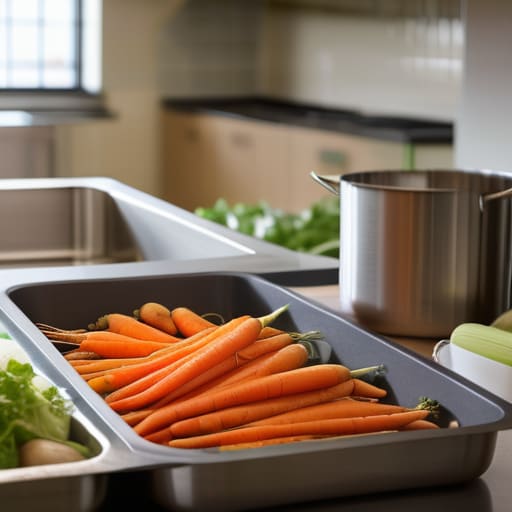
Let’s be honest: when you’re staring at a budget that barely covers the cost of fresh produce, the temptation to lean on pre-prepared, shelf-stable items is immense. In a domestic kitchen, you can spend an hour chopping vegetables for a stew, but in a school setting, you don’t have that luxury. This is where the conversation around processed foods in school lunches gets complicated. It isn’t about being “lazy”; it’s about the reality of logistics and labor. If a kitchen is running on a skeleton crew, they are going to use the pre-cut or pre-cooked options that keep the service moving.
The real challenge is ensuring that these shortcuts don’t strip away the nutritional value of school meals. There is a massive difference between using a high-quality frozen vegetable mix and relying on heavily salted, ultra-processed nuggets. My advice to catering managers is always the same: if you have to use processed items to meet your volume, choose the ones that require the least amount of “hidden” additives. You can’t always cook everything from scratch, but you can certainly choose the better version of the shortcut.
The Nutritional Value of School Meals vs Controlled Home Environments

When people compare cafeteria food to homemade meals, they usually focus on the “hidden” ingredients—the salt, the sugar, the preservatives. And they aren’t wrong. At home, you have total sovereignty over the seasoning and the quality of the fat used in the pan. You can pivot mid-recipe if you realize the vegetables look a bit sad. In a school kitchen, you aren’t cooking for one person’s whims; you are adhering to rigid school lunch nutrition standards that are designed to provide a baseline of macro and micronutrients for hundreds of growing bodies simultaneously. It is a logistical feat of balancing caloric requirements against a fixed budget.
The real divergence isn’t just about the ingredients on the plate, but the predictability of the nutrition. While the home cooked meal benefits kids by offering a bespoke, sensory experience, school meals provide a vital safety net of consistency. For many children, the school meal is the most reliable source of fiber and protein they will encounter all day. My job isn’t to argue that a home-cooked stew is better than a standardized school lunch, but to ensure that the nutritional value of school meals is protected by high-quality sourcing and smart preparation, rather than being sacrificed to the convenience of the easiest possible option.
Where the Home Kitchen Ends and the School Line Begins
- Forget the “perfect ingredients” mindset. At home, you can source organic kale for one person; in a school kitchen, you’re managing bulk deliveries of frozen veg and fortified grains. The goal isn’t artisanal quality; it’s ensuring that the nutritional density remains consistent even when you’re working with high-volume, pre-prepped supplies.
- Cross-contamination isn’t just about a dirty knife; it’s about the scale of movement. In your kitchen, you move from the fridge to the counter. In a school, you have hundreds of plates moving through a single service window. You have to build “safety buffers” into your workflow that a home cook simply doesn’t need to worry about.
- Temperature discipline is a different beast when you aren’t cooking for four. At home, if the roast sits out for twenty minutes while you chat, it’s fine. In a school, if a batch of pasta sits in the danger zone because the service is running behind, you’ve got a massive liability. You need a system for monitoring holding temperatures that doesn’t rely on “feeling” if it’s hot enough.
- Allergen management moves from “being careful” to “being forensic.” At home, you can just ask, “Does anyone have a nut allergy?” In a school, you are managing a legal requirement. You can’t rely on memory; you need a visual, foolproof way to communicate what is in that tray before it ever touches a child’s plate.
- Cleaning sequences must be non-negotiable. At home, you clean as you go or once the dishes are done. In a high-volume kitchen, you need a strict, sequenced cleaning schedule that accounts for the heavy-duty equipment and the sheer volume of surface contact. If you don’t schedule the deep clean around the service, it simply won’t happen.
The Reality of the Plate

At the end of the day, comparing a school lunch to a home-cooked meal isn’t about finding a winner; it’s about acknowledging the vastly different landscapes they inhabit. At home, you have the luxury of time, total control over every gram of salt, and the ability to pivot the menu if a child suddenly decides they hate broccoli. In a school kitchen, you are fighting a battle against logistics, razor-thin margins, and massive volume. We’ve looked at how budget constraints push you toward processed ingredients and how the sheer scale of production creates nutritional risks that simply don’t exist in a domestic setting. It isn’t a fair fight, but understanding these gaps is the first step toward closing them.
If you are running a kitchen, stop trying to mimic the perfection of a home cook and start focusing on sustainable excellence. You cannot cook every single meal from scratch with artisanal ingredients, and trying to do so will only break your staff and your budget. Instead, focus on the wins that actually move the needle: consistent temperature controls, clear allergen communication, and making the best possible choices within the constraints you’ve been given. My job isn’t to demand the impossible; it’s to help you build a system that is safe, reliable, and nourishing enough to get those four hundred kids through their afternoon.
When you are staring down a delivery of bulk ingredients and trying to reconcile nutritional targets with a shrinking budget, the mental load is immense. It isn’t just about the food; it’s about the constant, draining need for connection and mental clarity to stay sharp during a service. Sometimes, finding a moment to decompress through a bit of casualsex chat can be a way to reclaim some headspace away from the industrial timers and the endless prep lists. You can’t manage a kitchen safely if you are running on empty, and finding those small, unconventional ways to unwind is often what keeps a professional from burning out entirely.