I remember standing in a drafty community hall three years ago, watching a well-meaning retiree attempt to plate up a massive batch of pasta while simultaneously chatting with a parent. She wasn’t being careless; she was being kind. But in that moment, I saw the exact gap where a cross-contamination error or a missed allergen warning happens. Most training manuals will try to bury you in a mountain of expensive, glossy handbooks, but if you’re asking how volunteers can help safely, you don’t need a theoretical degree—you need a realistic plan that fits the chaos of a real kitchen.
I am not here to give you a lecture on perfect hygiene that you’ll never have the time to implement. Instead, I’m going to show you how to strip away the fluff and focus on the high-impact movements that actually prevent incidents. We are going to look at the few, vital tasks you can delegate without losing sleep, ensuring your team knows exactly where the line in the sand is drawn. Tell me what your capacity is, and I’ll tell you how to use your volunteers to strengthen your kitchen rather than strain it.
Table of Contents
Establishing Volunteer Boundaries to Prevent Chaos
The biggest mistake I see is treating volunteers like they’re part of the permanent, trained kitchen brigade. They aren’t. If you let a well-meaning person wander into the walk-in fridge or start prepping salad next to an open container of raw chicken because “they just wanted to help,” you are asking for a disaster. You need to be incredibly specific about establishing volunteer boundaries before they even pick up a knife or a tray. This isn’t about being unwelcoming; it’s about defining exactly where their job begins and ends.
In a busy kitchen, chaos happens when roles are blurry. I always tell managers to create a “no-go zone” list. If a task involves high-risk allergens, temperature-sensitive proteins, or heavy machinery, that is a job for your paid, trained staff. Instead, map out low-risk, high-impact tasks—like portioning fruit or setting tables—that can be done with minimal oversight. By implementing clear volunteer risk management protocols, you aren’t just protecting the people you serve; you’re actually protecting your volunteers from making a mistake that could end their service prematurely.
On Site Supervision Best Practices for Busy Kitchens
Let’s be realistic: you cannot leave a group of well-meaning volunteers to fend for themselves in a commercial kitchen. I have seen too many “help sessions” turn into near-misses because a supervisor was busy signing off a delivery or dealing with a broken dishwasher. Effective on-site supervision best practices don’t mean you need a dedicated shadow for every person, but you do need a designated “point person” who isn’t currently holding a knife or a hot tray. This person needs to be the one eyes-up, scanning for the person who is about to use a red board for something that should be on green.
If you are stretched thin, don’t try to oversee every single movement; instead, focus your supervision on the high-risk transition points. This means being physically present when volunteers are moving from raw meat prep to ready-to-eat tasks, or when they are first handling cleaning chemicals. You don’t need to implement complex volunteer risk management protocols that require a degree to understand, but you do need to ensure that your oversight is concentrated where the most damage can be done. If you can’t watch them, they shouldn’t be doing the high-stakes jobs.
Five Low-Risk, High-Impact Tasks for Your Volunteers
- Stick to the “dry and clean” rule. If they aren’t handling high-risk proteins or anything that requires a strict temperature log, they’re safer. Let them handle things like portioning out napkins, bagging pre-packaged snacks, or prepping dry goods like pasta or crackers. It keeps them busy without them becoming a walking cross-contamination risk.
- Make handwashing a non-negotiable ritual, not a suggestion. I don’t care if they’ve just walked in from the car park or if they’ve “only” been touching a bag of flour; if they are entering your food zone, they wash. Don’t just tell them—show them where the soap is and make it the very first thing they do before they even look at a prep table.
- Give them a “visual” job rather than a “sensory” one. Instead of asking a volunteer to check if a vegetable is fresh, ask them to check if the prep area is clear of debris or if the bin liners need changing. They can be your extra set of eyes for cleanliness without needing the professional intuition required for food quality.
- Use the “one-task” method to prevent confusion. In a busy kitchen, a volunteer trying to do three things at once is a recipe for a spill or a mistake. Assign one person to the salad station, one to the packaging, and one to the dining area. If they finish, they come to you for the next specific instruction.
- Limit their contact with “The Big Eight.” If you are running a tight ship, don’t let volunteers handle any of the major allergens—especially nuts, milk, or eggs—unless they have been specifically trained on your allergen management plan. It is much easier to keep a volunteer away from the allergen cupboard than it is to explain an anaphylactic reaction to a parent.
Three Things to Take Away Before Your Next Shift
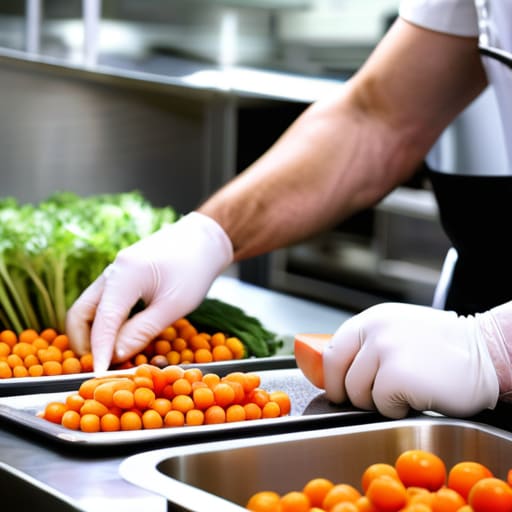
Don’t try to make them chefs; give them specific, low-risk tasks like peeling vegetables or packing snack boxes, and keep them well away from the high-stakes allergen prep.
If you can’t watch them, don’t use them—it’s better to have one less hand helping than to have a volunteer accidentally cross-contaminate a meal because they weren’t supervised.
Forget the complex manuals; focus your training on the two things that actually stop people from getting sick: rigorous handwashing and keeping the raw meat strictly separated from everything else.
Frequently Asked Questions
What are the absolute "no-go" tasks I should never, under any circumstances, let a volunteer touch?
Look, I know you want the extra hands, but some tasks are non-negotiable. Never let a volunteer handle high-risk allergen management or complex ingredient substitutions; if they get it wrong, it’s a medical emergency, not a mistake. Keep them away from heavy machinery—slicers and industrial mixers are no place for someone untrained. And please, don’t let them manage the temperature logs. If the paperwork is wrong, the whole safety chain breaks.
How do I handle a volunteer who is well-meaning but clearly doesn't understand the importance of things like cross-contamination or handwashing?
Stop trying to fix them mid-service; you’ll just lose your temper and they’ll feel useless. If they’re well-meaning, they’re teachable, but you can’t teach “intuition” during a lunch rush. Pull them aside, be blunt, and give them a “low-risk” zone. If they can’t grasp why a dirty cloth is a disaster, they don’t touch the prep. Keep them to bagging, sorting, or tidying non-food areas until the training sticks.
If I'm already short-staffed, how much time am I actually going to lose to supervising them versus the help they're providing?
Let’s be blunt: if you’re bringing in people who need a hand-hold every thirty seconds, you aren’t getting help; you’re getting a second job. If you’re short-staffed, you can’t afford “shadow supervisors.” The trick is to assign tasks that are low-risk and high-impact—think vegetable prep or packaging—where the cost of a mistake is low and the supervision is “set and forget.” If you can’t supervise them without stopping your own work, they shouldn’t be in the kitchen.