I remember standing in a school kitchen three years ago, the air thick with the smell of steamed veg and frantic energy, watching a cook probe a massive tray of lasagna with a thermometer she’d clearly just wiped on her apron. She looked at me, exhausted, and said, “I know how core temperature is measured, Ottoline, I’ve been doing this twenty years.” She wasn’t being defiant; she was just spent. Most of the training manuals out there treat temperature control like a laboratory experiment, full of expensive, high-tech gadgets that break the moment they hit a real-world service. But in a kitchen serving four hundred hungry kids on a shoestring budget, fancy tech is a distraction; what you actually need is a method that is bulletproof and repeatable even when the lunch rush is hitting the fan.
I’m not here to lecture you on the physics of heat transfer or sell you a digital probe that costs more than your weekly veg order. Instead, I’m going to show you the practical, unvarnished reality of how core temperature is measured when you actually have work to do. We are going to strip away the fluff and focus on the specific, boring habits—the right probe placement, the cleaning intervals, and the documentation—that actually keep your students safe. I’ll tell you what’s worth your time and what’s just box-ticking nonsense that won’t stop a foodborne illness.
Table of Contents
Moving Beyond Guesswork With Medical Grade Thermometry Equipment
I’ve seen too many kitchen managers treat a thermometer like a suggestion rather than a tool. They grab a cheap, flimsy probe from a discount shop, stick it into a chicken thigh, and if it says 72°C, they call it a day. But here is the reality: if your equipment isn’t up to scratch, you aren’t measuring anything; you’re just playing a high-stakes game of chance. When we talk about precision, we aren’t just talking about food—we are talking about the science of accuracy. In a clinical setting, you wouldn’t settle for anything less than medical grade thermometry equipment, and frankly, your school kitchen shouldn’t either.
The difference between a budget probe and a professional-grade instrument is the margin of error. In medical environments, practitioners rely on specific clinical thermometry methods—like an esophageal temperature probe or even rectal temperature monitoring—because they need to know the absolute truth of the core. While I’m not asking you to start inserting probes into your sausages, the principle remains the same. You need a tool that is calibrated, responsive, and reliable. If your thermometer is slow to react or gives a different reading every time you use it, throw it in the bin. You cannot manage risk with broken tools.
The Unreliable Truth of Tympanic Membrane Accuracy
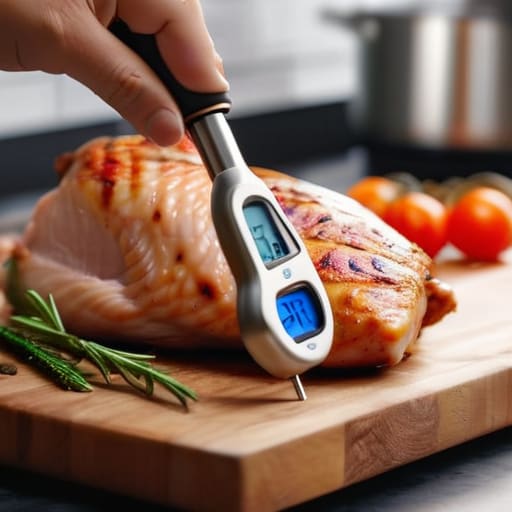
I’ve seen it a dozen times: a kitchen manager grabs a quick infrared ear thermometer because they’re in a rush, thinking they’ve got a handle on the food’s internal state. Here is the hard truth: tympanic membrane accuracy is a complete myth when you are trying to verify if a chicken breast is safe to serve. Those ear thermometers are designed for human clinical use, measuring heat radiated from the eardrum. They are not, and will never be, a substitute for a probe that actually penetrates the food.
When we talk about clinical thermometry methods, we are discussing how to monitor a living body’s temperature regulation. Using that same logic in a catering environment is a recipe for disaster. You might get a reading that looks fine, but you aren’t actually measuring the thermal center of the product. If you aren’t using a probe designed to sit in the thickest part of the meat, you aren’t performing a safety check; you’re just collecting data that feels good while the risk remains untouched.
Five ways to actually get the measurement right when the lunch rush hits
- Stop using the probe for everything. If you’re using a single probe to check the temperature of a chicken thigh and then immediately dipping it into a pot of gravy without a proper sanitisation step in between, you aren’t measuring temperature—you’re just spreading bacteria around. Use a dedicated probe for high-risk proteins and keep a separate, clean one for ready-to-eat foods.
- Learn the “sweet spot” for placement. I see staff poking the thermometer into the thickest part of the meat, but if they hit a bone, the reading is going to be uselessly high. You need to aim for the deepest part of the flesh, avoiding any bone or fat pockets, or you’ll be serving food that looks safe on paper but is actually a ticking time bomb.
- Calibrate your gear or don’t bother. I’ve walked into kitchens where the thermometer says 75°C but the ice water test says it’s actually reading 70°C. That 5-degree gap is exactly where the pathogens live. Do a quick ice-point calibration once a week; it takes two minutes and it’s the only way to know your equipment isn’t lying to you.
- Give the probe time to breathe. I know the service is backing up and the kids are hungry, but if you pull the probe out the second it hits the target number, you’re getting a false reading. Let the probe sit in the center of the food for a few seconds to stabilise. A rushed reading is a wrong reading, every single time.
- Clean the probe like your job depends on it—because it does. It’s not enough to just wipe it on a tea towel. Use a food-safe sanitiser wipe after every single use. If I see a thermometer sitting on a prep bench next to raw mince and then being used on a cooked pasta dish, I don’t care how accurate the sensor is; the process has already failed.
The Bottom Line for Your Kitchen
Ditch the ear thermometers for food; they’re for patients, not poultry, and they’ll give you a false sense of security that ends in a food poisoning outbreak.
If you aren’t using a high-quality, probe-style thermometer that you actually clean and calibrate, you aren’t measuring temperature—you’re just playing a dangerous game of chance.
Precision isn’t about being a perfectionist; it’s about having a single, reliable data point that tells you whether a meal is safe to serve or a liability waiting to happen.
Frequently Asked Questions
If my probe thermometer is digital, do I still need to be checking it in ice water every single time I use it?
Look, I’ve seen plenty of digital displays that look perfectly fine while giving you a reading that’s two degrees off. If you’re checking a critical batch of chicken or a high-risk sauce, yes—test it. You don’t need to do it every single time you pick it up, but you must do it at the start of a shift and whenever you suspect it’s drifted. If you aren’t verifying, you aren’t measuring; you’re just hoping.
How often am I actually expected to calibrate these things if we're hitting the same volume of meals every day?
I get this question every time I walk into a busy school kitchen. You’re doing three hundred covers by noon, the rush is relentless, and the idea of “calibrating” feels like a luxury you don’t have. But here’s the reality: if you aren’t checking your probe in an ice slurry or boiling water at least once a week—ideally every time you switch from raw to cooked foods—you aren’t measuring temperature; you’re just reading a number.
We’re short-staffed during the lunch rush; is there a way to check temperatures quickly without risking cross-contamination?
I hear you. When the lunch rush hits and you’re down a person, the temptation to just “eyeball it” or use one thermometer for everything is massive. Don’t do it. If you can’t afford a dedicated probe for every station, invest in high-quality probe wipes—not just a damp cloth. Wipe, check, wipe again. It takes ten seconds, but it’s the only way to ensure you aren’t carrying allergens or bacteria from a chicken thigh straight into a vegetarian pasta.