I’ve walked into thousands of kitchens, and if there is one thing I can tell you, it’s that most “complete guide to food safety inspections” you find online are written by people who have never had to manage a lunch rush with two staff members short and a broken dishwasher. They’ll give you fifty pages of dense, legalistic jargon that suggests you need a PhD and a mountain of expensive digital logging software to pass. But let’s be honest: nobody has time for that when they’re trying to get four hundred school meals out the door by 12:30.
I’m not here to give you a textbook; I’m here to give you a survival strategy. My goal is to strip away the performative box-ticking and focus on the high-stakes controls that actually prevent a child from ending up in the hospital. I will show you which parts of the inspection process actually matter and which ones are just paperwork for the sake of paperwork. If you tell me what your kitchen can realistically sustain on a Tuesday afternoon, I will tell you exactly where to put your energy to ensure you pass every single time.
Table of Contents
- Navigating Health Department Audit Requirements Without Losing Your Mind
- Prioritizing Foodborne Illness Prevention Protocols That Actually Work Unde
- The Five Things I Always Look For (And Why They Matter More Than Your Folder)
- The Three Things That Actually Matter When the Door Opens
- Frequently Asked Questions
Navigating Health Department Audit Requirements Without Losing Your Mind
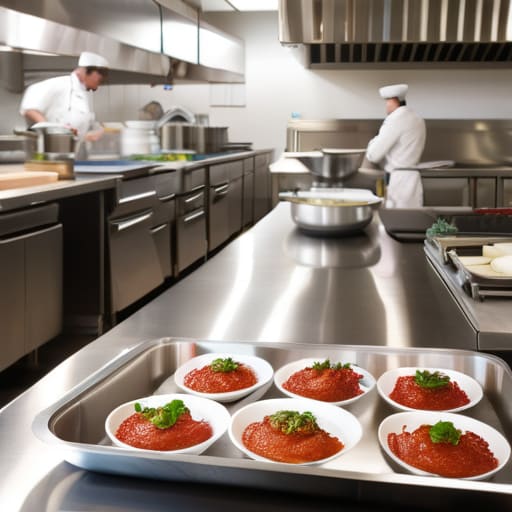
When I walk into a kitchen, I can usually tell within ninety seconds if the paperwork is going to match the reality of the prep surfaces. Most managers treat health department audit requirements like a looming storm they can just hide from, but that’s a losing game. You don’t need a pristine, museum-quality kitchen to pass; you need a system that survives the 12:00 PM rush. If your staff is scrambling to find a thermometer or a folder while I’m standing there, I’m not just looking at your equipment—I’m looking at your culture.
Stop trying to build a massive, unmanageable binder that sits gathering grease on a shelf. Instead, focus on your sanitation SOPs for restaurants that actually reflect how your team moves. If your cleaning schedule is so complex that a tired teenager can’t follow it at the end of a shift, it’s a useless piece of paper. I’d much rather see a simple, three-step process that is consistently executed than a twenty-page manual that everyone ignores. Focus on the high-stakes habits, and the audit becomes a formality rather than a crisis.
Prioritizing Foodborne Illness Prevention Protocols That Actually Work Unde
When the lunch rush hits and you’ve got forty minutes to get three hundred trays out the door, your HACCP compliance checklist isn’t going to save you—your habits are. I’ve seen too many kitchens fall apart because they tried to treat every single rule with the same level of intensity. You can’t fight every battle at once. If you try to be perfect at everything during a peak period, you’ll end up being mediocre at the things that actually matter. You need to identify your non-negotiables. For me, that’s always temperature control and allergen separation. If the chicken is hitting the right internal temp and the gluten-free prep area is physically isolated, you’ve already won half the battle.
Don’t get bogged down in the minutiae of paperwork when the floor is busy; focus on preventing cross-contamination during inspections and service by mastering the flow of your staff. It’s about the high-stakes movements—the handwashing after touching raw protein, the dedicated utensils, and the way you manage your cooling logs. If you can sustain those core foodborne illness prevention protocols when the pressure is on, the rest of the compliance stuff usually falls into place.
The Five Things I Always Look For (And Why They Matter More Than Your Folder)
- Stop obsessing over the perfect binder and start obsessing over your temperature logs. I’ve seen kitchens with beautiful, color-coded folders where the actual fridge temperatures haven’t been recorded since Tuesday. If your logs are blank, I don’t care how clean your prep tables are; I know you aren’t actually monitoring the high-risk stuff.
- Master the “flow” of your kitchen to prevent cross-contamination before it happens. You can’t expect a tired staff member to be perfect, so set up your space so it’s hard to mess up. If your raw meat prep area is too close to your salad station, you’re just begging for an allergen or bacterial incident.
- Treat allergen communication as a live conversation, not a static list. A printed sheet tucked in a drawer is useless when a parent is asking about gluten in the middle of a lunch rush. I want to see that your team actually knows what’s in the sauce they’re ladling out, not just that they know where the recipe book is.
- Cleaning needs to follow a sequence, not just a frantic scrub. There is nothing worse than seeing a staff member wipe a surface with a cloth that was just used on a cutting board. Teach them the order: clear, clean, rinse, sanitise. It takes thirty seconds longer, but it’s the difference between a clean kitchen and a dangerous one.
- Build a culture where “I don’t know” is an acceptable answer, provided it’s followed by “let me check.” I’ve shut down more kitchens because staff were too scared to admit they weren’t sure about a cooking temperature than because they were intentionally being messy. If they can’t find the answer, they need to know exactly which supervisor to grab.
The Three Things That Actually Matter When the Door Opens
Stop chasing perfection on every minor detail and focus your energy on the “big killers”—temperature control, cross-contamination, and allergen management. If your fridge logs are a mess but your surfaces are spotless, I’m still going to worry; if your logs are perfect but you’re using the same board for raw chicken and salad, you’ve failed.
Documentation isn’t a creative writing exercise; it’s your only shield. I don’t need a beautifully formatted binder, but I do need to see that you actually checked the temperatures at 10:00 AM and 2:00 PM, because if it isn’t written down, in my eyes, it never happened.
Build systems that survive a bad shift. A safety protocol that requires three people to sign off on it is a protocol that will be ignored the moment you’re short-staffed or the lunch rush hits; design your controls to be something a tired, stressed cook can do in thirty seconds without thinking twice.
Frequently Asked Questions
If my staff is constantly rotating and I can't get them all through formal training, what are the absolute non-negotiables I need to drill into them every single morning?
If you’re dealing with high turnover, stop trying to teach them the whole manual on day one. You don’t have time, and they won’t remember it. Drill three things every single morning: hand hygiene (when and how), cross-contamination (keep the raw away from the ready-to-eat), and temperature checks. If they can’t do those three things without being told, they shouldn’t be touching the food. Master the basics first; we can worry about the rest later.
How do I prove to an inspector that our cleaning schedule is actually being followed when we're too busy to spend half an hour filling out a clipboard every afternoon?
Stop trying to write a novel on a clipboard mid-service; that’s how you get messy, inaccurate logs that I can spot a mile away. Instead, switch to a “point-of-task” system. Use a simple tick-sheet or a dry-wipe board kept exactly where the cleaning happens—above the sink or by the prep station. If the task is done, the mark goes on immediately. It’s less about the paperwork and more about the discipline of the habit.
When we're short-staffed and the lunch rush hits, how do I decide which safety checks are safe to delay and which ones are "stop everything and do this now" moments?
When the rush hits and you’re down two people, you have to triage. You can delay a deep clean of the floor or reorganising the dry store, but you never, ever delay cross-contamination controls or temperature checks. If a delivery arrives, check it immediately. If you’re prepping allergens, stop and double-check those labels. If you can’t guarantee the temperature of the high-risk protein, you don’t serve it. Everything else is secondary; safety isn’t negotiable.